Hole 5 of 18 · Brewster, Washington

Hole 5 at Gamble Sands Golf and Inn

Par
4
Yards
501
Handicap
3
Bunkers
2
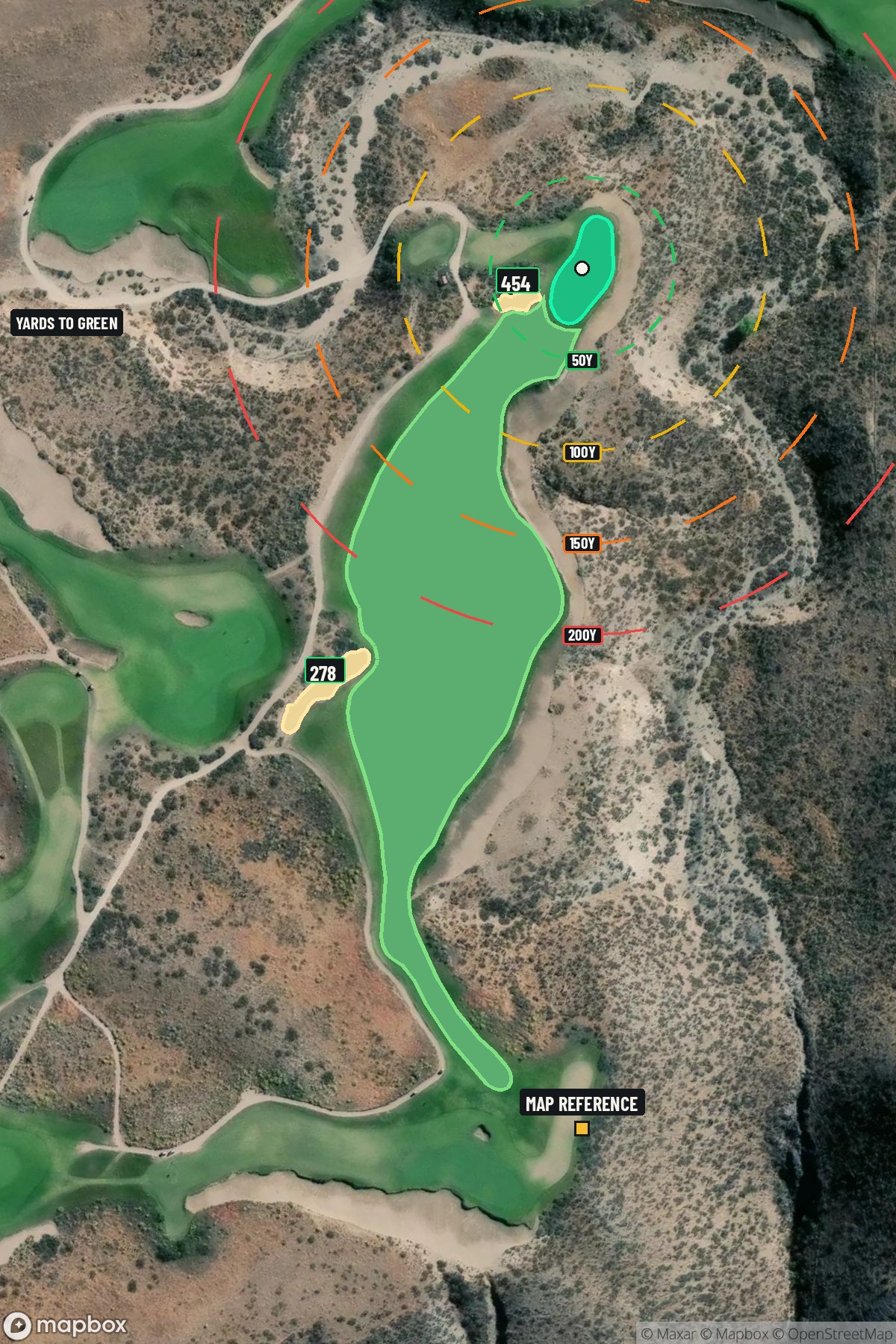
Hole 5 aerial at Gamble Sands Golf and Inn
Map distances from Map reference tee

The map's printed distances are measured from the Map reference tee to the green; they do not move when you change tees. Your Championship yardage is in the tiles above.

Green size: 60 yds deep × 36 yds wide

Mapbox Satellite composite · capture date not provided. Green at the top.

Where this map comes from

Satellite photo
Date not published
Mapbox satellite
Report a map problem
100%
Hole 5 aerial at Gamble Sands Golf and Inn

The plan for No. 5

These notes were written before the current map. Where their distances differ, trust the map.

The play: The 5th hole at Gamble Sands Golf and Inn presents a formidable 501-yard par 4 that demands both power and precision from the championship tees. This straight, no-nonsense test features the course's signature wide-open playing corridors that showcase the dramatic Columbia River valley landscape. The generous fairway invites aggressive tee shots, but the real challenge emerges on the approach to a compact, well-defended green complex. With its #3 handicap rating, this hole separates skilled players from the field, requiring two quality shots to reach the putting surface in regulation. The small green demands accurate iron play, making club selection and distance control paramount. It's a classic risk-reward proposition that epitomizes Gamble Sands' strategic design philosophy.

Shot by shot

  1. Off the tee

    Your tee shot strategy should focus on finding the optimal position for your approach rather than maximum distance. The straight layout rewards accuracy over power, making this an ideal hole to prioritize fairway position. Target the center-left portion of the fairway to set up the best angle into the small green. A well-struck drive in the 250-270 yard range leaves a manageable mid-iron approach, while shorter hitters should focus on staying in play and advancing the ball as far as possible down the fairway. The wide corridors provide forgiveness, but don't let this encourage reckless swings—smooth tempo and solid contact will serve you better than trying to overpower this lengthy hole.

  2. Approach & recovery

    The approach shot represents the hole's primary challenge, with the small green demanding precision and proper club selection. From the typical landing zone, you'll likely face a mid-iron to long-iron depending on conditions and pin position. The key is committing to enough club—coming up short on a 501-yard par 4 wastes the good work done with your tee shot. Study the pin position carefully, as the small green size means there's little margin for error. Favor the center of the green unless you're confident in your iron play, as the putting surface will test your short game skills regardless of where you land.

  3. On the green

    The small green size makes every putt crucial and rewards accurate approach shots. Expect subtle breaks and firm conditions typical of the desert environment. Focus on lag putting from longer distances, as three-putting from the wrong side of this compact surface can quickly derail your score. Pay attention to grain direction and wind effects, which can be significant in this exposed Columbia River valley location. Conservative putting strategy often proves wise—getting down in two putts from anywhere on this green represents solid execution. ## RISK VS REWARD Unlike some of Gamble Sands' more dramatic risk/reward holes, the 5th presents a more straightforward challenge: execute two solid shots or face the consequences of a difficult up-and-down. The risk comes from being overly aggressive with club selection or trying to attack tough pin positions on the small green. The reward for patient, strategic play is a legitimate birdie opportunity and confidence heading into the middle portion of the round. ## DIFFERENT SKILL LEVELS **Low Handicappers:** Focus on optimal positioning off the tee and commit to aggressive iron play into the green. This hole rewards precision and confidence—two qualities that define skilled players. Consider the pin position when selecting your approach club, and don't hesitate to attack when conditions favor aggressive play. **High Handicappers:** Embrace the wide fairways and focus on two solid, conservative shots. Use a reliable club off the tee even if it means a longer approach shot. On the approach, prioritize the center of the green and focus on avoiding short-sided positions. This hole's length means bogey represents a reasonable score, so avoid the temptation to press for par with risky shots that could lead to bigger numbers. The 5th hole at Gamble Sands exemplifies thoughtful course design—no tricks or gimmicks, just a honest test that rewards good golf shots and strategic thinking while punishing poor execution.

  4. Watch for

    • Course conditioning and mapped hazards may affect line selection; confirm from the aerial.

The green on No. 5

Mapped boundary
Wide × deepyards
36×60
Areasq ft
12,409

Gear for Hole 5

We may earn a commission when you buy through these links.

Golfer feedback

How did Hole 5 play?

⚡ Quick Golfer Pulse

How did this hole play today?

1-tap anonymous vote

Frequently asked questions

Yardage reference: Championship tees · 501 yards.

What's the best strategy off the tee?

↓

For this 501-yard par 4, most players will hit driver to set up a comfortable approach. Be mindful of the bunker at 278.4 yards if you hit driver.

How difficult is hole 5?

↓

This hole is a moderate challenge for most golfers. Key challenges include: long par 4, large green requiring good lag putting.

How big is the green on hole 5?

↓

The green is large and can play quite long. Three-putt territory if you don't manage your approach distance well.

Which side of the fairway is safer on hole 5?

↓

Aim for the right side of the fairway when possible. Missing left brings more trouble into play.

What's a good score on hole 5?

↓

This hole is one of the tougher holes where par feels like birdie. A challenging par 4. Accept that bogey happens and avoid big numbers.