Hole 12 of 18 · Brewster, Washington

Hole 12 at Gamble Sands Golf and Inn

Par
4
Yards
327
Handicap
16
Bunkers
3
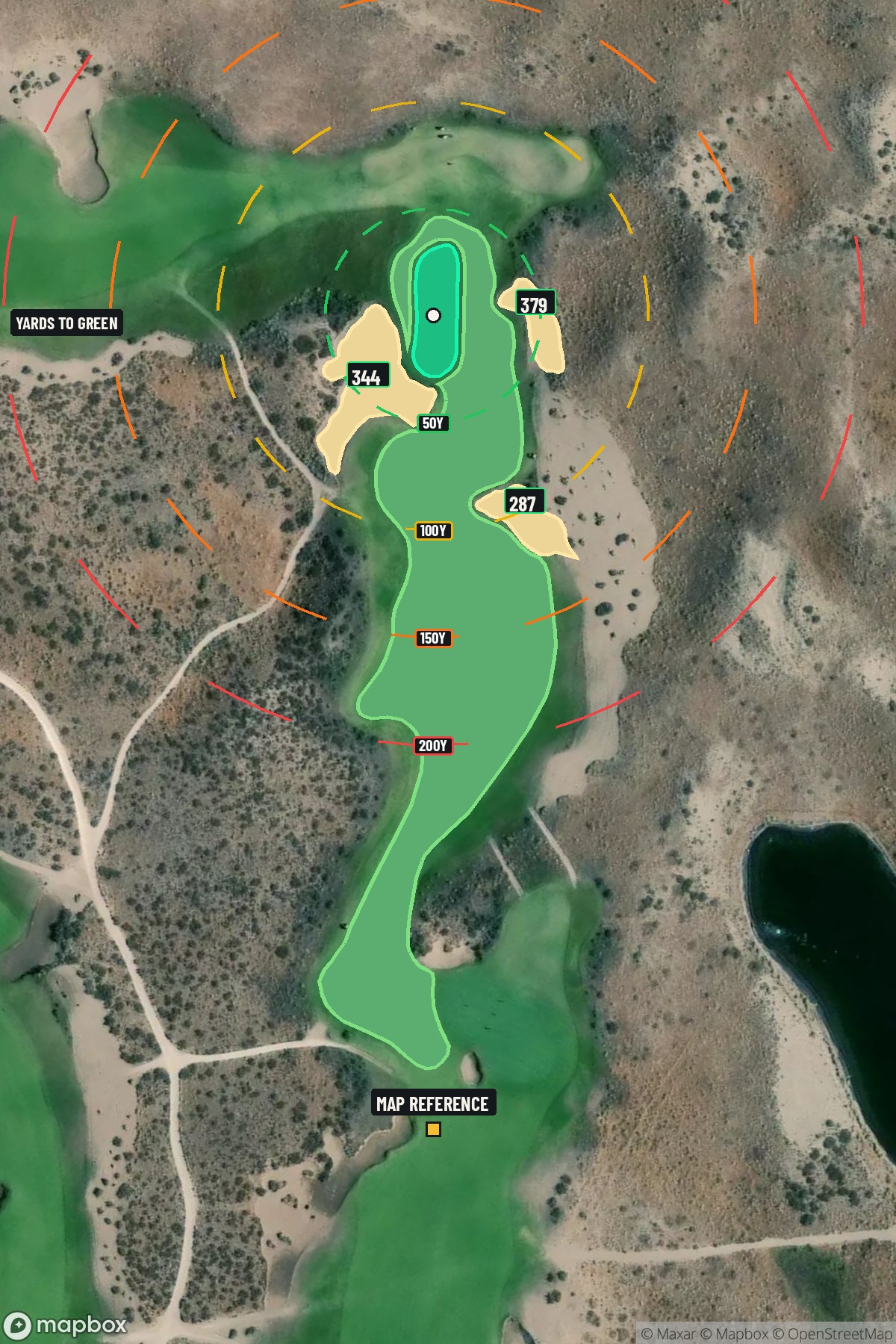
Hole 12 aerial at Gamble Sands Golf and Inn
Map distances from Map reference tee

The map's printed distances are measured from the Map reference tee to the green; they do not move when you change tees. Your Championship yardage is in the tiles above.

Green size: 63 yds deep × 22 yds wide

Mapbox Satellite composite · capture date not provided. Green at the top.

Where this map comes from

Satellite photo
Date not published
Mapbox satellite
Report a map problem
100%
Hole 12 aerial at Gamble Sands Golf and Inn

The plan for No. 12

These notes were written before the current map. Where their distances differ, trust the map.

The play: The 12th hole at Gamble Sands Golf and Inn presents a deceptively straightforward par 4 that embodies the course's philosophy of wide-open, enjoyable golf. At 327 yards, this short par 4 offers multiple strategic options from the tee, with golfers able to play conservatively with an iron or take an aggressive line with driver toward the small green complex. The generous fairway provides ample room for error, allowing players to focus on positioning for the crucial approach shot. Despite its modest length and 16 handicap rating, the compact green demands precision on the second shot, rewarding accurate iron play while punishing wayward approaches. This hole exemplifies Gamble Sands' commitment to maximum enjoyment through strategic variety and forgiving design.

Shot by shot

  1. Off the tee

    The generous fairway allows for aggressive play off the tee. Most golfers should consider driver to maximize their scoring opportunity, as the lack of hazards removes the typical risk factors. Your target line should favor the center of the fairway, giving yourself the best angle and shortest approach into the small green. For those seeking maximum control, a 3-wood or long iron will still leave a manageable mid-iron approach while ensuring perfect position. The key is committing to your club selection - indecision leads to poor swings on scoring holes like this.

  2. Approach & recovery

    This is where the hole's challenge reveals itself. The small green demands pinpoint accuracy with your approach shot. Study the pin position carefully during your pre-round preparation or from the previous group. A smooth, controlled swing with a mid-iron to short iron (depending on your tee shot distance) should be your approach. Focus on landing the ball softly on the green rather than trying to get it close to a tucked pin. The center of the green is always a safe target on small greens, as it minimizes the risk of missing entirely.

  3. On the green

    Small greens typically feature subtle breaks that can be deceiving. Take extra time to read your putts, as the compact surface means every slope is magnified. Pay attention to the overall tilt of the green and any ridge lines that might affect ball roll. From longer distances, focus on lag putting to ensure you don't leave yourself with a tricky comeback putt. The small surface area means even minor misreads can result in three-putts if you're not careful with your speed control. ## RISK VS REWARD This hole offers excellent risk/reward potential for aggressive players. The short distance makes it possible to drive the green or get very close, but the small target requires exceptional accuracy. Conservative players can take advantage by playing for the center of the fairway and center of the green, virtually guaranteeing a par with birdie potential. Aggressive players might consider going for the green with driver, accepting the higher risk for the reward of a potential eagle putt. ## DIFFERENT SKILL LEVELS **High-Handicap Players:** Play this hole conservatively with fairway wood or hybrid off the tee, then a controlled approach to the center of the green. Don't get greedy chasing pins - the small green makes misses costly. Focus on making solid contact and two-putting for par. **Low-Handicap Players:** This is a must-birdie hole. Consider the aggressive line with driver, and be precise with your approach shot. Study pin positions and green conditions carefully. You should be disappointed with anything worse than par here, as the lack of hazards removes most trouble from play. The 12th hole at Gamble Sands exemplifies how shorter holes can still challenge your golf strategy and club selection skills. While the yardage suggests an easy hole, the small green ensures that precision remains paramount for optimal scoring.

  4. Watch for

    • Course conditioning and mapped hazards may affect line selection; confirm from the aerial.

The green on No. 12

Mapped boundary
Wide × deepyards
22×63
Areasq ft
10,802

Gear for Hole 12

We may earn a commission when you buy through these links.

Golfer feedback

How did Hole 12 play?

⚡ Quick Golfer Pulse

How did this hole play today?

1-tap anonymous vote

Frequently asked questions

Yardage reference: Championship tees · 327 yards.

What's the best strategy off the tee?

↓

For this 327-yard par 4, most players will hit 3-wood or driver to set up a comfortable approach.

How difficult is hole 12?

↓

This hole is a good scoring opportunity for most golfers. Key challenges include: large green requiring good lag putting.

How big is the green on hole 12?

↓

The green is large and can play quite long. The green is wider than it is deep, rewarding shots that find the correct tier. Three-putt territory if you don't manage your approach distance well.

What's a good score on hole 12?

↓

This hole is a birdie opportunity if you find the fairway. This shorter par 4 rewards accuracy off the tee with a short iron approach.