Best Golf Drivers 2026 — Expert Rankings & Reviews
Find the best drivers for maximum distance and forgiveness off the tee.
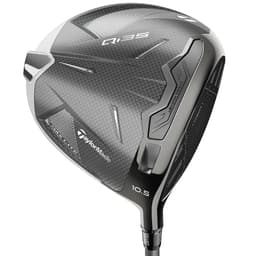
Our #1 Pick
TaylorMade Qi35 Max
As an Amazon Associate and affiliate partner (including Sovrn, Awin, and StubHub), we earn from qualifying purchases. Our rankings are based on independent research; affiliate relationships do not influence our recommendations.
How we rank: Performance data · Expert testing · No pay-for-placement · Updated quarterly
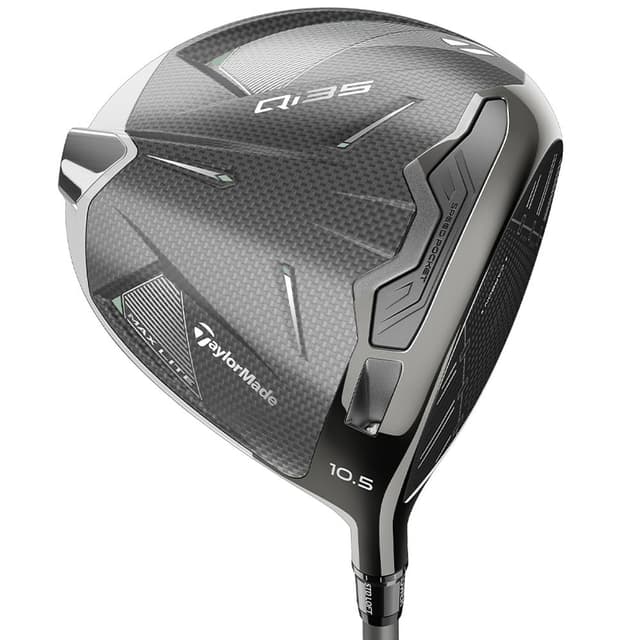
TaylorMade Qi35 Max
TaylorMade · 2025 · MSRP $600
The most forgiving driver we've ever tested. The Qi35 Max combines explosive ball speed with a massive sweet spot that rescues off-center hits.

Why These Three
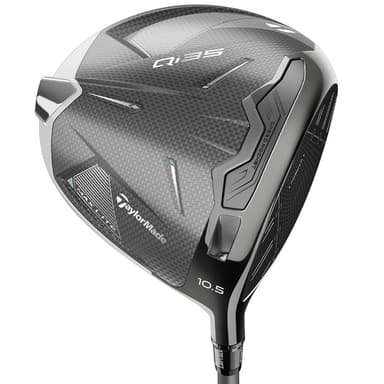
TaylorMade Qi35 Max
TaylorMade · 2025
Best for: Most golfers seeking maximum forgiveness
The most forgiving driver we've ever tested. The Qi35 Max combines explosive ball speed with a massive sweet spot that rescues off-center hits.
- +Best-in-class forgiveness
- +Explosive ball speed across the face
- +Adjustable hosel with 4° of loft change
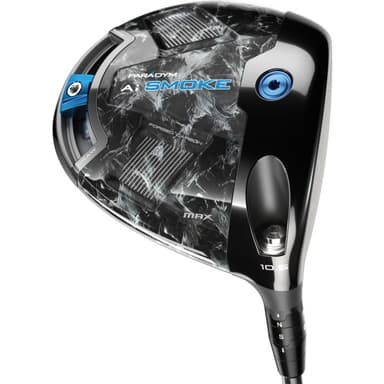
Callaway Paradym Ai Smoke Max
Callaway · 2025
Best for: Players who want the tightest shot dispersion
AI-designed face delivers the tightest dispersion we measured. A seriously smart driver that optimizes launch on every swing.
- +Tightest dispersion in testing
- +AI-optimized face design
- +Excellent stability on mis-hits
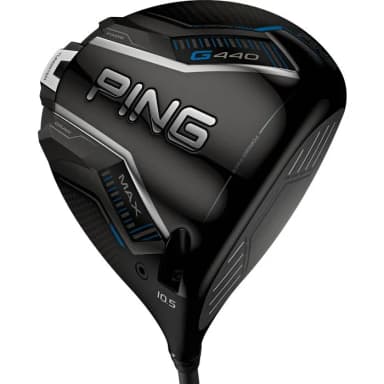
Ping G440 Max 10K
Ping · 2025
Best for: High-handicappers seeking max stability
Ping pushes MOI to its limit. The G440 Max 10K is built for golfers who want the driver to do the work — just swing and let physics handle the rest.
- +Highest MOI driver available
- +Incredibly stable at impact
- +Forgiving on heel and toe misses
Complete Rankings
| Rank | Product | Rating | Best For | MSRP | |
|---|---|---|---|---|---|
| 1 |  TaylorMade Qi35 Max TaylorMade · 2025 | 9.4/10 | Most golfers seeking maximum forgiveness | $600 | Check Price |
| 2 |  Callaway Paradym Ai Smoke Max Callaway · 2025 | 9.2/10 | Players who want the tightest shot dispersion | $600 | Check Price |
| 3 |  Ping G440 Max 10K Ping · 2025 | 9.1/10 | High-handicappers seeking max stability | $600 | Check Price |
| 4 |  Titleist GT2 Titleist · 2025 | 9/10 | Low-handicap players who want workability | $600 | Check Price |
| 5 |  Cobra Darkspeed X Cobra · 2025 | 8.7/10 | Value-conscious golfers wanting premium performance | $450 | Check Price |
Prices shown are MSRP and may vary by retailer. Last updated Mar 2026. We may earn a commission when you buy through links on this page, at no extra cost to you.
How to Choose the Right Driver
Quick Recommendation by Skill Level
Beginner
High-loft (10.5-12°), max forgiveness, lightweight shaft
Improving
Adjustable loft, mid-weight shaft, draw bias option
Low Handicap
Low-spin head, stiff/X-stiff shaft, neutral or adjustable
Match Your Swing Speed
Driver performance hinges on swing speed. Under 90 mph, prioritize high-loft heads (10.5°–12°) and lightweight shafts. Between 90–105 mph, you have the widest range of options—focus on forgiveness and adjustability. Over 105 mph, lower lofts (8°–9.5°) and stiffer shafts will help control spin and maximize distance.
Forgiveness vs. Workability
Higher MOI (moment of inertia) means more forgiveness on off-center hits, but less ability to shape shots. Most golfers benefit from maximum MOI—only single-digit handicappers who actively work the ball should consider lower-MOI heads. When in doubt, choose forgiveness.
Adjustability Matters
Modern drivers offer loft sleeves and movable weights. A 4° adjustable hosel lets you fine-tune launch angle without buying a new club. Movable weights let you set draw or fade bias. These features add real value if you’re willing to experiment on the range.
Budget Considerations
Premium drivers from the current year cost $500–600. Last year’s models often drop to $350–400 and perform within 1–2 yards of current tech. For budget shoppers, a prior-generation flagship outperforms a current-year budget driver every time.
Driver Specs Explained
- MOI (Moment of Inertia)
- Measures the clubhead’s resistance to twisting on off-center hits. Higher MOI means more forgiveness. Top 2025 drivers exceed 10,000 g·cm².
- Loft
- The angle of the clubface relative to the shaft. More loft (10.5°–12°) launches higher with more spin—better for slower swing speeds. Less loft (8°–9.5°) produces a lower, more penetrating flight for faster swingers.
- Adjustable Hosel
- A mechanism that lets you change the loft by 1–4 degrees and sometimes the lie angle. This fine-tunes launch conditions without buying a new driver.
- CG (Center of Gravity)
- Where the mass is concentrated in the head. Lower CG promotes higher launch. Back CG increases forgiveness. Forward CG reduces spin for more distance.
- Head Size (cc)
- Volume of the clubhead measured in cubic centimeters. The USGA maximum is 460cc. Larger heads offer a bigger sweet spot and more confidence at address.
Expert Video Reviews
Different?: Old Golf Driver VS New Driver (30 Year Test)
The BEST DRIVERS IN GOLF (for every handicap!)
Is THIS the best driver of 2023? - PING G430 Driver Review
Tommy Fleetwood's BEST driver drill 👀
My Qi10 Max Didn't SURVIVE This Driver Fitting
Driver vs 3 wood
Frequently Asked Questions
How often should I replace my driver?
Does a more expensive driver actually go farther?
What loft should I choose?
Should I get fitted for a driver?
What’s the difference between a regular and stiff shaft?
Get Our Next Driver Update
We'll send you head-to-head test results and new driver rankings as soon as they drop.
More Equipment Rankings
Find the best hybrid golf clubs for versatility and forgiveness from tee to green.
Training AidsThe best golf training aids to improve your swing, putting, speed, and overall game. From swing trainers to alignment tools, these top-rated practice aids help golfers of all levels build better habits.
Push CartsTop-rated golf push carts for 2025. From lightweight 3-wheel folders to feature-loaded 4-wheel models, find the best walking cart for your game and budget.
Golf ShoesThe best golf shoes of 2025 tested and reviewed. From tour-level spiked models to casual spikeless designs, find the perfect pair for comfort, traction, and style on the course.
Golf BagsOur experts tested and ranked the best golf bags for 2025–2026, from lightweight stand bags to fully loaded cart bags. Find the perfect bag for your game and budget.
Golf GPSThe best golf GPS watches, handhelds, and speakers to get accurate yardages on every shot.
IronsCompare the best iron sets for game improvement, distance, and feel.
Golf BallsDiscover which golf ball matches your swing speed and playing style.
PuttersFind the best putters for improved accuracy and feel on the greens.
RangefindersFind the best golf rangefinders for precise distance measurement on the course.
WedgesFind the best golf wedges for spin, control, and versatility around the greens.
Fairway WoodsFind the best fairway woods for distance, forgiveness, and versatility off the tee and fairway.