Hole 16 at Hazeltine National Golf Club
- Par
- 4
- Yardage
- 402 yds
- Stroke index
- 0
- Hazards
- Water
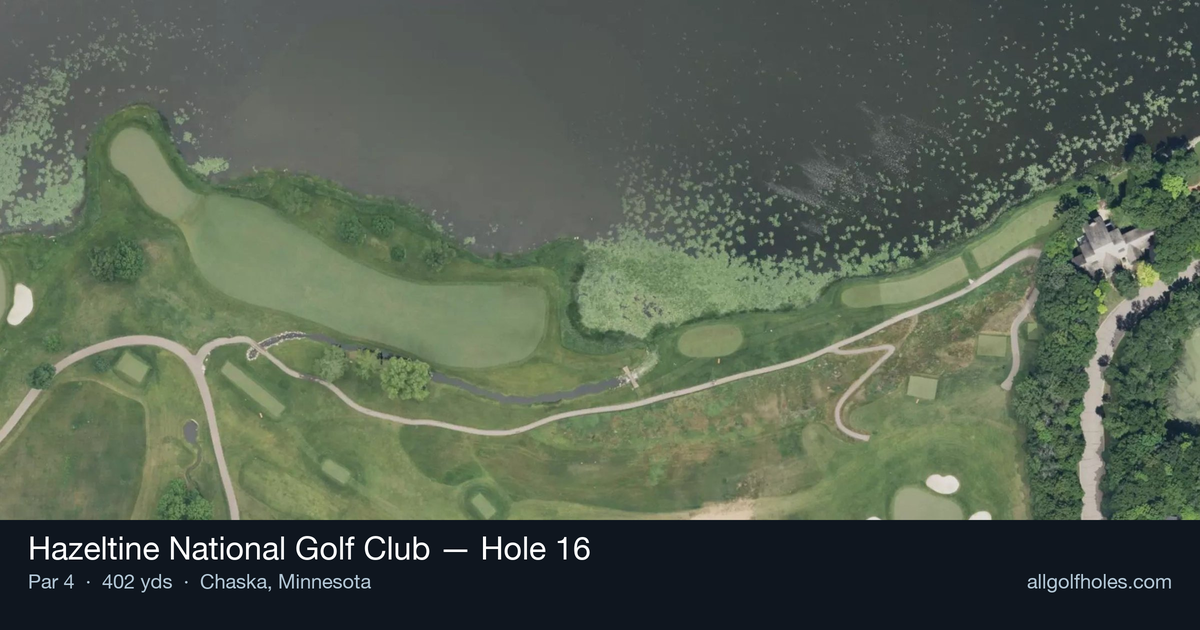
Aerial source not provided
Green size: 33 yds deep × 38 yds wide
Scorecard yardage is for Championship tees. The aerial shows its labeled reference position; distance rings measure to the green.
Championship tees · Par 4 · 402 yards
The plan for No. 16
Hazeltine's signature 16th hole offers one of golf's most breathtaking and intimidating tee shots, requiring a precise carry over the pristine waters of Lake Hazeltine. This stunning par-4 has become the course's calling card, demanding both courage and precision as it curves along the lake's shoreline in one of the property's windiest corridors.
Off the tee
The tee shot strategy centers on executing a controlled water carry with a slight fade to find the optimal landing zone. Your target line should favor the left side of the fairway to account for the natural fade and provide the best angle for your approach shot. The sloping landing zone means precision trumps distance - focus on finding the fairway rather than maximizing yardage. Club selection depends on your carry distance capability and confidence level. Players who can comfortably carry the water should consider a driver with controlled tempo, while those uncertain about the carry should opt for a fairway wood or hybrid that guarantees clearing the hazard. The key is committing fully to your club choice and swing with confidence.
Approach & recovery
The approach shot plays into what's known as the windiest corridor on the property, making club selection particularly challenging. The small green demands accuracy, and with water lurking nearby, precision becomes paramount. Favor the center of the green regardless of pin position, as the putting surface's compact size makes any part of the green a reasonable target. Wind assessment is crucial here - take extra time to read conditions and consider taking one more club than the yardage suggests. The green's tendency to reject misplaced approaches toward the water means conservative targeting pays dividends. A mid-iron to long-iron approach (depending on your tee shot position and conditions) should focus on solid contact over aggressive pin-hunting.
On the green
The small green size means most putts will be relatively straight, but don't underestimate the subtle breaks that can affect shorter putts. Pay attention to the green's orientation relative to the lake, as putts often break toward the water. The exposed location means wind can affect even shorter putts, so maintain your putting stroke tempo and commit to your read. Speed control becomes critical on this compact surface - leaving putts short is preferable to running them past the hole and potentially off the green. Focus on getting your first putt close rather than being overly aggressive with birdie attempts.
Watch for
- Water along the hole
Hole 16 Green Complex
Mapped green boundary
Green size: 6,068 sq ft
How did Hole 16 play?
How did this hole play today?
Frequently asked questions
Yardage reference: Championship tees · 402 yards.
What's the best strategy off the tee?
↓
For this 402-yard par 4, most players will hit driver to set up a comfortable approach.
How difficult is hole 16?
↓
This hole is a moderate challenge for most golfers. Key challenges include: water in play.
What hazards should I watch out for on hole 16?
↓
Key hazards include: water at 248.9 yards. Plan your shots to avoid these trouble spots.
How big is the green on hole 16?
↓
The green is fairly large with multiple pin positions. Lag putting becomes important on longer putts.