
Pro V1
2025 · 3-piece · Comp 87 · $58/doz
- Construction
- 3-piece
- Compression
- 87
- Release
- 2025
- MSRP
- $58/doz
Discover which golf ball matches your swing speed and playing style.
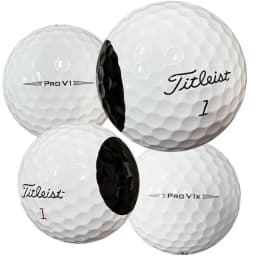
Our #1 Pick
Titleist Pro V1
As an Amazon Associate and affiliate partner (including Sovrn, Awin, and StubHub), we earn from qualifying purchases. Our rankings are based on independent research; affiliate relationships do not influence our recommendations.
How we rank: Performance data · Expert testing · No pay-for-placement · Updated quarterly
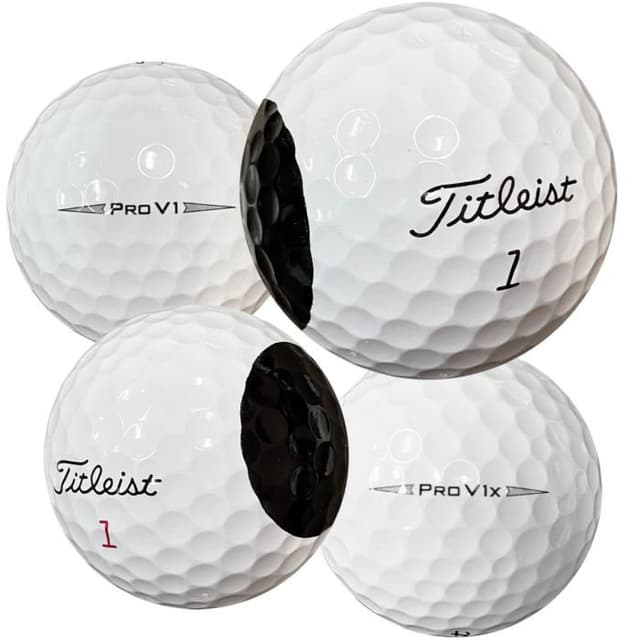
Titleist · 2025 · MSRP $55
Still the gold standard. The 2025 Pro V1 refines the formula with a slightly softer feel and even more consistent flight — the ball every other ball is measured against.
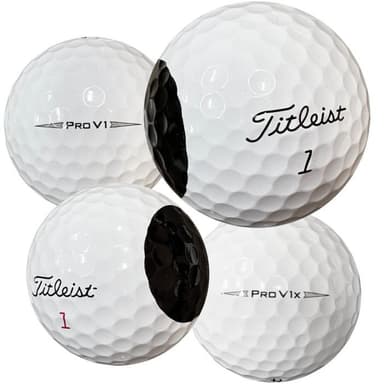
Titleist · 2025
Best for: Golfers with swing speeds above 90 mph who want total control
Still the gold standard. The 2025 Pro V1 refines the formula with a slightly softer feel and even more consistent flight — the ball every other ball is measured against.
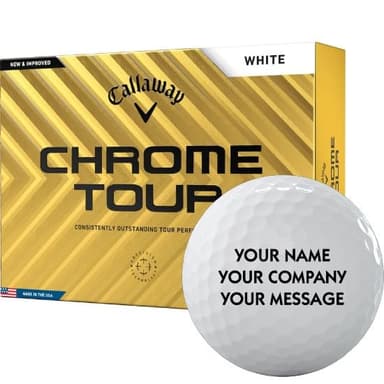
Callaway · 2025
Best for: Competitive golfers wanting Pro V1 performance at lower cost
The closest challenger to the Pro V1. Seamless Tour Aero cover reduces drag for longer carry, and the greenside spin nearly matches the Titleist.
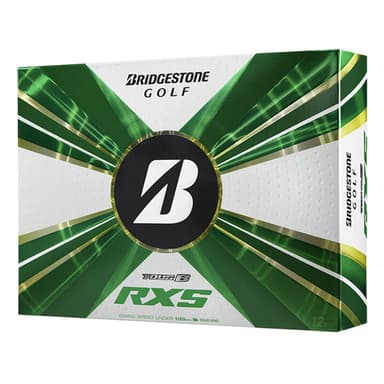
Bridgestone · 2025
Best for: Moderate swing speed golfers (85-100 mph) wanting tour spin
The thinking golfer's ball. REACTIV cover gets firm on full shots for distance, then soft around the greens for spin. Smart technology, real results.
Side-by-side specs for every ranked ball. Lower compression generally feels softer and suits slower swing speeds; higher compression rewards faster swings with more distance off the tee.
| Ball | Compression | Cover | Layers | Spin | Feel | $/Dozen | |
|---|---|---|---|---|---|---|---|
Titleist Pro V1 Titleist | 87 | Urethane | 3 | Mid-high | Soft-medium | $55 | Check Price |
Callaway Chrome Tour Callaway | 75 | Urethane | 4 | Mid | Soft | $50 | Check Price |
Bridgestone Tour B RXS Bridgestone | 66 | REACTIV iQ urethane | 3 | Mid-high greenside | Very soft | $48 | Check Price |
TaylorMade TP5x TaylorMade | 97 | Urethane | 5 | Low full-swing | Firm | $50 | Check Price |
Kirkland Signature V3 Kirkland | 80 | Urethane | 4 | Mid | Medium | $28 | Check Price |
Titleist Pro V1
Titleist
87
compression
Bridgestone Tour B RXS
Bridgestone
66
compression
TaylorMade TP5x
TaylorMade
97
compression
Compression values are widely-published industry figures and approximate; manufacturers don't always disclose exact numbers and they vary slightly year-to-year.
| Rank | Product | Rating | Best For | MSRP | |
|---|---|---|---|---|---|
| 1 |  Titleist Pro V1 Titleist · 2025 | 9.5/10 | Golfers with swing speeds above 90 mph who want total control | $55 | Check Price |
| 2 |  Callaway Chrome Tour Callaway · 2025 | 9.2/10 | Competitive golfers wanting Pro V1 performance at lower cost | $50 | Check Price |
| 3 |  Bridgestone Tour B RXS Bridgestone · 2025 | 8.9/10 | Moderate swing speed golfers (85-100 mph) wanting tour spin | $48 | Check Price |
| 4 |  TaylorMade TP5x TaylorMade · 2025 | 8.8/10 | Fast-swinging golfers prioritizing distance | $50 | Check Price |
| 5 |  Kirkland Signature V3 Kirkland · 2025 | 8.5/10 | Value-focused golfers who want real urethane performance | $28 | Check Price |
Prices shown are MSRP and may vary by retailer. Last updated May 2026. We may earn a commission when you buy through links on this page, at no extra cost to you.
See how each brand's current models stack up against each other — trajectory and spin the way the manufacturer positions them. Pick a brand, compare side-by-side, then check live pricing.
2025 · 3-piece · Comp 87 · $58/doz

2025 · 4-piece · Comp 96 · $58/doz

2026 · 4-piece · Comp 100 · $58/doz

2026 · 3-piece · Comp 80 · $50/doz
Swipe sideways to compare all models.
Attributes sourced from manufacturer sites. Scales show comparison within this brand's lineup only. Not intended to compare across brands. Retail prices subject to change.
Beginner
Low compression (under 80), Surlyn cover, 2-piece construction
Improving
Mid compression (80-90), 3-piece, urethane or ionomer
Low Handicap
Tour-level, high compression (90+), urethane, 4+ piece
Golf ball compression determines how efficiently you transfer energy at impact. Under 85 mph swing speed, low-compression balls (under 80) maximize distance. Between 85–105 mph, mid-compression (80–90) gives the best balance. Over 105 mph, high-compression (90+) prevents the ball from deforming too much and losing energy.
Urethane-covered balls spin more around the greens, giving you stopping power on approach shots and check on chips. Surlyn (ionomer) covers are more durable and cheaper but produce less spin. If you frequently play approach shots to firm greens, urethane is worth the premium.
2-piece balls prioritize distance with minimal spin. 3-piece balls add a mantle layer for spin separation (low spin off the driver, higher spin with wedges). 4-5 piece balls optimize each layer for different shot types. More layers generally mean more performance nuance—but only if your swing speed can activate them.
Premium balls cost $45–55/dozen. If you lose 3+ balls per round, the math doesn’t work—a $28 Kirkland or $25 Maxfli performs nearly as well and halves your cost per round. Invest in premium balls when your game is consistent enough to keep them in play.
We'll send you compression testing results and value picks as soon as new balls hit our lab.
Find the best hybrid golf clubs for versatility and forgiveness from tee to green.
Training AidsThe best golf training aids to improve your swing, putting, speed, and overall game. From swing trainers to alignment tools, these top-rated practice aids help golfers of all levels build better habits.
Push CartsTop-rated golf push carts for 2025. From lightweight 3-wheel folders to feature-loaded 4-wheel models, find the best walking cart for your game and budget.
Golf ShoesThe best golf shoes of 2025 tested and reviewed. From tour-level spiked models to casual spikeless designs, find the perfect pair for comfort, traction, and style on the course.
Golf BagsOur experts tested and ranked the best golf bags for 2025–2026, from lightweight stand bags to fully loaded cart bags. Find the perfect bag for your game and budget.
Golf GPSThe best golf GPS watches, handhelds, and speakers to get accurate yardages on every shot.
DriversFind the best drivers for maximum distance and forgiveness off the tee.
IronsCompare the best iron sets for game improvement, distance, and feel.
PuttersFind the best putters for improved accuracy and feel on the greens.
RangefindersFind the best golf rangefinders for precise distance measurement on the course.
WedgesFind the best golf wedges for spin, control, and versatility around the greens.
Fairway WoodsFind the best fairway woods for distance, forgiveness, and versatility off the tee and fairway.