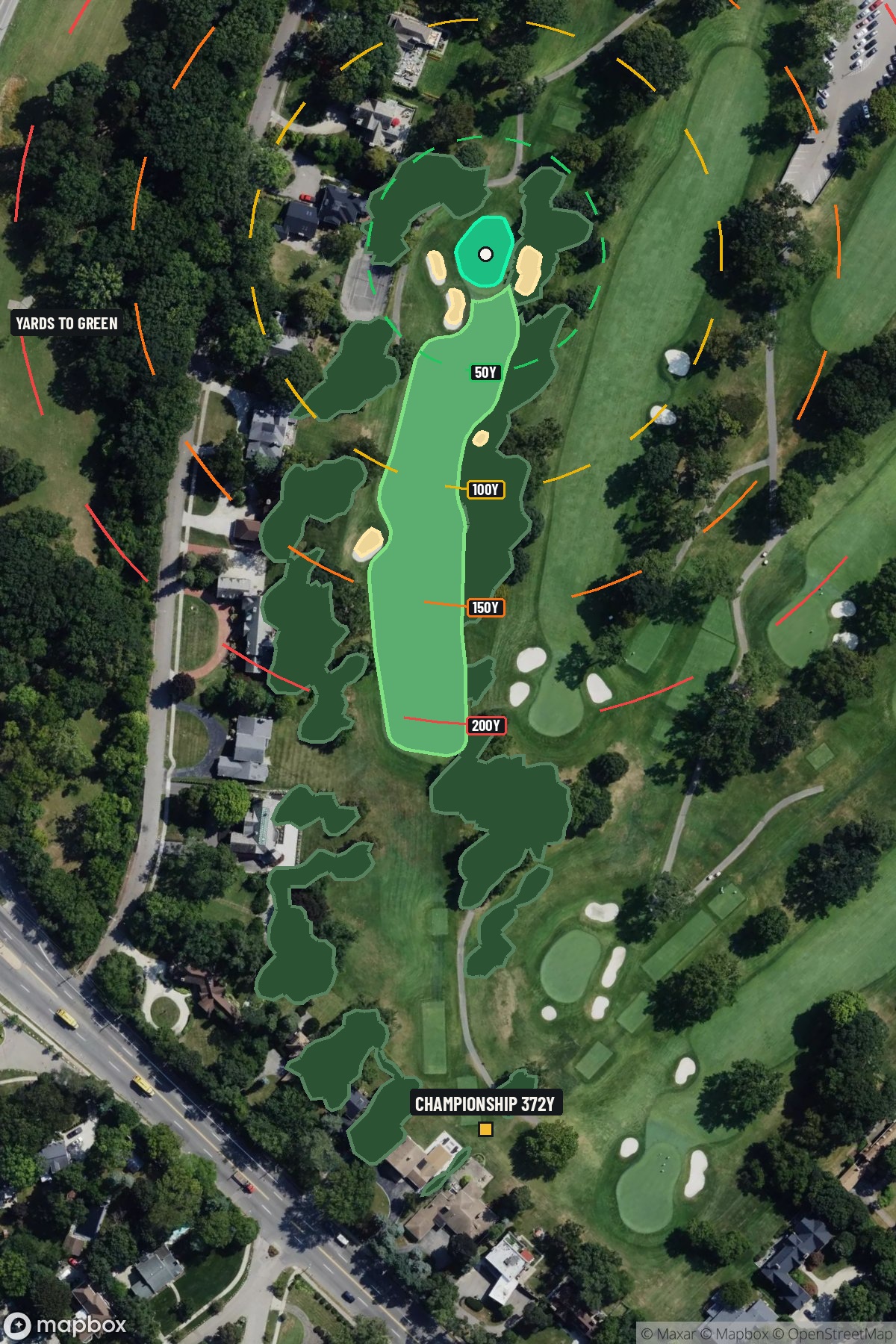
Hole 6 of 18 · Highland Park, Michigan

Hole 6 at Detroit Golf Club (North)

Par
4
Yards
372
Handicap
9
Bunkers
5
Hole 6 aerial at Detroit Golf Club (North)
Map distances from Championship tee · 372 yds

The map's printed distances are measured from the Championship tee to the green; they do not move when you change tees.

Green size: 31 yds deep × 25 yds wide

Mapbox Satellite composite · capture date not provided. Green at the top.

Where this map comes from

Satellite photo
Date not published
Mapbox satellite
Green contours
2017 survey
USGS lidar survey
Report a map problem
100%
Hole 6 aerial at Detroit Golf Club (North)

The plan for No. 6

The play: The sixth hole at Detroit Golf Club (North) showcases Donald Ross's timeless design philosophy in a deceptively challenging 372-yard par 4. This straight-away hole demands precision over power, with strategic placement taking precedence on the tee shot. The generous fairway initially appears inviting, but the approach reveals Ross's genius - a small, undulating green that punishes anything but the most accurate iron play. Without significant hazards to distract, golfers must focus entirely on distance control and green reading. The putting surface's subtle contours create multiple pin positions that can dramatically alter scoring opportunities. This hole epitomizes classic American golf architecture, where strategic thinking and execution matter more than raw distance, making it a true test of golf fundamentals in the heart of Michigan.

Shot by shot

  1. Off the tee

    The tee shot strategy centers on positioning for the optimal approach angle. With 372 yards to work with, most players will benefit from a controlled drive that finds the center of the fairway rather than maximum distance. A well-struck driver or strong 3-wood should leave a comfortable approach shot of 100-130 yards, depending on conditions. The target line should favor the center-left portion of the fairway, as this typically provides the best angle into Ross-designed greens. Avoid the temptation to overpower this hole - course management and accuracy will serve you better than trying to get as close to the green as possible.

  2. Approach & recovery

    The approach shot is where this hole reveals its true character. With a small green typical of Ross design, precision becomes critical. A short iron or wedge should be the result of a well-executed tee shot, but don't let the shorter club fool you into complacency. Focus on hitting the center of the green rather than attacking pins, especially when the flag is tucked near edges. Ross greens are known for their subtle undulations and strategic bunkering, so even though major hazards aren't present, the green's size and contours provide natural defense. Club selection should account for any prevailing wind conditions that are common on this Michigan course.

  3. On the green

    The small green demands respect with your putter. Ross-designed greens typically feature subtle breaks and strategic slopes that can confound even experienced players. Take time to read the green carefully, as seemingly simple putts can break more than expected. When facing longer putts, focus on lag putting to ensure two-putt success rather than being overly aggressive. The small target means that approach shots leaving long putts should be avoided when possible, making the approach shot strategy even more critical. ## RISK VS REWARD This hole offers a classic risk/reward scenario in club selection and target selection. The reward for precision is a genuine birdie opportunity with a short iron approach to a small target. However, the risk of missing the small green or leaving difficult recovery shots makes aggressive play potentially costly. The smart play is to embrace the scoring opportunity while respecting the design. A well-managed par is always preferable to a poorly executed attempt at birdie that leads to bogey or worse. ## DIFFERENT SKILL LEVELS **Low Handicap Players:** Should view this as a birdie opportunity while respecting the precision required. Focus on hitting quality shots rather than perfect shots, and don't be afraid to aim for the center of the green even with short irons. **High Handicap Players:** This hole offers an excellent chance to score well by playing within your abilities. Use whatever club gives you confidence off the tee, even if it's a hybrid or long iron. The key is finding the fairway and leaving yourself a comfortable distance for your approach capabilities. Don't let the shorter yardage tempt you into overly aggressive play. **Mid Handicap Players:** Strike the balance between aggression and caution. A solid drive followed by a committed approach shot to the center of the green should yield consistent results. This is an excellent hole to practice course management skills that will serve you throughout the round. The 6th hole at Detroit Golf Club North rewards thoughtful golf strategy over power, making it a perfect example of why Donald Ross remains one of golf's most revered architects.

  4. Watch for

    • Course conditioning and mapped hazards may affect line selection; confirm from the aerial.

The green on No. 6

Mapped boundary
Wide × deepyards
25×31
Areasq ft
4,769
Golfer feedback

How did Hole 6 play?

⚡ Quick Golfer Pulse

How did this hole play today?

1-tap anonymous vote

Frequently asked questions

Yardage reference: Championship tees · 372 yards.

What's the best strategy off the tee?

↓

For this 372-yard par 4, most players will hit 3-wood or driver to set up a comfortable approach.

How difficult is hole 6?

↓

This hole is a good scoring opportunity for most golfers. Key challenges include: heavily bunkered.

How big is the green on hole 6?

↓

The green is medium-sized with moderate targets. Pay attention to pin placement when selecting your approach club.

What's a good score on hole 6?

↓

This hole is a medium-length test where par is a solid result. A straightforward par 4 where course management pays off.