Hole 18 of 18 · Highland Park, Michigan

Hole 18 at Detroit Golf Club (North)

Par
4
Yards
420
Handicap
8
Bunkers
4
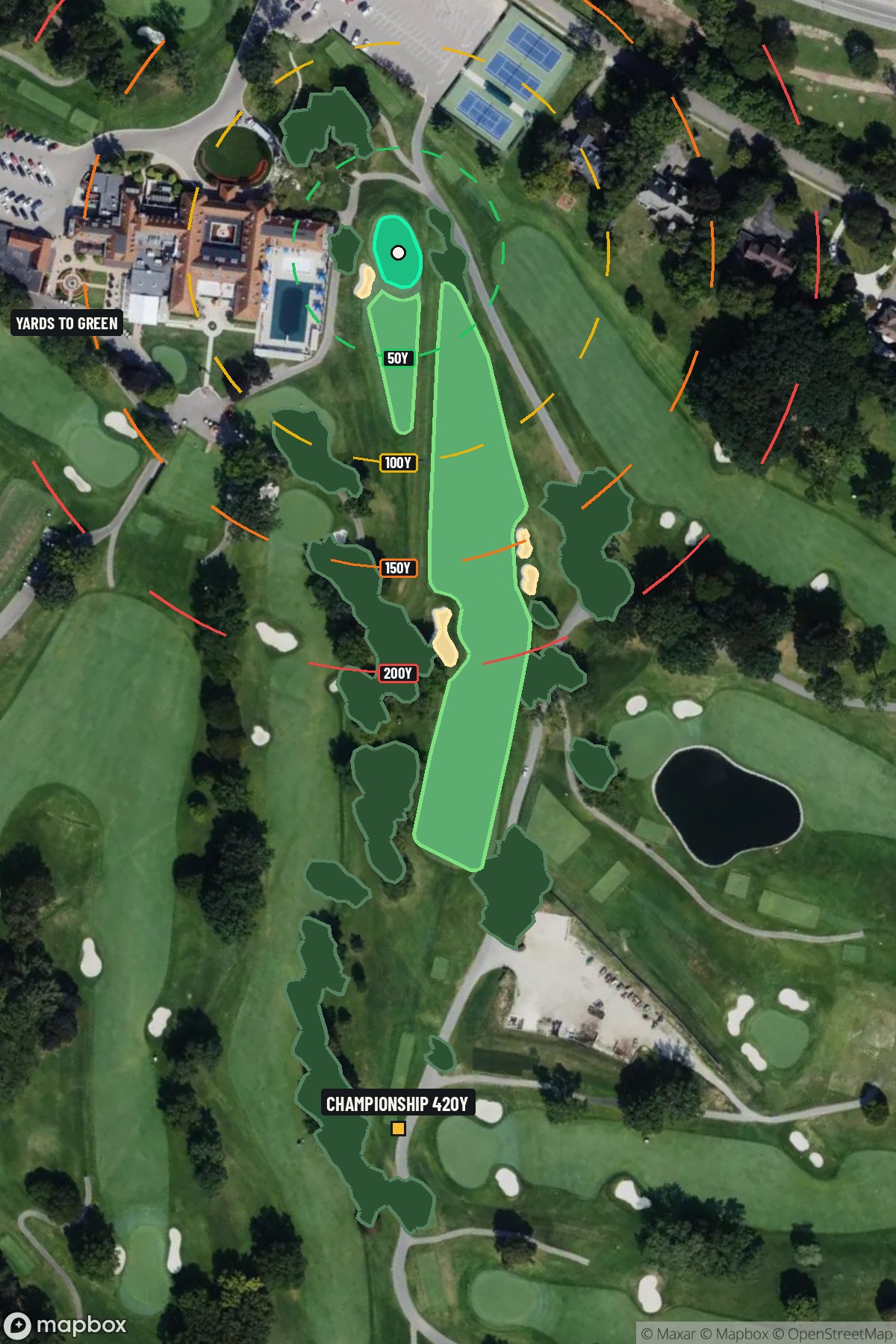
Hole 18 aerial at Detroit Golf Club (North)
Map distances from Championship tee · 420 yds

The map's printed distances are measured from the Championship tee to the green; they do not move when you change tees.

Green size: 35 yds deep × 24 yds wide

Mapbox Satellite composite · capture date not provided. Green at the top.

Where this map comes from

Satellite photo
Date not published
Mapbox satellite
Green contours
2017 survey
USGS lidar survey
Report a map problem
100%
Hole 18 aerial at Detroit Golf Club (North)

The plan for No. 18

The play: The 18th hole at Detroit Golf Club (North) provides a fitting finale to Donald Ross's masterful design, demanding both precision and nerve as players navigate this 420-yard par 4 under tournament pressure. This straight-away finishing hole epitomizes Ross's philosophy of strategic golf architecture, where placement trumps power. The tee shot requires careful consideration of wind conditions and pin position, as the approach shot into the small, undulating green becomes increasingly challenging from wayward drives. With minimal hazards to distract, the hole's difficulty lies in its deceptive simplicity and the psychological pressure of closing out a round on this storied course that has hosted PGA Tour professionals during the Rocket Mortgage Classic. The green's subtle contours and compact size reward accurate iron play while punishing anything less than committed execution.

Shot by shot

  1. Off the tee

    Your tee shot strategy should prioritize finding the optimal angle for your approach to the small green. With no significant hazards to navigate, club selection becomes about positioning rather than distance. Most players will benefit from a controlled driver or strong 3-wood that leaves a comfortable approach distance. The key is avoiding the temptation to overpower this hole - focus on finding the center of the fairway with a smooth, controlled swing. Given Detroit's typical wind conditions, factor in any crosswinds that might affect your ball flight and target line accordingly.

  2. Approach & recovery

    The approach shot to this small green is where the hole's true challenge reveals itself. Donald Ross greens are renowned for their subtle contours and demanding precision, and this target will punish wayward shots despite the absence of obvious hazards. Club selection should err on the side of control - a smooth mid-iron to long-iron depending on conditions will serve you better than forcing a shorter club. Aim for the center of the green regardless of pin position, as the small target leaves little room for error. Pay attention to any slopes or tiers visible on the putting surface, as these will influence both your approach trajectory and subsequent putting strategy.

  3. On the green

    Expect typical Donald Ross green characteristics - subtle breaks that can be deceiving and multiple tiers that create challenging two-putt scenarios. The small size means precision putting becomes paramount. Study the green carefully from your approach, looking for the general slope and any ridge lines that might affect ball roll. Conservative putting strategy works best here - focus on lag putting to the correct tier rather than aggressive runs at the pin. Speed control becomes more critical than line on these smaller, contoured surfaces. ## RISK VS REWARD This hole offers a different type of risk/reward equation than many modern designs. The reward comes from patience and precision rather than aggressive play. The risk lies in trying to force shots on a hole that demands acceptance of par as a good score. Players who attack pins on the small green or try to overpower their way to shorter approach distances often find themselves struggling with difficult recovery shots or challenging putts. ## DIFFERENT SKILL LEVELS **High-handicap players** should embrace this hole's strategic nature by playing conservatively from tee to green. Use whatever club gives you confidence off the tee, even if it's a hybrid or long iron. Focus on hitting the green with your approach rather than getting close to the pin. Two-putt strategy on the green will serve you well. **Low-handicap players** can be more aggressive with distance control while maintaining respect for the small target. Your superior short game skills allow for more precise approaches, but don't let confidence override the hole's demand for precision. Use your course management skills to identify the best quadrant of the green based on pin position and your natural ball flight. This finishing hole exemplifies why Detroit Golf Club has hosted professional tournaments - it rewards complete golf skills and punishes mental lapses, making it a worthy conclusion to your round on this Donald Ross masterpiece.

  4. Watch for

    • Course conditioning and mapped hazards may affect line selection; confirm from the aerial.

The green on No. 18

Mapped boundary
Wide × deepyards
24×35
Areasq ft
5,190
Golfer feedback

How did Hole 18 play?

⚡ Quick Golfer Pulse

How did this hole play today?

1-tap anonymous vote

Frequently asked questions

Yardage reference: Championship tees · 420 yards.

What's the best strategy off the tee?

↓

For this 420-yard par 4, most players will hit driver to set up a comfortable approach.

How difficult is hole 18?

↓

This hole is a moderate challenge for most golfers. Key challenges include: heavily bunkered.

How big is the green on hole 18?

↓

The green is medium-sized with moderate targets. Pay attention to pin placement when selecting your approach club.