Hole 17 of 18 · Highland Park, Michigan

Hole 17 at Detroit Golf Club (North)

Par
5
Yards
577
Handicap
4
Bunkers
7
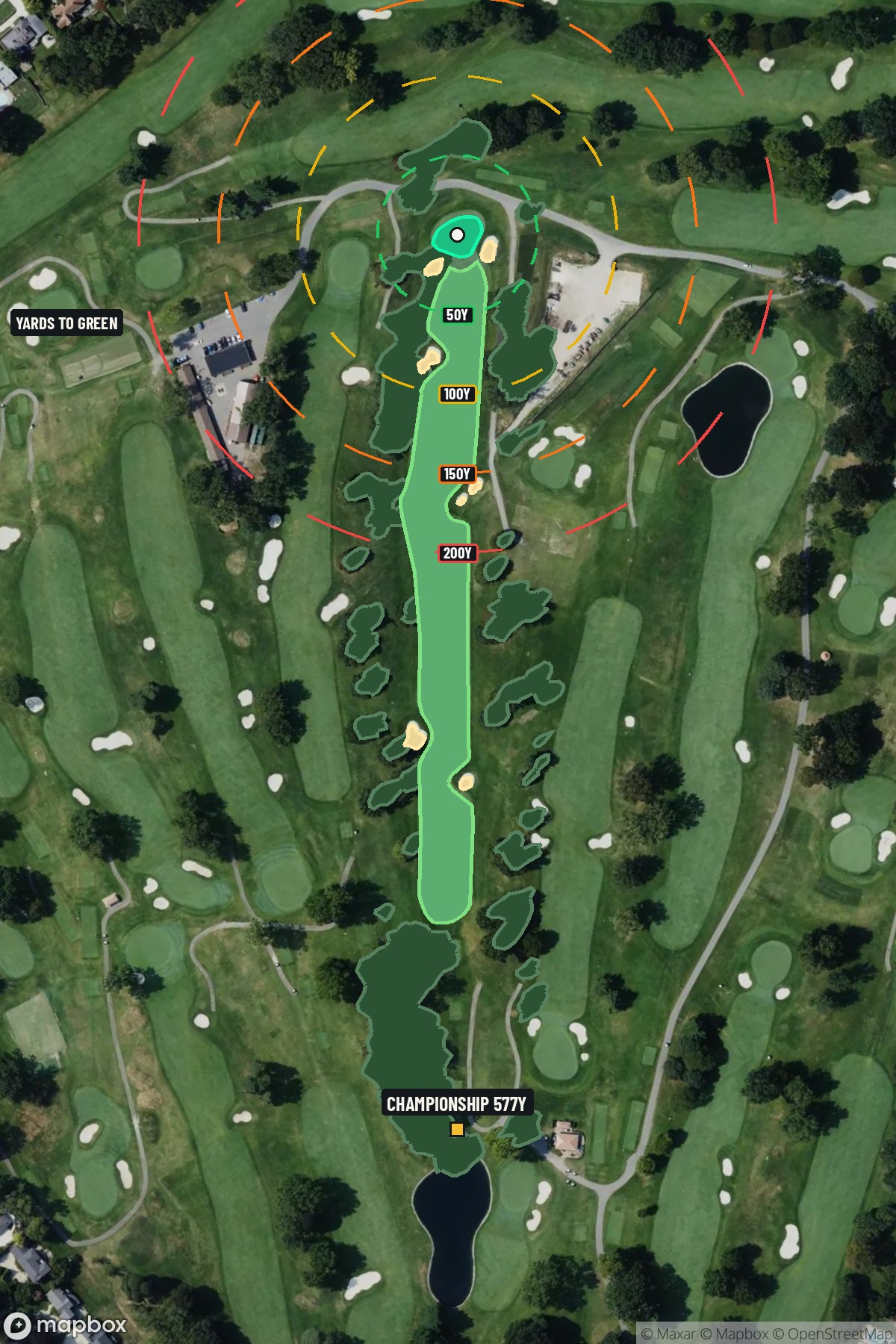
Hole 17 aerial at Detroit Golf Club (North)
Map distances from Championship tee · 577 yds

The map's printed distances are measured from the Championship tee to the green; they do not move when you change tees.

Green size: 27 yds deep × 33 yds wide

Mapbox Satellite composite · capture date not provided. Green at the top.

Where this map comes from

Satellite photo
Date not published
Mapbox satellite
Green contours
2017 survey
USGS lidar survey
Report a map problem
100%
Hole 17 aerial at Detroit Golf Club (North)

The plan for No. 17

The play: The penultimate hole at Detroit Golf Club (North) hole 17 presents a classic Donald Ross par 5 that demands both power and precision across its 577 yards. This straight-away finisher showcases the legendary architect's timeless design philosophy, offering multiple strategic options as players navigate toward the compact, well-defended green complex. The absence of major water hazards doesn't diminish the challenge, as Ross's subtle contouring and strategic bunkering reward thoughtful course management over pure distance. Long hitters face the tantalizing decision of whether to attack in two, while shorter players must plot their way methodically down the fairway. As one of the featured holes in the Rocket Classic, this penultimate test serves as a crucial scoring opportunity before the final hole, where Ross's masterful green complex demands pinpoint approach shots to secure birdie chances.

Shot by shot

  1. Off the tee

    Your tee shot strategy should prioritize finding the fairway over maximum distance. Given the hole's straight layout, aim for the center of the fairway with a controlled swing that ensures accuracy. Depending on conditions and your comfort level, consider using a 3-wood or hybrid off the tee to guarantee finding the short grass. The target line should be down the middle, avoiding any temptation to cut corners or gain extra distance at the expense of position. Focus on a smooth tempo and solid contact rather than trying to bomb your drive.

  2. Approach & recovery

    Your second shot becomes crucial in setting up a manageable third shot into the small green. Position yourself in the fairway at a distance that leaves you with a comfortable wedge or short iron for your approach. Most players should lay up to their preferred wedge distance, typically leaving 80-120 yards to the pin. Avoid the temptation to go for the green in two unless you're extremely confident in your long iron or fairway wood accuracy. The small green size makes precision essential, so prioritize leaving yourself the best angle and distance for your approach shot.

  3. On the green

    The small green demands pinpoint accuracy on your approach and careful attention to putting strategy. Focus on hitting your approach shot to the center of the green rather than attacking difficult pin positions. Once on the putting surface, take time to read the subtle breaks that are characteristic of Donald Ross designs. The compact size means most putts will be relatively short, but the undulations can be tricky. Play for the center of the cup on most putts, as aggressive lines on a small green can lead to lengthy comeback putts. ## RISK VS REWARD The primary risk/reward decision comes on your second shot - whether to lay up or attempt to reach the green. For most players, the reward of potentially reaching the small green doesn't justify the risk of finding trouble or leaving yourself with a difficult long approach. The smart play is to lay up to your favorite wedge distance, giving yourself the best chance at birdie while virtually eliminating the possibility of a big number. Only attempt to go for the green in two if you're playing exceptionally well and the conditions are favorable. ## DIFFERENT SKILL LEVELS **High-handicap players** should treat this as a three-shot hole from start to finish. Use a fairway wood or hybrid off the tee for accuracy, lay up with a mid-iron to your comfortable wedge distance, and focus on getting your approach shot somewhere on the green. Don't worry about pin positions - aim for the center and take your par or better. **Low-handicap players** have more flexibility in their approach but should still prioritize precision over power. You might consider going for the green in two if you're in perfect position after your drive, but the small target makes this a high-risk proposition. More often, you'll want to position your second shot at an optimal distance and angle for attacking specific pin positions with your wedge approach. The 17th hole rewards patience and precision - qualities that define successful play on Donald Ross designs. Trust your course management skills and resist the urge to force birdies through aggressive play.

  4. Watch for

    • Course conditioning and mapped hazards may affect line selection; confirm from the aerial.

The green on No. 17

Mapped boundary
Wide × deepyards
33×27
Areasq ft
5,292
Golfer feedback

How did Hole 17 play?

⚡ Quick Golfer Pulse

How did this hole play today?

1-tap anonymous vote

Frequently asked questions

Yardage reference: Championship tees · 577 yards.

Can this par 5 be reached in two?

↓

At 577 yards, A true three-shot hole for most players. Position your layup to leave a comfortable wedge distance.

How difficult is hole 17?

↓

This hole is a moderate challenge for most golfers. Key challenges include: long par 5, heavily bunkered.

How big is the green on hole 17?

↓

The green is medium-sized with moderate targets. Pay attention to pin placement when selecting your approach club.

What's a good score on hole 17?

↓

This hole is a true three-shot hole where birdie requires execution. This longer par 5 demands patience. Two good shots set up the scoring opportunity.