Hole 13 at Edgewood Tahoe G.C.
- Par
- 4
- Yardage
- 434 yds
- Stroke index
- 2
- Hazards
- 5 bunkers · Water
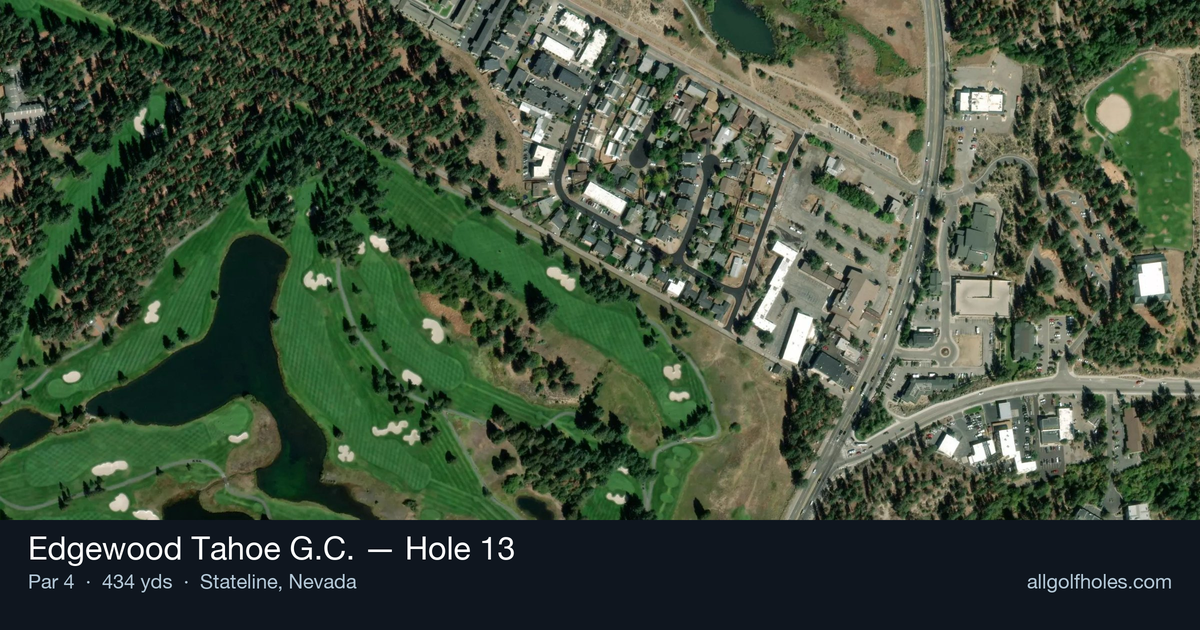
Aerial source not provided
Green size: 34 yds deep × 16 yds wide
Scorecard yardage is for Pro tees. The aerial shows its labeled reference position; distance rings measure to the green.
Pro tees · Par 4 · 434 yards
The plan for No. 13
The 13th hole at Edgewood Tahoe G.C. stands as one of the course's most demanding tests, earning its #2 handicap rating through a combination of length and elevation change. This 434-yard par 4 plays significantly longer than the scorecard suggests, as golfers must navigate a straight but challenging layout that culminates with an approach shot to a dramatically elevated green complex. The tee shot requires precision to find the optimal position in the fairway, setting up a crucial uphill approach to the small, multi-tiered green. With Lake Tahoe's stunning backdrop framing the hole, players face the dual challenge of managing the elevation gain while avoiding the treacherous slopes that can send errant shots tumbling away from the putting surface. The elevated green demands club selection mastery and precise distance control.
Off the tee
Your tee shot strategy should prioritize finding the fairway over maximum distance. With 434 yards to work with, focus on placing your drive in the optimal position for your approach rather than trying to overpower the hole. The straight layout suggests a driver or strong 3-wood, aiming for the center of the fairway to avoid any trouble areas that might not be immediately visible from the tee. Given Edgewood's tendency toward left-to-right hole movements, consider favoring the left side of your target line to account for any natural draw or fade in your ball flight. The key is leaving yourself with a manageable approach distance while maintaining a good angle to the elevated green.
Approach & recovery
The elevated green is the defining feature of this approach shot, requiring you to take extra club to account for the uphill trajectory. This small green demands precision - you cannot simply aim for the center and hope for the best. Study the pin position carefully, as the multi-tiered nature typical of Edgewood's greens means being on the wrong level can lead to challenging putts. Club selection becomes critical here. What might normally be a 7-iron approach could easily require a 6-iron or even 5-iron depending on the elevation change and pin position. The elevated target also means your ball will land softer, so don't be afraid to be aggressive with your line - just ensure you have enough club to clear the front edge.
On the green
Edgewood's greens are known for their multiple tiers and tricky slopes, and the 13th is no exception. The small green size means precision is paramount when reading putts. Pay special attention to the overall slope and how it relates to the hole location - being above the hole on these slippery surfaces can lead to challenging downhill putts. Focus on lag putting if you're outside comfortable birdie range. The elevated nature of the green and its small size mean three-putts can quickly turn a good hole into a disappointing one. Take time to read the green from multiple angles, especially noting how putts will break as they near the hole. ## RISK VS REWARD This hole offers limited risk/reward opportunities due to its straightforward design and demanding length. The primary decision point comes with tee shot club selection - do you take driver for maximum distance but risk missing the fairway, or play more conservatively with a 3-wood or long iron? The elevated green actually reduces some risk on the approach shot, as shots that might run through a ground-level green will hold better here. However, coming up short becomes more penal, making club selection crucial. ## DIFFERENT SKILL LEVELS **High-Handicap Players:** Focus on course management over heroics. Consider playing this as a three-shot hole if needed - a solid drive, layup to comfortable wedge distance, then a precise short iron to the elevated green. Don't be tempted to force a long iron or hybrid if you're not comfortable with the shot. **Low-Handicap Players:** This hole rewards precision and smart club selection. Use your course management skills to identify the optimal approach angle and don't get greedy with pin hunting if the location is tucked in a difficult area. The small green and elevation change make this a true test of iron play - trust your yardages and commit to taking enough club. The 13th hole at Edgewood Tahoe exemplifies championship golf course design, combining natural beauty with strategic challenge. Success here comes from respecting the hole's difficulty and executing two quality shots rather than trying to overpower your way to a good score.
Watch for
- Course conditioning and mapped hazards may affect line selection; confirm from the aerial.
Hole 13 Green Complex
Mapped green boundary
Green size: 3,151 sq ft
How did Hole 13 play?
How did this hole play today?
Frequently asked questions
Yardage reference: Pro tees · 434 yards.
What's the best strategy off the tee?
↓
For this 434-yard par 4, most players will hit driver to set up a comfortable approach.
How difficult is hole 13?
↓
This hole is one of the tougher holes on the course for most golfers. Key challenges include: water in play, heavily bunkered, small green.
How big is the green on hole 13?
↓
The green is small and requires precision. Expect challenging pin positions with limited room for error.
What's a good score on hole 13?
↓
This hole is a demanding hole where bogey is not unusual. This longer par 4 will test most golfers. Focus on position over distance.