Hole 1 at Forest Dunes Golf Club
- Par
- 4
- Yardage
- 399 yds
- Stroke index
- 13
- Hazards
- 7 bunkers
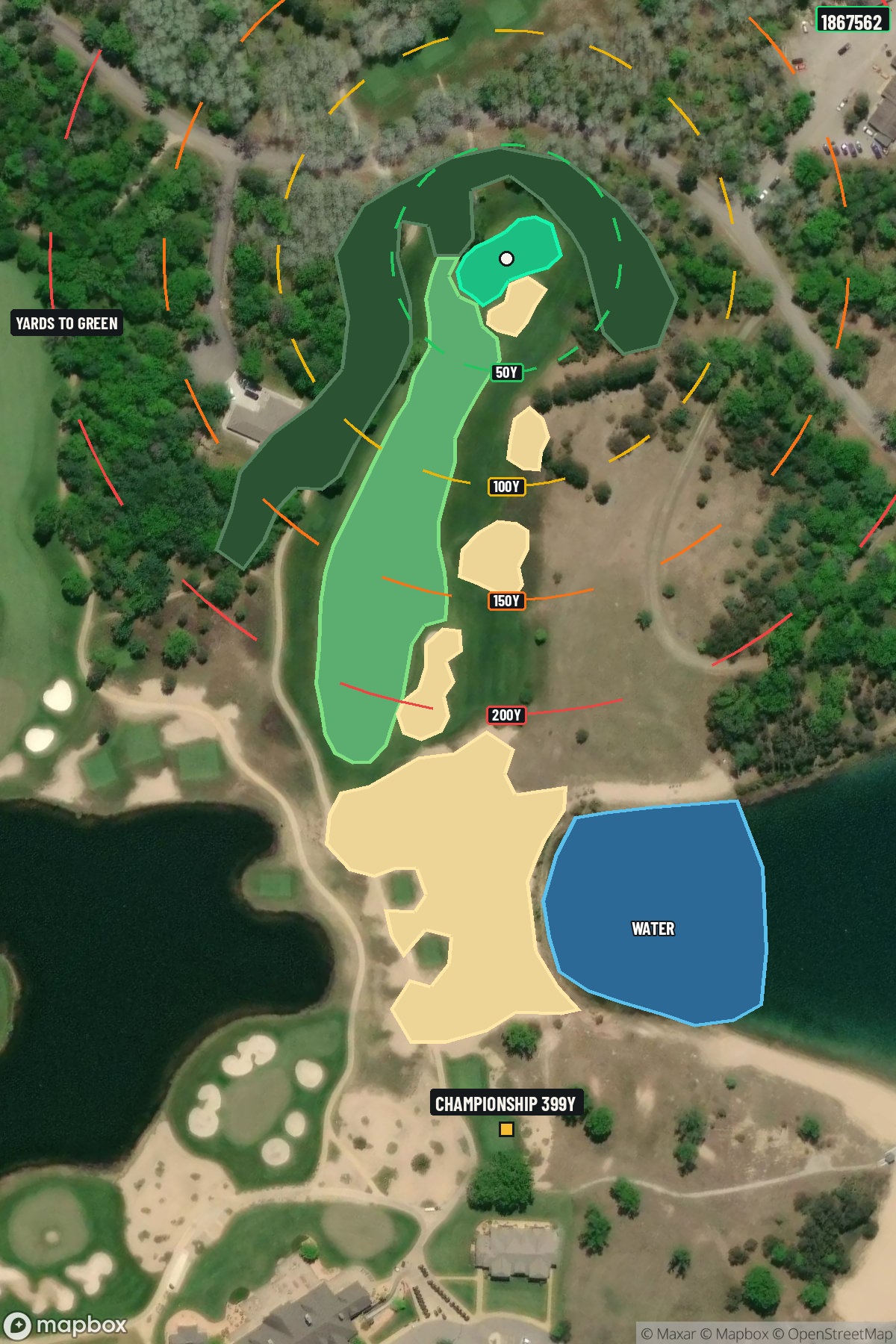 Hole 1 map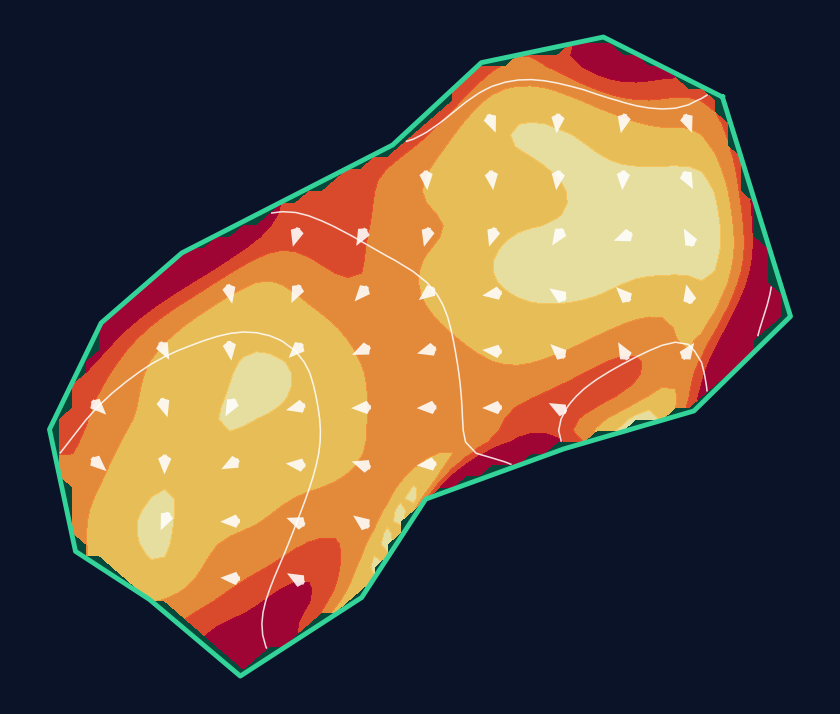
47 yd wide × 40 yd deep · 3.7 ft total elevation range
Light = gentler slope · Red = steeper slope
White lines: 1 foot of elevation. Arrows: downhill. General terrain, not a pin read.
Approach from bottom
Contour source
USGS 1 Meter 16 x69y495 MI_FEMA_2019_C19 · collection 2019–2021
Map source & reference
Mapbox Satellite composite · capture date not provided. Green at the top; the labeled map reference is below.
Scorecard yardage is for Championship tees. The aerial shows its labeled reference position; distance rings measure to the green.
Championship tees · Par 4 · 399 yards
The plan for No. 1
Forest Dunes Golf Club hole 1 opens Tom Weiskopf's masterpiece with a welcoming yet strategic par 4 that sets the tone for the heavily wooded front nine experience. At 399 yards, this straight opener threads through the towering pines of Michigan's Huron National Forest, demanding accuracy over distance from the tee shot. The tree-lined fairway provides a generous landing area for those who find the center, while errant drives quickly disappear into the dense woodland. The approach shot plays to a small, well-protected green that requires precise club selection and commitment. As the 13th handicap hole, it offers birdie opportunities for confident players while still testing course management skills. This opening hole perfectly introduces golfers to Weiskopf's parkland design philosophy, where strategy and shot-making precision take precedence over pure power.
Off the tee
Focus on finding the fairway rather than maximizing distance on this opening tee shot. The straight layout allows you to aim down the center, but the surrounding forest demands respect. Consider taking one club less than your typical driver if accuracy is a concern - a well-struck 3-wood or hybrid will leave you in perfect position for your approach. The target line should be the center of the fairway, giving you the best angle into the small green. Avoid the temptation to grip it and rip it on the first tee; smooth tempo and solid contact will serve you better here.
Approach & recovery
With the green being small, your approach shot becomes the scoring key on this hole. From the fairway, you'll likely have a mid-iron to long-iron depending on conditions and your tee shot distance. The lack of significant hazards around the green is deceiving - missing this small target will leave you with challenging up-and-downs from the surrounding areas. Aim for the center of the green and let your putting take care of the rest. Club selection should favor taking enough club to ensure you reach the putting surface, as short approaches into small greens often lead to bogey or worse.
On the green
Small greens typically feature subtle breaks that can be deceptive. Take time to read the putt from multiple angles, as what appears straight might have more movement than expected. The key is getting your first putt close to the hole, as three-putts on small greens are round-killers. Focus on solid speed control and commit to your read - tentative putting rarely works well on compact surfaces. ## RISK VS REWARD This hole offers a classic opening-hole philosophy: there's little reward for taking excessive risks, but plenty of penalty for poor execution. The reward comes from playing smart golf strategy and setting up a birdie opportunity with two solid shots. The risk lies in getting too aggressive off the tee and finding the forest, or being too casual with your approach and missing the small green. ## DIFFERENT SKILL LEVELS **High-handicap players** should prioritize course management above all else. Consider hitting 3-wood or even a long iron off the tee to ensure you find the short grass. Take one extra club on your approach and aim for the center of the green - par is an excellent score here. **Low-handicap players** can be more aggressive with driver off the tee, but should still respect the forest boundaries. Your superior ball-striking ability gives you an advantage on the approach to the small green, but don't get pin-hunting crazy on the first hole. Make your birdie attempt, but ensure you walk away with par at worst. The beauty of Tom Weiskopf's design philosophy shines through on this opening hole - it's not about overpowering the course, but about playing intelligent golf and respecting the natural environment that makes Forest Dunes such a unique Michigan golf experience.
Watch for
- Course conditioning and mapped hazards may affect line selection; confirm from the aerial.
Hole 1 Green Complex & Slope
USGS 3DEP terrain analysis
Green size: 3,046 sq ft
How did Hole 1 play?
How did this hole play today?
Frequently asked questions
Yardage reference: Championship tees · 399 yards.
What's the best strategy off the tee?
↓
For this 399-yard par 4, most players will hit driver to set up a comfortable approach.
How difficult is hole 1?
↓
This hole is a moderate challenge for most golfers. Key challenges include: heavily bunkered, small green.
What hazards should I watch out for on hole 1?
↓
Key hazards include: fairway bunkers at 1867253.2-1867661.9 yards. Plan your shots to avoid these trouble spots.
How big is the green on hole 1?
↓
The green is small and requires precision. Expect challenging pin positions with limited room for error.
Which side of the fairway is safer on hole 1?
↓
Aim for the left side of the fairway when possible. Missing right brings more trouble into play.
What's a good score on hole 1?
↓
This hole is a medium-length test where par is a solid result. A straightforward par 4 where course management pays off.