Hole 15 of 18 · Highland Park, Michigan

Hole 15 at Detroit Golf Club (North)

Par
3
Yards
160
Handicap
18
Bunkers
3
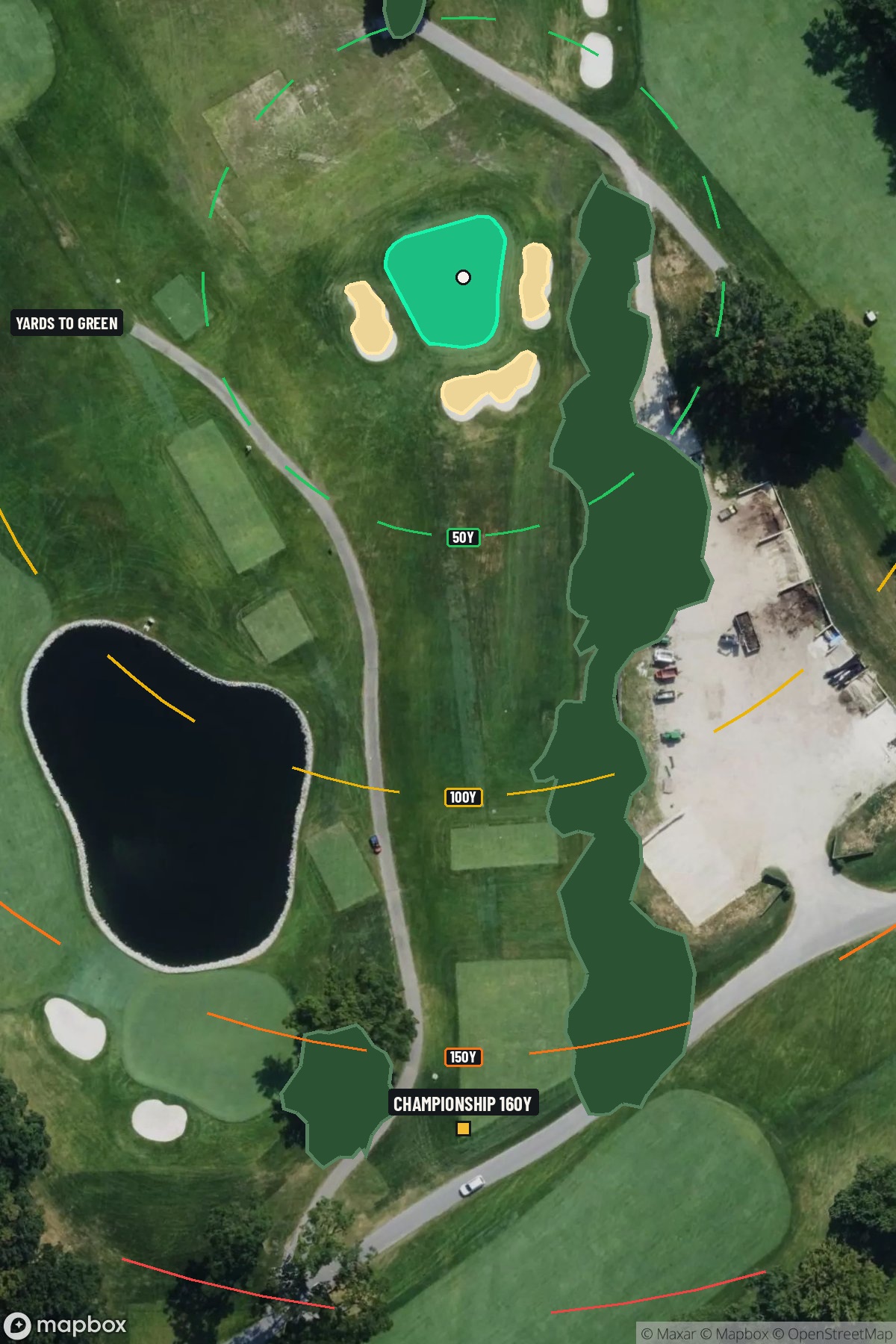
Hole 15 aerial at Detroit Golf Club (North)
Map distances from Championship tee · 160 yds

The map's printed distances are measured from the Championship tee to the green; they do not move when you change tees.

Green size: 26 yds deep × 24 yds wide

Mapbox Satellite composite · capture date not provided. Green at the top.

Where this map comes from

Satellite photo
Date not published
Mapbox satellite
Green contours
2017 survey
USGS lidar survey
Report a map problem
100%
Hole 15 aerial at Detroit Golf Club (North)

The plan for No. 15

The play: Detroit Golf Club (North) hole 15 presents a deceptively challenging par 3 that embodies Donald Ross's brilliant design philosophy. At 160 yards, this short iron test demands precision over power, with the restored hole showcasing the legendary architect's strategic brilliance. The tee shot plays to a small, undulating green that punishes wayward approaches with subtle slopes and collection areas. Despite being rated the easiest handicap hole, seasoned players know that Ross's greens never surrender birdies easily. The absence of major hazards shifts focus entirely to green reading and distance control. As part of the Rocket Mortgage Classic's "Area 313" challenge, this hole has seen PGA Tour professionals hunting aces, making it a tantalizing birdie opportunity that can quickly turn treacherous with poor execution.

Shot by shot

  1. Off the tee

    Club selection is paramount on this hole, with most players requiring a mid-iron to short-iron depending on conditions and pin position. The key is committing fully to your chosen club rather than trying to finesse a shorter iron. Aim for the center of the green unless the pin is accessible, as the small target rewards conservative target lines. Pay close attention to wind direction and strength, as even a slight breeze can push your ball off the putting surface. Take one extra club if there's any doubt, as being long is often preferable to coming up short on this Donald Ross design.

  2. Approach & recovery

    Since this is a par 3, your tee shot IS your approach shot. Focus on a smooth, controlled swing rather than trying to muscle the ball to the pin. The small green demands precision, so trust your distance control and avoid the temptation to attack difficult pin positions. Ross greens typically feature subtle slopes and collection areas, so understanding the green's contours from your pre-round preparation is crucial. If you're between clubs, take the longer option and focus on a solid strike to the center of the green.

  3. On the green

    Donald Ross greens are renowned for their subtle undulations and challenging putting surfaces. Even from the center of this small green, you'll face breaking putts that require careful reading. The undulating surface means seemingly flat putts often have more break than expected. Focus on speed control, as getting the ball to the hole with proper pace will help it hold its line on these classic greens. Three-putts can quickly turn a scoring opportunity into a bogey, so be conservative with your first putt if facing a long one. ## RISK VS REWARD The primary risk/reward decision involves pin hunting versus playing to the center of the green. With PGA Tour pros attempting aces here, there's always temptation to fire directly at the flag. However, the small green size means aggressive shots that miss the target often find trouble. The reward for hitting this green in regulation is significant - a legitimate birdie opportunity on the highest handicap hole. Conservative play to the center typically yields a makeable putt, while aggressive shots can lead to difficult recovery situations. ## DIFFERENT SKILL LEVELS **High Handicappers:** Focus entirely on hitting the green, regardless of pin position. Take enough club to ensure you reach the putting surface, and aim for the center of the green. A two-putt par on the 18th handicap hole is an excellent score. Don't let the relatively short distance fool you into being overly aggressive. **Low Handicappers:** You can be more aggressive with pin hunting, especially when the flag is in an accessible position. Still respect the small target, but your improved ball-striking allows for more precise shots. Consider the risk/reward of going at tucked pins versus playing to the fat part of the green. Your short game skills should allow for more aggressive play when conditions warrant. This hole exemplifies why Detroit Golf Club's North Course has earned its reputation as a thinking player's course, where strategy and precision matter more than raw power.

  4. Watch for

    • Course conditioning and mapped hazards may affect line selection; confirm from the aerial.

The green on No. 15

Mapped boundary
Wide × deepyards
24×26
Areasq ft
3,740
Golfer feedback

How did Hole 15 play?

⚡ Quick Golfer Pulse

How did this hole play today?

1-tap anonymous vote

Frequently asked questions

Yardage reference: Championship tees · 160 yards.

What club should I use on this par 3?

↓

At 160 yards, most golfers will need a mid-iron (7-iron to 8-iron) to reach this green. Adjust for elevation, wind, and pin position.

How difficult is hole 15?

↓

This hole is a good scoring opportunity for most golfers. Key challenges include: small green.

What hazards should I watch out for on hole 15?

↓

Key hazards include: 3 greenside bunkers. Plan your shots to avoid these trouble spots.

How big is the green on hole 15?

↓

The green is small and requires precision. Expect challenging pin positions with limited room for error.

What's a good score on hole 15?

↓

This hole is a solid par with birdie chances for precise approach shots. Making par is a good result here. Focus on hitting the green and avoiding three-putts.