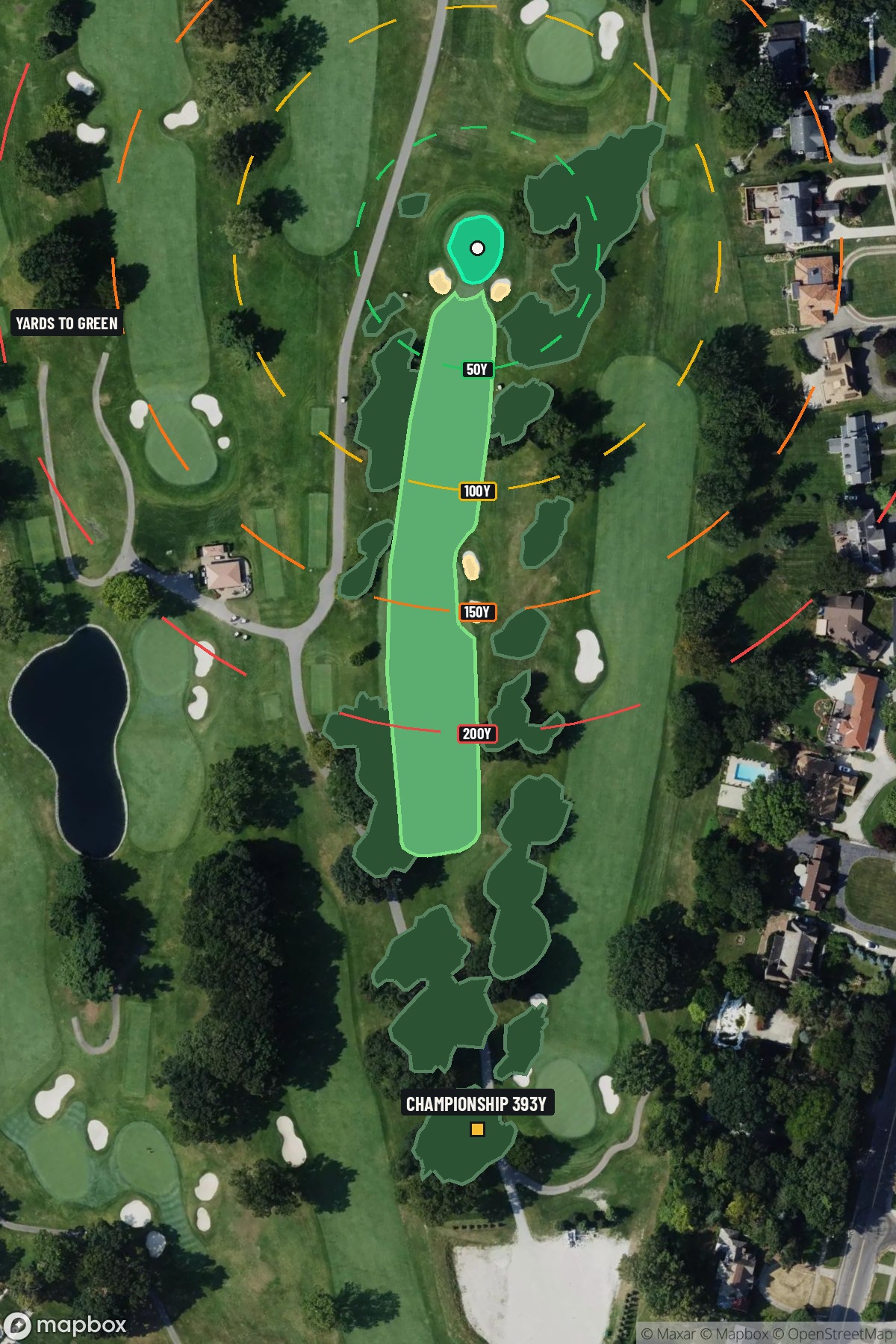
Hole 13 of 18 · Highland Park, Michigan

Hole 13 at Detroit Golf Club (North)

Par
4
Yards
393
Handicap
12
Bunkers
4
Hole 13 aerial at Detroit Golf Club (North)
Map distances from Championship tee · 393 yds

The map's printed distances are measured from the Championship tee to the green; they do not move when you change tees.

Green size: 29 yds deep × 23 yds wide

Mapbox Satellite composite · capture date not provided. Green at the top.

Where this map comes from

Satellite photo
Date not published
Mapbox satellite
Green contours
2017 survey
USGS lidar survey
Report a map problem
100%
Hole 13 aerial at Detroit Golf Club (North)

The plan for No. 13

The play: Detroit Golf Club (North) hole 13 presents a deceptively challenging par 4 that showcases the timeless design principles of legendary architect Donald Ross. At 393 yards, this straight hole demands precision over power, with strategic placement being paramount for success. The tee shot must navigate carefully around potential trouble areas to find the optimal angle into a well-protected small green complex. The approach shot becomes the critical scoring opportunity, requiring accurate distance control to a compact target that rewards precise iron play. As part of the recently restored North Course, this hole exemplifies Ross's philosophy of rewarding thoughtful course management while punishing wayward shots, making it a true test of golf strategy and execution.

Shot by shot

  1. Off the tee

    The tee shot strategy centers on finding the optimal position for your approach shot rather than maximum distance. With the hole's straight layout, focus on the center-right portion of the fairway to open up the best angle to the green. Most players will benefit from a controlled drive with a 3-wood or hybrid, especially in windy conditions that are common at Detroit Golf Club. The key is avoiding the temptation to overpower the tee shot—position over distance is the winning formula here.

  2. Approach & recovery

    The approach shot to this small green requires surgical precision and careful club selection. Ross's design philosophy means the green will have subtle undulations that can dramatically affect your putting. Aim for the center of the green regardless of pin position, as the small target leaves little margin for error. A controlled mid-iron to short-iron approach gives you the best chance to hold this green. Pay attention to wind direction, as Detroit's prevailing winds can significantly impact club selection.

  3. On the green

    The small, undulating green demands respect and conservative putting strategy. Ross greens are famous for their subtle breaks that become more pronounced as putts lose speed. Focus on lag putting to the correct level of the green rather than attacking every pin position. The green's compact size means most putts will be manageable length, but reading the grain and subtle slopes correctly is crucial for avoiding three-putts. ## RISK VS REWARD This hole offers a classic risk/reward scenario in club selection rather than target selection. Aggressive players might attempt to drive closer to the green for a wedge approach, but the small target makes this high-risk strategy questionable. The smarter play is accepting a longer approach shot from the ideal fairway position, which provides better angle control and reduces the likelihood of missing the green entirely. ## DIFFERENT SKILL LEVELS **High-Handicap Players:** Focus on two solid shots rather than one great one. Use a 3-wood or hybrid off the tee to ensure fairway position, then take one extra club on the approach and aim for the center of the green. Accept bogey as a reasonable score while avoiding big numbers. **Low-Handicap Players:** This hole rewards precision and course management skills. Consider the pin position when selecting your tee shot target line, and don't be afraid to take less club off the tee to optimize your approach angle. The small green demands commitment to your chosen target—half-hearted swings will find trouble. The 13th hole at Detroit Golf Club perfectly demonstrates why Donald Ross remains revered in golf course architecture. Success here comes from embracing the strategic challenge rather than trying to overpower it, making this a true test of golf strategy and execution.

  4. Watch for

    • Course conditioning and mapped hazards may affect line selection; confirm from the aerial.

The green on No. 13

Mapped boundary
Wide × deepyards
23×29
Areasq ft
4,076
Golfer feedback

How did Hole 13 play?

⚡ Quick Golfer Pulse

How did this hole play today?

1-tap anonymous vote

Frequently asked questions

Yardage reference: Championship tees · 393 yards.

What's the best strategy off the tee?

↓

For this 393-yard par 4, most players will hit driver to set up a comfortable approach.

How difficult is hole 13?

↓

This hole is a moderate challenge for most golfers. Key challenges include: heavily bunkered, small green.

How big is the green on hole 13?

↓

The green is small and requires precision. Expect challenging pin positions with limited room for error.

What's a good score on hole 13?

↓

This hole is a medium-length test where par is a solid result. A straightforward par 4 where course management pays off.