Hole 8 at Pinehurst Resort #7
- Par
- 5
- Yardage
- 543 yds
- Stroke index
- 7
- Hazards
- 2 bunkers · Water
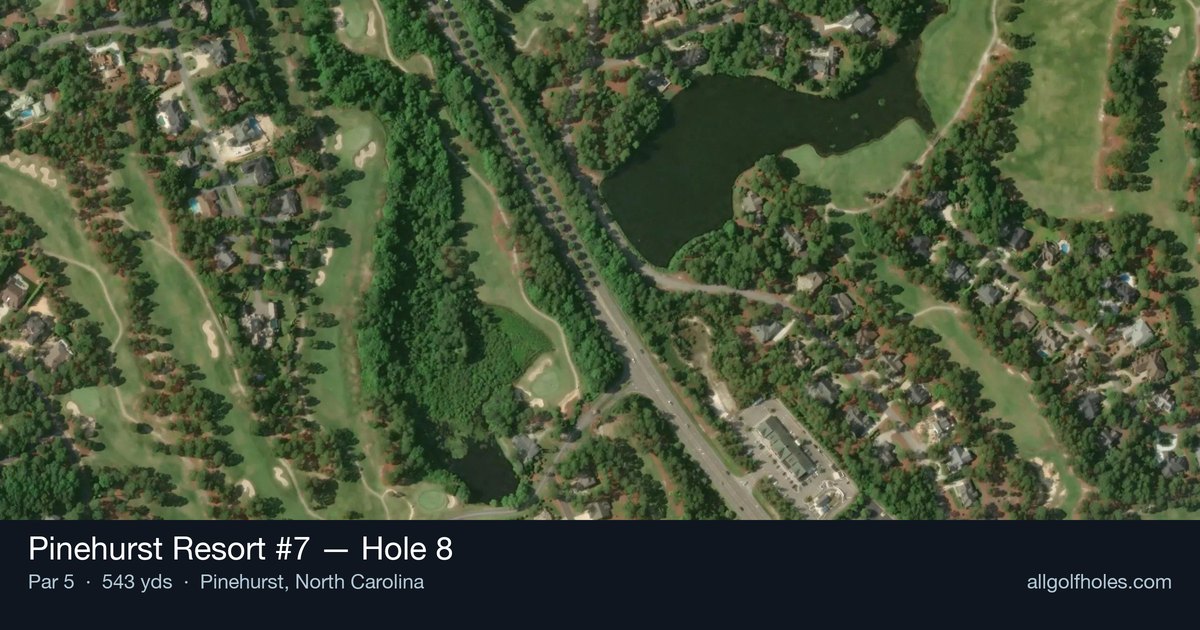
Aerial source not provided
Green size: 31 yds deep × 29 yds wide
Scorecard yardage is for Championship tees. The aerial shows its labeled reference position; distance rings measure to the green.
Championship tees · Par 5 · 543 yards
The plan for No. 8
The eighth hole at Pinehurst Resort #7 presents a strategic par 5 that epitomizes Rees Jones' thoughtful design philosophy. At 543 yards, this straight-away hole rewards intelligent course management over pure distance. The generous fairway invites an aggressive tee shot, but players must carefully consider their positioning for the crucial second shot. The approach to the small green demands precision, as Jones incorporated classic Donald Ross influences including subtle slopes and collection areas that punish wayward shots. With relatively few hazards protecting the hole, success hinges on execution rather than navigation around trouble. This hole perfectly demonstrates how strategic architecture can create compelling golf without relying on penal features, making it a memorable test of shot-making and decision-making skills.
Off the tee
The tee shot strategy centers on finding the optimal position for your second shot while maximizing distance safely. With no significant hazards mentioned, aggressive players can take driver and challenge the furthest landing areas, potentially setting up a mid-iron approach. However, the smart play involves ensuring you stay in the fairway's center, as even minor misses can leave challenging lies in Pinehurst's notorious sandy waste areas. Consider your comfort level with longer clubs - if driver tends to spray, a 3-wood or hybrid that guarantees fairway position sets up a more manageable second shot.
Approach & recovery
The approach shot presents the hole's primary strategic challenge. Whether going for the green in two or laying up depends on your position and skill level. For those attempting to reach in regulation, target the center of the small green rather than chasing pins - the margin for error is minimal. If laying up, position yourself around 100-120 yards out in the fairway's center, setting up a comfortable wedge distance. The key is avoiding the short sides of the green, where Rees Jones likely incorporated collection areas that make recovery difficult.
On the green
The small green demands precise distance control and careful green reading. Expect subtle breaks and potentially challenging pin positions that test your short game skills. Focus on getting your approach shots below the hole when possible, as uphill putts are generally more makeable on smaller surfaces. Pay attention to the green's edges - shots that just miss may find themselves in collection areas or swales, requiring delicate chip shots back to limited pin-accessible areas. ## RISK VS REWARD This hole offers clear risk/reward decisions based on your playing ability and round situation. Going for the green in two shots provides excellent birdie opportunities but requires precise execution with longer clubs. The reward is significant - potential eagle with a definite birdie chance. The risk involves missing the small target and facing difficult recovery shots. Laying up virtually guarantees a comfortable wedge approach but reduces eagle possibilities while still maintaining birdie chances with solid execution. ## DIFFERENT SKILL LEVELS **High-handicap players** should prioritize course management over distance. Take two conservative shots to reach wedge distance, then focus on hitting the center of the green. This strategy minimizes big numbers while maintaining par and occasional birdie opportunities. Avoid the temptation to reach in two unless you're hitting your longest clubs particularly well that day. **Low-handicap players** can be more aggressive, especially if driving well. Consider going for the green when positioned favorably after a good drive, but respect the small target. Your superior short game skills make recovery from misses more manageable, allowing for more aggressive target selection. Focus on creating the best angle for your approach, whether that's from the fairway in two or from optimal layup position. The 8th hole rewards patience and precision over pure power, making it a true test of golf strategy and execution in the heart of North Carolina's sandhills.
Watch for
- Course conditioning and mapped hazards may affect line selection; confirm from the aerial.
Hole 8 Green Complex
Mapped green boundary
Green size: 4,671 sq ft
How did Hole 8 play?
How did this hole play today?
Frequently asked questions
Yardage reference: Championship tees · 543 yards.
Can this par 5 be reached in two?
↓
At 543 yards, A true three-shot hole for most players. Position your layup to leave a comfortable wedge distance.
How difficult is hole 8?
↓
This hole is a moderate challenge for most golfers. Key challenges include: water in play.
What hazards should I watch out for on hole 8?
↓
Key hazards include: 2 greenside bunkers; water at 412.9 yards. Plan your shots to avoid these trouble spots.
How big is the green on hole 8?
↓
The green is medium-sized with moderate targets. Pay attention to pin placement when selecting your approach club.