Hole 16 at Bethpage State Park (Black Course)
- Par
- 4
- Yardage
- 479 yds
- Hazards
- 2 bunkers
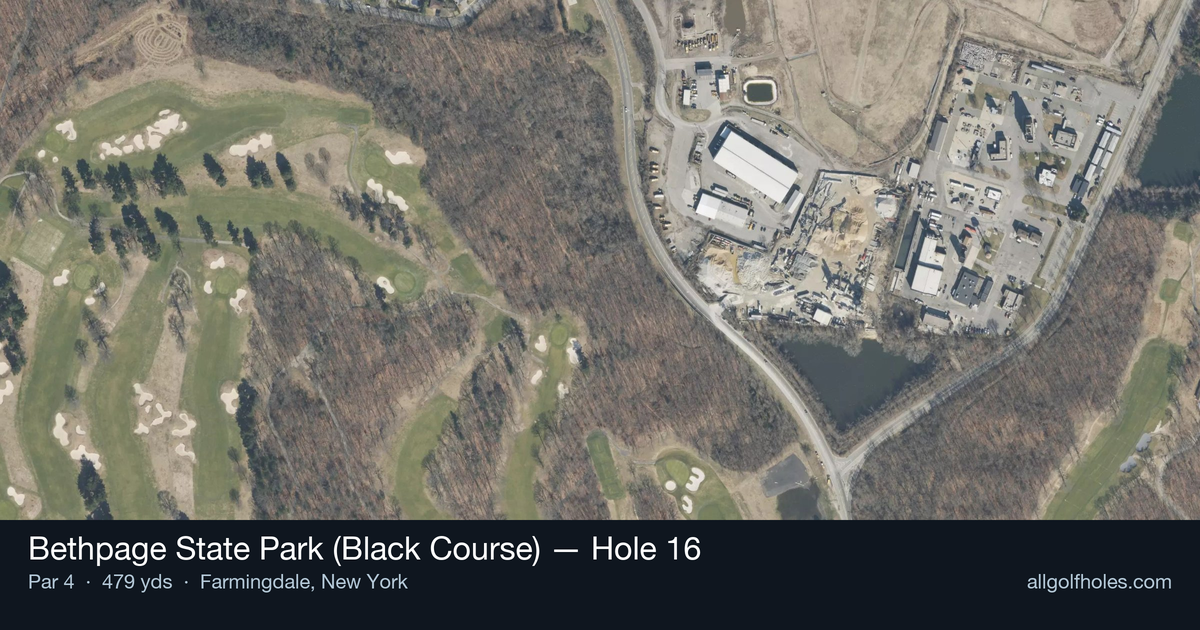
Aerial source not provided
Green size: 34 yds deep × 28 yds wide
Scorecard yardage is for Championship tees. The aerial shows its labeled reference position; distance rings measure to the green.
Championship tees · Par 4 · 479 yards
The plan for No. 16
The 16th hole at Bethpage State Park (Black Course) stands as the centerpiece of the legendary "Bear Trap," where Jack Nicklaus famously declared championships "should all be won or lost here." This demanding 479-yard par 4 presents a deceptively straight layout that becomes increasingly treacherous as golfers approach the small green. The tee shot requires precision down a generous fairway, but the real challenge emerges on the approach shot, where a menacing tree line along the left side blocks direct access to the green—a design element inspired by Pine Valley's notorious 16th hole. The compact green demands surgical accuracy, as even well-struck approach shots can find trouble if not properly positioned. As part of Bethpage's most feared three-hole stretch, this hole epitomizes the course's championship pedigree and unforgiving nature.
Off the tee
Your tee shot strategy should prioritize position over power on this demanding hole. Aim for the right-center of the fairway to open up the best angle to the small green, avoiding the tree line that dominates the left side. A well-struck driver or 3-wood should leave you in the ideal position, but conservative players might consider a long iron or hybrid to ensure finding the short grass. The key is avoiding the left side at all costs, as the trees will block your approach shot and force you into recovery mode.
Approach & recovery
The approach shot is where this hole reveals its true character. With the tree line on the left severely limiting your angle to the green, positioning from your tee shot becomes crucial. From the right side of the fairway, you'll have a clearer view and better angle to attack the small green. Club selection should favor accuracy over distance - a smooth mid-iron to long-iron depending on your position and pin location. The small green demands precision, so take enough club to ensure you're not short while avoiding going long into potential trouble.
On the green
The small green at the 16th requires careful attention to pin position and putting strategy. With limited real estate to work with, approach shots that miss the target can leave challenging recovery shots. Once on the green, focus on lag putting to the correct level, as the compact surface can feature subtle breaks that become magnified. Two-putting should be the primary goal unless you have a genuine birdie opportunity within comfortable range. ## RISK VS REWARD This hole presents a classic risk versus reward scenario within the Bear Trap context. The reward for aggressive play is minimal given the small target, while the risks are substantial. The conservative approach - favoring the right side of the fairway and playing to the center of the green - offers the best scoring opportunity. Aggressive players attempting to cut corners or attack tight pin positions often find themselves in the recovery situations that define this challenging stretch. ## DIFFERENT SKILL LEVELS **High-Handicap Players:** Focus entirely on avoiding the left side and the tree line. Consider playing a 3-wood or hybrid off the tee to ensure accuracy, then use a mid-iron approach aimed at the center of the green regardless of pin position. Accept par as an excellent score and avoid the big numbers that can derail your round. **Low-Handicap Players:** While you have more options with club selection and shot-making ability, respect the hole's strategic demands. Use your distance advantage to position yourself in the optimal approach zone, then be aggressive only when the pin position allows. This is a hole where course management trumps raw skill - even tour professionals approach this hole with caution during major championships. The 16th hole at Bethpage Black demands respect and strategic thinking. As part of the Bear Trap, it has humbled the world's best players and will test every aspect of your golf strategy. Success here comes from understanding that sometimes the best offense is a well-planned defense.
Watch for
- 2 mapped bunkers influence club selection and recovery options on this hole.
- Fairway width is roughly 48 yards at the landing zone.
Hole 16 Green Complex
Mapped green boundary
Green size: 5,397 sq ft
Course and tournament history
Historical context for the course and venue. Each entry identifies the event or course it describes.
Jack Nicklaus
The “Bear Trap,” a 3-hole stretch including 15, 16, and 17, was named in honor of Jack Nicklaus, who said, “it should all be won or lost here
Source →
How did Hole 16 play?
How did this hole play today?
Frequently asked questions
Yardage reference: Championship tees · 479 yards.
What's the best strategy off the tee?
↓
For this 479-yard par 4, most players will hit driver to set up a comfortable approach.
How difficult is hole 16?
↓
This hole is a moderate challenge for most golfers. Key challenges include: long par 4.
What hazards should I watch out for on hole 16?
↓
Key hazards include: 2 greenside bunkers. Plan your shots to avoid these trouble spots.
How big is the green on hole 16?
↓
The green is medium-sized with moderate targets. The green is deeper than wide, so club selection is crucial. Pay attention to pin placement when selecting your approach club.
What's a good score on hole 16?
↓
This hole is one of the tougher holes where par feels like birdie. A challenging par 4. Accept that bogey happens and avoid big numbers.