Hole 14 at Cascata
- Par
- 4
- Yardage
- 434 yds
- Stroke index
- 4
- Hazards
- 2 bunkers · Water
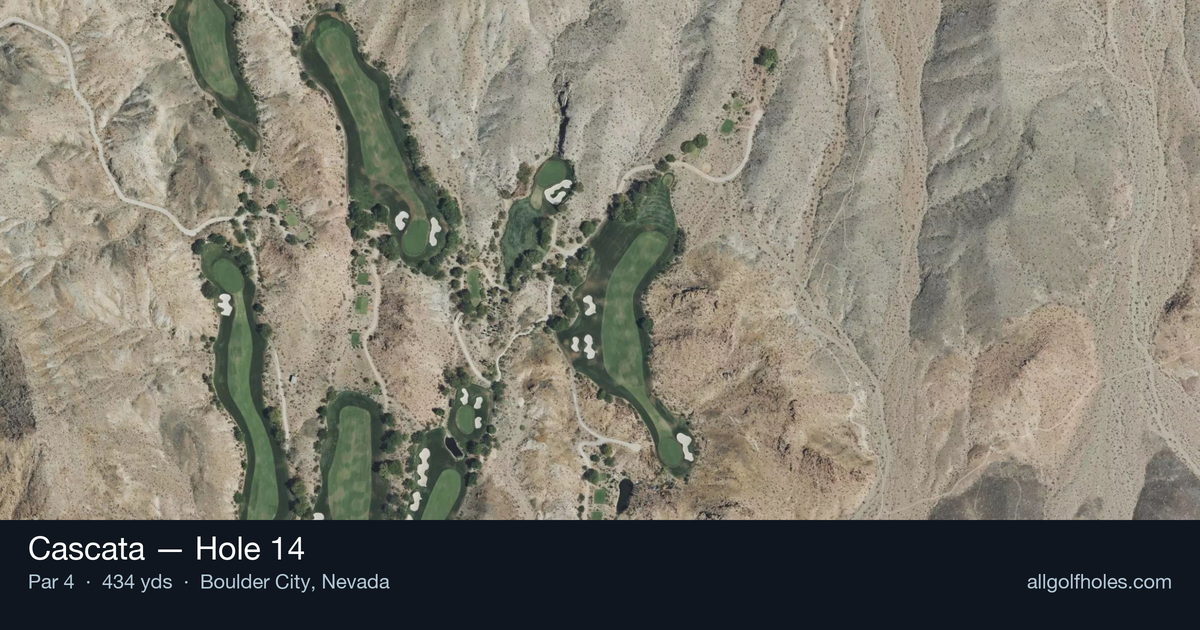
Aerial source not provided
Green size: 30 yds deep × 35 yds wide
Scorecard yardage is for Championship tees. The aerial shows its labeled reference position; distance rings measure to the green.
Championship tees · Par 4 · 434 yards
The plan for No. 14
Cascata hole 14 showcases the dramatic beauty that defines this Las Vegas desert masterpiece, where a spectacular waterfall tumbles down the left side of this 434 yard par 4. The cascading water creates both visual splendor and strategic complexity, as the stream flows alongside the fairway before collecting in a pond that guards the green. This straight hole demands precision on the tee shot to avoid the water hazard, while the approach shot requires careful club selection to a small green protected by the pond. The combination of desert landscape and flowing water makes this one of Cascata's most photographed and memorable holes, epitomizing the course's reputation for blending natural Nevada terrain with stunning water features.
Off the tee
The key to the tee shot is finding the optimal position while respecting the waterfall and stream that flow down the left side. Aim for the right-center of the fairway to provide maximum safety margin from the water hazard. A driver or 3-wood should leave you with a manageable approach distance, but club selection should prioritize accuracy over distance. The desert terrain surrounding the hole means wayward shots face severe penalties, making fairway position paramount. Consider the wind conditions common in the Nevada desert, as they can significantly affect ball flight and push shots toward the water hazard.
Approach & recovery
Your approach shot strategy centers on avoiding the stream that collects in a pond near the green. The small green size demands precision, and the water hazard likely guards the front or left side of the putting surface. Plan for a mid-iron to short-iron approach depending on your tee shot position, but prioritize hitting the green over attacking pins near the water. The elevated nature of many desert greens means shots can play longer than expected, so take an extra club if in doubt. Target the center or safe side of the green, as the small target leaves little margin for error.
On the green
The small green size means every putt requires careful attention to speed control and break reading. Desert greens often feature subtle slopes that can be deceptive, particularly around water features where drainage patterns affect green contours. Focus on leaving putts below the hole when possible, as uphill putts provide better speed control on smaller targets. Pay attention to the grain direction, which may be influenced by the prevailing desert winds and the nearby water source. ## RISK VS REWARD The primary risk/reward decision involves tee shot positioning versus approach angle. Playing too aggressively toward the left side offers a better angle to the green but brings the waterfall into play. The conservative play keeps you right of center off the tee, accepting a slightly more challenging approach angle in exchange for eliminating the water hazard. Given the hole's handicap ranking and the severe penalty for finding water, the percentage play favors the conservative approach unless you're chasing a score. ## DIFFERENT SKILL LEVELS **High-handicap players** should prioritize keeping the ball dry above all else. Play well right of the waterfall off the tee, even if it means a longer approach shot. Use one extra club on the approach and aim for the center of the green, accepting a two-putt par as an excellent result. The beauty of the hole can be distracting, so maintain focus on execution over sightseeing. **Low-handicap players** can be more aggressive with their target line off the tee, moving slightly closer to the water hazard to improve their approach angle. They should still respect the small green size and water hazard but can attack more accessible pin positions. Course management becomes crucial in tournament situations, where the hole's scoring difficulty suggests patience often trumps aggression. The 14th at Cascata exemplifies strategic golf course design, where natural beauty enhances rather than distracts from the tactical challenge at hand.
Watch for
- Course conditioning and mapped hazards may affect line selection; confirm from the aerial.
Hole 14 Green Complex
Mapped green boundary
Green size: 6,208 sq ft
How did Hole 14 play?
How did this hole play today?
Frequently asked questions
Yardage reference: Championship tees · 434 yards.
What's the best strategy off the tee?
↓
For this 434-yard par 4, most players will hit driver to set up a comfortable approach.
How difficult is hole 14?
↓
This hole is a moderate challenge for most golfers. Key challenges include: water in play.
What hazards should I watch out for on hole 14?
↓
Key hazards include: 2 greenside bunkers; water at 366.6 yards. Plan your shots to avoid these trouble spots.
How big is the green on hole 14?
↓
The green is fairly large with multiple pin positions. Lag putting becomes important on longer putts.
What's a good score on hole 14?
↓
This hole is a demanding hole where bogey is not unusual. This longer par 4 will test most golfers. Focus on position over distance.