Hole 16 at Cascata
- Par
- 5
- Yardage
- 508 yds
- Stroke index
- 10
- Hazards
- 2 bunkers
Aerial source not provided
Green size: 30 yds deep × 30 yds wide
Scorecard yardage is for Championship tees. The aerial shows its labeled reference position; distance rings measure to the green.
Championship tees · Par 5 · 508 yards
The plan for No. 16
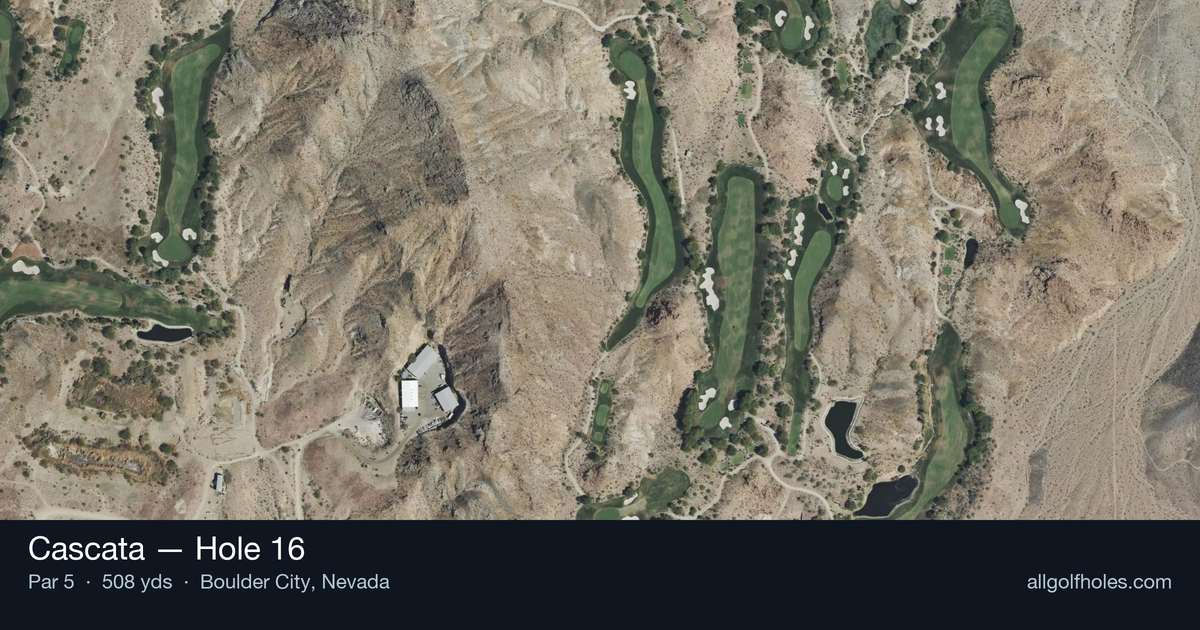
The 16th hole at Cascata stands as one of the course's signature challenges, earning its reputation as a demanding par 5 that tests every aspect of your game. This 508-yard straight hole may appear straightforward from the tee, but its deceptive simplicity masks the precision required for scoring. The generous fairway invites an aggressive tee shot, yet positioning becomes critical for the approach into the compact green complex. What makes Cascata hole 16 particularly memorable is how it builds tension as you near the finish, demanding both power and finesse. The small green rewards accurate iron play while punishing wayward approaches, creating a classic risk-reward scenario that epitomizes championship golf design in the Nevada desert.
Off the tee
Your tee shot strategy should focus on finding the optimal position for your second shot. With the straight layout, aim for the center-right portion of the fairway to open up the best angle to the green. Driver is the obvious choice for longer hitters looking to get home in two, but don't overlook a well-positioned 3-wood if accuracy is a concern. The target line should favor the right side of the fairway, as this typically provides the clearest view and best approach angle to the small green. Avoid getting too aggressive if conditions are firm, as a ball rolling through the fairway can complicate your approach strategy.
Approach & recovery
For your second shot, the decision between going for the green or laying up depends heavily on your lie and the pin position. If attempting to reach in two, focus on the center of the green rather than chasing pins - the small green size makes precision paramount. A mid-iron to long-iron layup to about 100 yards creates an ideal wedge distance for your third shot. When laying up, favor the right side of the fairway for the best angle into the green. The small green demands accuracy on approach shots, so choose the club that gives you the most confidence in hitting your target.
On the green
The small green at the 16th requires precise putting and careful green reading. With limited surface area, even slight misreads can leave you with challenging second putts. Focus on getting your first putt to the correct level, as the compact green can feature subtle breaks that become magnified. Pin positions on the edges of this small green create particularly challenging targets, so don't be afraid to aim for the center and take your two-putt par or birdie. ## RISK VS REWARD This hole epitomizes risk/reward golf strategy. Going for the green in two offers genuine birdie and eagle opportunities, but the small target requires exceptional accuracy. The safer three-shot approach typically yields more consistent scoring, especially when the pin is tucked in a difficult position. Evaluate your lie, the wind conditions, and your confidence level before committing to either strategy. Remember that a well-executed layup often leads to better scoring than a poorly executed aggressive play. ## DIFFERENT SKILL LEVELS **High-Handicap Players:** Focus on the three-shot strategy, prioritizing position over distance. Use your most reliable club off the tee, even if it's a 3-wood or hybrid. Lay up to your favorite wedge distance and aim for the center of the green on your approach. This conservative approach maximizes your chances of walking away with par or bogey. **Low-Handicap Players:** You have the option to attack this hole, but choose your spots wisely. If you're hitting it well and have a good lie, going for the green in two can pay dividends. However, don't force the issue - sometimes the smart play is laying up to create a high-percentage birdie opportunity with a wedge in your hands. The 16th at Cascata rewards thoughtful golf strategy and punishes hasty decisions. Whether you choose aggression or patience, commit fully to your chosen approach and execute with confidence.
Watch for
- Course conditioning and mapped hazards may affect line selection; confirm from the aerial.
Hole 16 Green Complex
Mapped green boundary
Green size: 4,844 sq ft
How did Hole 16 play?
How did this hole play today?
Frequently asked questions
Yardage reference: Championship tees · 508 yards.
Why is hole 16 called 'Redbud'?
↓
Hole 16 at Cascata is called "Redbud" because it's named after the redbud plant or flower that can be found growing naturally on or around this particular hole, following the course's tradition of using botanical names that reflect the local flora.
Can this par 5 be reached in two?
↓
At 508 yards, Reachable in two for longer hitters. Consider laying up short of hazards if going for it is risky.
How difficult is hole 16?
↓
This hole is a good scoring opportunity for most golfers.
What hazards should I watch out for on hole 16?
↓
Key hazards include: 2 greenside bunkers. Plan your shots to avoid these trouble spots.
How big is the green on hole 16?
↓
The green is medium-sized with moderate targets. Pay attention to pin placement when selecting your approach club.
What's a good score on hole 16?
↓
This hole is a solid birdie opportunity with smart layup strategy. Most golfers can reach in three. Position your layup to leave a comfortable wedge.