Hole 9 at Cascata
- Par
- 4
- Yardage
- 451 yds
- Stroke index
- 7
- Hazards
- 2 bunkers
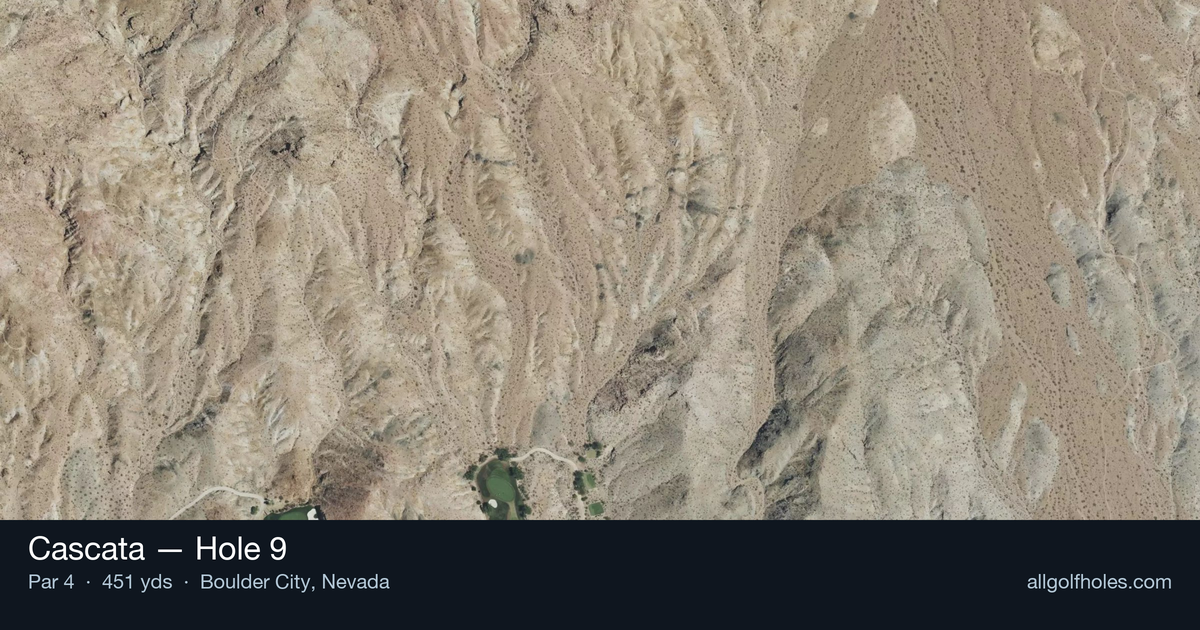
Aerial source not provided
Green size: 35 yds deep × 32 yds wide
Scorecard yardage is for Championship tees. The aerial shows its labeled reference position; distance rings measure to the green.
Championship tees · Par 4 · 451 yards
The plan for No. 9
Cascata hole 9 presents a formidable test as the front nine's climactic challenge, stretching 451 yards through the dramatic Nevada desert landscape. This straight par 4 demands precision from the championship tees, where players must navigate the natural terrain that defines this Steve Wynn masterpiece. The tee shot requires careful placement to set up an optimal approach to the small green complex, which sits as an inviting yet demanding target. Without traditional water hazards or bunkers dominating the hole, success depends on course management and accurate iron play. As golfers prepare for the turn, this hole serves as a stern reminder of Cascata's championship pedigree, setting the stage for the back nine's renowned waterfall spectacle.
Off the tee
Your tee shot strategy should focus on finding the ideal distance for your approach shot comfort zone. Most players will benefit from a driver or 3-wood that leaves them with a mid-iron to long-iron into the green. The key is avoiding the temptation to overswing - smooth tempo and solid contact are more valuable than maximum distance here. Target the center of the fairway, as the straight layout provides a generous landing zone. Pay attention to wind conditions, as they'll significantly impact both your tee shot carry and approach club selection.
Approach & recovery
The approach shot is where this hole shows its teeth. With a small green as your target, precision becomes paramount over power. Club selection should prioritize landing softly on the green rather than trying to get as close to the pin as possible. Aim for the center of the green regardless of pin position - the small target makes attacking specific quadrants too risky for most players. Take one extra club if you're between distances, as coming up short of a small green often leads to difficult up-and-down situations.
On the green
The small green size means every putt matters significantly. Focus on lag putting to avoid three-putts, which can quickly turn a par opportunity into a bogey. Without specific break information available, rely on reading the surrounding terrain and green slope. Speed control becomes critical on smaller greens, as aggressive putts that miss have less room for error. Position your approach shots below the hole when possible to ensure uphill putts. ## RISK VS REWARD This hole rewards conservative, strategic play over aggressive tactics. The risk/reward calculation favors accuracy and course management - there's little benefit to taking unnecessary risks when par represents a solid score. The reward comes from precise execution rather than bold shot-making. Players who can consistently hit fairways and greens will find scoring opportunities, while those who gamble often pay the price. ## DIFFERENT SKILL LEVELS **High-Handicap Players:** Focus on keeping the ball in play off the tee, even if it means using a 3-wood or hybrid for better accuracy. On the approach, aim for the largest part of the green and don't worry about pin hunting. Two-putt pars are excellent scores here. **Low-Handicap Players:** Can be more aggressive with driver off the tee to leave shorter irons into the green. These players should still respect the small green size but can consider attacking favorable pin positions when conditions permit. The key is recognizing when to be aggressive versus when to play conservatively based on your position in the round. The 9th hole at Cascata exemplifies how a seemingly straightforward par 4 can test every aspect of your game through its demanding approach shot requirements and small green target.
Watch for
- Course conditioning and mapped hazards may affect line selection; confirm from the aerial.
Hole 9 Green Complex
Mapped green boundary
Green size: 5,711 sq ft
How did Hole 9 play?
How did this hole play today?
Frequently asked questions
Yardage reference: Championship tees · 451 yards.
Why is hole 9 called 'Carolina Cherry'?
↓
Based on the available information, the specific reason why hole 9 at Cascata is called "Carolina Cherry" is not documented in the provided sources, which focus primarily on the course's signature waterfall features and other holes rather than the naming origin of the 9th hole.
What's the best strategy off the tee?
↓
For this 451-yard par 4, most players will hit driver to set up a comfortable approach.
How difficult is hole 9?
↓
This hole is a moderate challenge for most golfers. Key challenges include: long par 4.
What hazards should I watch out for on hole 9?
↓
Key hazards include: 2 greenside bunkers. Plan your shots to avoid these trouble spots.
How big is the green on hole 9?
↓
The green is medium-sized with moderate targets. The green is deeper than wide, so club selection is crucial. Pay attention to pin placement when selecting your approach club.
What's a good score on hole 9?
↓
This hole is one of the tougher holes where par feels like birdie. A challenging par 4. Accept that bogey happens and avoid big numbers.