Hole 9 at Sea Island Golf Club (Seaside)
- Par
- 4
- Yardage
- 410 yds
- Stroke index
- 5
- Hazards
- 2 bunkers · Water
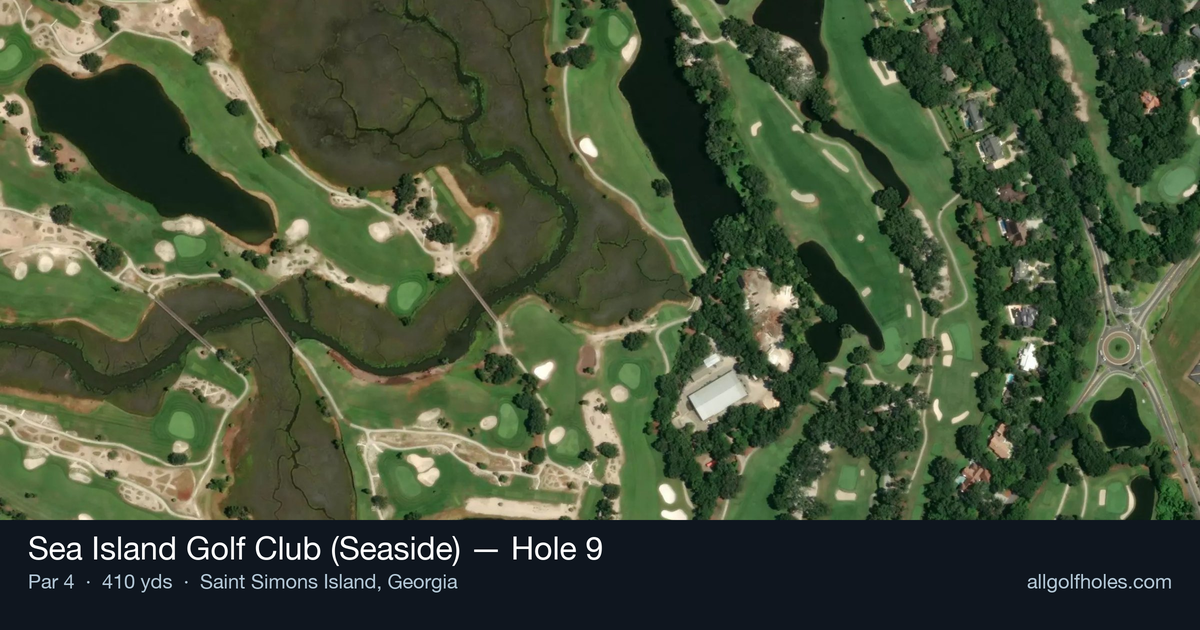
Aerial source not provided
Green size: 31 yds deep × 32 yds wide
Scorecard yardage is for Championship tees. The aerial shows its labeled reference position; distance rings measure to the green.
Championship tees · Par 4 · 410 yards
The plan for No. 9
The finishing hole at Sea Island Golf Club (Seaside) embodies the true spirit of links golf that Bobby Jones praised during his historic Grand Slam year. This straight par 4 stretches 410 yards through the coastal winds that define Seaside's character, where the elements dictate club selection more than yardage markers. The tee shot demands precision into a generous fairway, but the ever-present Georgia coast breeze transforms this seemingly straightforward hole into a strategic puzzle. Players must read the wind conditions carefully, as what appears to be a comfortable 7-iron approach shot might suddenly require a firm 5-iron when the coastal gusts pick up. The small green rewards accurate approach shots but punishes those who misjudge the wind's influence, making this closing hole a fitting test of links golf mastery.
Off the tee
Your tee shot strategy must prioritize position over pure distance, especially given the wind variability that defines Seaside. Target the center-left portion of the fairway to provide the best angle into the small green. Driver remains the preferred club for most players, but when facing strong headwinds, consider a 3-wood or hybrid to ensure you stay in the short grass. The key is leaving yourself a comfortable approach distance - typically between 120-160 yards for most golfers. Pay close attention to the wind direction before selecting your target line. A helping wind might push your drive further than expected, while a crosswind requires aiming into the breeze to account for drift. The links-style conditions mean the ball will run more on firm fairways, so factor this into your club selection.
Approach & recovery
The small green demands pinpoint accuracy on your approach shot, making this where the hole's difficulty truly reveals itself. Club selection becomes critical - you might find yourself hitting anything from a wedge to a mid-iron depending on wind conditions. When the wind is up, take an extra club and swing smoothly rather than forcing a shorter iron. Aim for the center of the green regardless of pin position, as the small target leaves little margin for error. Missing short is typically preferable to going long, where recovery becomes more challenging. The coastal winds can knock down even well-struck shots, so commit fully to your club selection and maintain an aggressive swing through impact.
On the green
The small putting surface requires careful speed control, as coastal greens often run faster than expected due to wind exposure. Read putts with extra attention to grain direction, which typically follows the prevailing wind patterns. Breaking putts will be influenced more by wind than elevation changes on this relatively flat green. Focus on lag putting to the center of the green when facing longer putts, as three-putting from distance becomes a real threat on the compact surface. Short putts require firm strokes to hold their line against potential wind interference. ## RISK VS REWARD This hole offers a subtle risk/reward scenario in club selection rather than routing options. The reward comes from aggressive approach shots when conditions allow, potentially setting up birdie opportunities on this scoring hole. However, the risk lies in forcing shots when wind conditions demand conservative play. The straight layout eliminates route-finding decisions, making this purely about execution under varying conditions. Players who accept par when conditions are tough often score better than those who chase birdies regardless of circumstances. ## DIFFERENT SKILL LEVELS **High-handicap players** should prioritize finding the fairway with their most reliable tee shot, even if that means using a 3-wood or hybrid. On the approach, always take one extra club and aim for the center of the green, accepting any pin position as secondary to hitting the putting surface. **Low-handicap players** can be more aggressive with driver off the tee and target specific quadrants of the green based on pin position. However, even skilled players must respect the wind conditions that can turn routine approach shots into challenging recoveries. Course management becomes paramount - knowing when to attack and when to play for the center of the green separates good scores from great ones. The key for all skill levels is developing a pre-shot routine that includes a thorough wind assessment, as conditions can change between shots on this exposed coastal hole.
Watch for
- Course conditioning and mapped hazards may affect line selection; confirm from the aerial.
Hole 9 Green Complex
Mapped green boundary
Green size: 5,293 sq ft
How did Hole 9 play?
How did this hole play today?
Frequently asked questions
Yardage reference: Championship tees · 410 yards.
What's the best strategy off the tee?
↓
For this 410-yard par 4, most players will hit driver to set up a comfortable approach.
How difficult is hole 9?
↓
This hole is a moderate challenge for most golfers. Key challenges include: water in play.
How big is the green on hole 9?
↓
The green is medium-sized with moderate targets. Pay attention to pin placement when selecting your approach club.