Hole 18 at Sage Valley Golf Club
- Par
- 4
- Yardage
- 440 yds
- Hazards
- 7 bunkers · Water
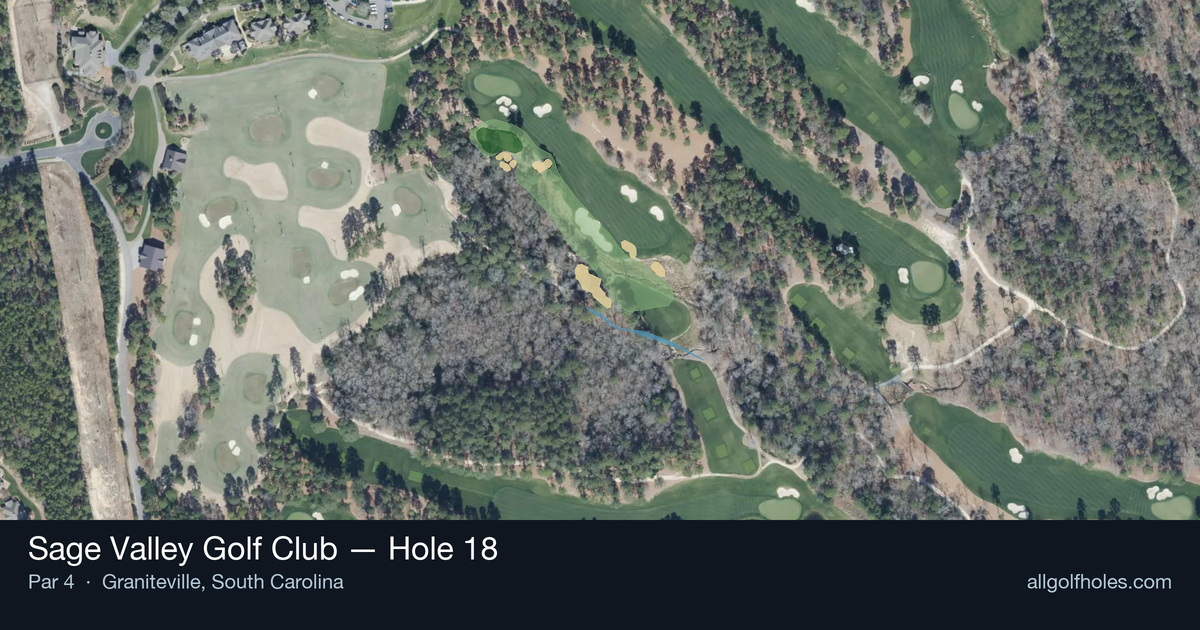
Aerial source not provided
Green size: 39 yds deep × 35 yds wide
Scorecard yardage is for Pro tees. The aerial shows its labeled reference position; distance rings measure to the green.
Pro tees · Par 4 · 440 yards
The plan for No. 18
The finishing hole at Sage Valley Golf Club presents a classic test of precision and nerve, demanding golfers bring their best when it matters most. This straight 440-yard par 4 strips away the distractions, offering a clean canvas where execution trumps complexity. The absence of significant hazards might seem forgiving, but the hole's true challenge lies in its deceptive simplicity and compact green target. From the tee, players face a generous fairway that invites aggressive driving, yet the approach shot reveals the hole's teeth. The small green demands pinpoint accuracy, punishing anything less than committed swings. Smart golfers favor the center of the putting surface, knowing that Sage Valley Golf Club's 18th hole rewards patience over heroics, making it a memorable conclusion to one of South Carolina's most respected golf experiences.
Off the tee
Your tee shot strategy should focus on finding the optimal position for your approach shot rather than maximum distance. Most players will benefit from a controlled drive that leaves them with their preferred approach yardage - typically somewhere in the 130-160 yard range for mid-to-high handicappers, or 100-130 yards for stronger players. Consider hitting 3-wood or hybrid if driver tends to run through your ideal landing zone. The straight layout means you can be aggressive with your line, but don't sacrifice accuracy for extra yards when positioning is more critical.
Approach & recovery
The small green is the defining feature of your approach shot strategy. This target demands precision and proper club selection - you'll want enough club to ensure you reach the putting surface, but not so much that you struggle to hold the green. A mid-iron to short-iron approach (depending on your tee shot position) should be played to the center of the green unless you have a specific read on pin position. Focus on a smooth, controlled swing that prioritizes accuracy over trying to attack pins close to the edges of this small target.
On the green
With a small green, most putts will be relatively manageable in length, but don't underestimate the importance of your first putt. Speed control becomes crucial on a smaller surface where running putts off the green is a real possibility. Play conservatively on longer putts, focusing on getting your ball into a comfortable two-putt range rather than being aggressive. The small size means less room for error on breaking putts, so take extra time to read the subtle slopes. ## RISK VS REWARD This hole offers a classic risk/reward decision on the tee shot. The reward for an aggressive driver is a shorter approach shot, but the risk is finding yourself with an awkward yardage or poor angle. The conservative play of laying back with a fairway wood or long iron provides better control and a more comfortable approach distance. Given the small green target, having your preferred approach yardage often trumps getting as close as possible. ## DIFFERENT SKILL LEVELS **High-Handicap Players:** Focus on two solid, conservative shots rather than trying to overpower the hole. Use your most reliable tee shot club, even if it's a hybrid or long iron, to ensure you're in the fairway. From there, take enough club on your approach to guarantee you reach the green - short misses can be particularly costly with a small target. **Low-Handicap Players:** You have more flexibility to work the hole based on conditions and pin position. Consider the pin location when selecting your tee shot strategy - back pins might call for a more aggressive drive to shorten the approach, while front pins reward laying back for better spin control. Use your course management skills to identify the lowest-risk path to par or better. This finishing hole at Sage Valley exemplifies strategic golf course design, where success comes from smart decisions rather than heroic shots. Execute your game plan with confidence, and you'll find yourself walking off the 18th green satisfied with a well-played round.
Watch for
- Course conditioning and mapped hazards may affect line selection; confirm from the aerial.
Hole 18 Green Complex
Mapped green boundary
Green size: 5,838 sq ft
Course coverage
Tournament and creator videos about Sage Valley Golf Club — shared course coverage, not hole-specific clips.
Featured by these creators
Creator videos about this course
YouTube creators who filmed or featured Sage Valley Golf Club. · Stats as of Oct 12, 2026 · 5d ago
The First Ever YouTube Match at Sage Valley
How did Hole 18 play?
How did this hole play today?
Frequently asked questions
Yardage reference: Pro tees · 440 yards.
What's the best strategy off the tee?
↓
For this 440-yard par 4, most players will hit driver to set up a comfortable approach.
How difficult is hole 18?
↓
This hole is one of the tougher holes on the course for most golfers. Key challenges include: water in play, heavily bunkered.
How big is the green on hole 18?
↓
The green is medium-sized with moderate targets. The green is wider than it is deep, rewarding shots that find the correct tier. Pay attention to pin placement when selecting your approach club.
What's a good score on hole 18?
↓
This hole is a demanding hole where bogey is not unusual. This longer par 4 will test most golfers. Focus on position over distance.