Hole 17 at National Golf Links of America
- Par
- 4
- Yardage
- 375 yds
- Hazards
- 8 bunkers
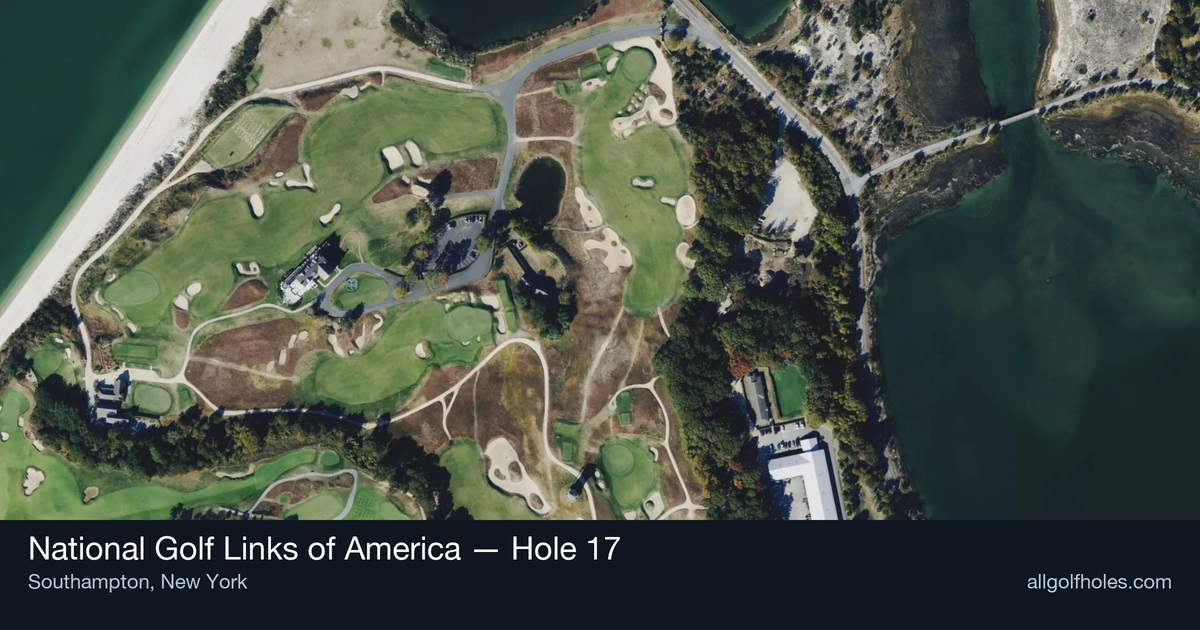
Aerial source not provided
Green size: 30 yds deep × 28 yds wide
Scorecard yardage is for Pro tees. The aerial shows its labeled reference position; distance rings measure to the green.
Pro tees · Par 4 · 375 yards
The plan for No. 17
The 17th hole at National Golf Links of America, known as "Peconic," stands as one of golf's most breathtaking par 4s, offering stunning views of Peconic Bay with the iconic windmill framing the tee shot. This 375-yard masterpiece demands both strategic thinking and precise execution, as players must navigate their approach shot toward a small green complex perched near the water's edge. The hole's genius lies in its deceptive simplicity - while the tee shot appears straightforward, the approach requires careful consideration of wind conditions and pin placement. The dramatic backdrop of Long Island's coastline creates an unforgettable playing experience, making this hole a crown jewel in C.B. Macdonald's tribute to golf's greatest international designs.
Off the tee
The tee shot strategy centers on finding the optimal angle for your approach while avoiding trouble areas. With 375 yards to work with, most players can use driver confidently, but the key is positioning rather than pure distance. Aim for the center-left portion of the fairway to open up the best angle to the small green. The straight layout allows for aggressive tee shots, but be mindful of coastal winds that can push balls offline. Consider taking one less club if facing a strong headwind, as course management trumps distance on this hole.
Approach & recovery
The approach shot to the small green requires precise club selection and careful attention to wind conditions. From an ideal fairway position, you'll typically face a short to mid-iron depending on your tee shot distance. The small green size means there's little margin for error, so prioritize accuracy over aggressive pin-hunting. Favor the center of the green regardless of pin position, as the putting surface's compact nature makes most pin locations accessible from the middle. Factor in the coastal breeze, which can significantly affect ball flight and landing conditions.
On the green
The small green at the 17th demands respect and precision with the putter. While specific break patterns aren't documented, the coastal location suggests subtle grain effects from the nearby bay. Focus on speed control rather than trying to read dramatic breaks, as most putts on a smaller green will be relatively straight. Take extra time to read the wind's effect on longer putts, as coastal breezes can influence ball roll even on the putting surface. ## RISK VS REWARD The primary risk/reward decision comes with tee shot positioning and approach aggression. Players can attack pins when the wind is favorable and they've found the fairway, but the small green punishes misses severely. The reward for precise play is significant - this hole offers legitimate birdie opportunities for players who execute proper course management. However, the penalty for overly aggressive play can quickly lead to bogey or worse when recovery shots are needed. ## DIFFERENT SKILL LEVELS **High Handicappers:** Focus on conservative play and aim for the center of everything. Use a 3-wood or hybrid off the tee if driver accuracy is inconsistent, prioritizing fairway position over distance. On approach shots, always aim for the middle of the green regardless of pin position, using one extra club to ensure you clear any front hazards. **Low Handicappers:** Can be more aggressive with target selection while maintaining smart course management. Use driver confidently when wind conditions allow, but be prepared to dial back club selection in strong coastal breezes. Approach shots can target specific quadrants of the green based on pin position, but always have a bailout plan if conditions deteriorate. The 17th at National Golf Links of America rewards thoughtful golf strategy over pure power, making it a perfect example of how scenic beauty and strategic design combine to create memorable golf experiences. Pay attention to wind conditions, trust your club selection, and let the spectacular setting inspire confident execution.
Watch for
- Course conditioning and mapped hazards may affect line selection; confirm from the aerial.
Hole 17 Green Complex
Mapped green boundary
Green size: 5,358 sq ft
Course coverage
Tournament and creator videos about National Golf Links of America — shared course coverage, not hole-specific clips.
Official & tour
Tour & network videos
Official coverage mentioning National Golf Links of America.
Inside Trump International Golf Links, Doonbeg | 3 Key Holes
Featured by these creators
Creator videos about this course
YouTube creators who filmed or featured National Golf Links of America. · Stats as of Oct 12, 2026 · 6d ago
All eyes on the leaders 👀 The final round is underway at Trump International Golf Links.
How did Hole 17 play?
How did this hole play today?
Frequently asked questions
Yardage reference: Pro tees · 375 yards.
What's the best strategy off the tee?
↓
For this 375-yard par 4, most players will hit 3-wood or driver to set up a comfortable approach.
How difficult is hole 17?
↓
This hole is a good scoring opportunity for most golfers.
How big is the green on hole 17?
↓
The green is medium-sized with moderate targets. Pay attention to pin placement when selecting your approach club.
What's a good score on hole 17?
↓
This hole is a medium-length test where par is a solid result. A straightforward par 4 where course management pays off.