Hole 1 at PGA West (Nicklaus Tournament course)
- Par
- 4
- Yardage
- 412 yds
- Stroke index
- 3
- Hazards
- 4 bunkers
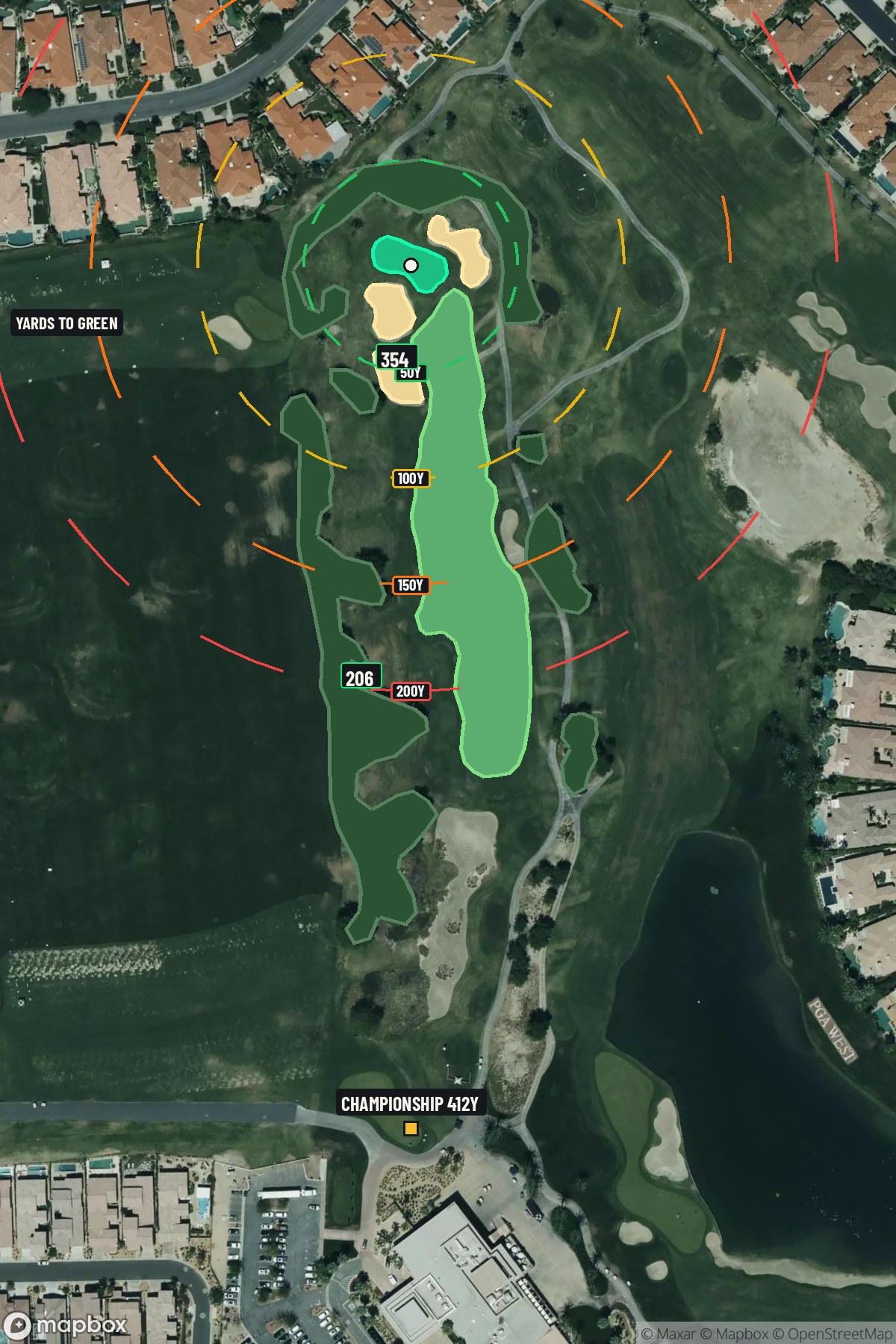 Hole 1 map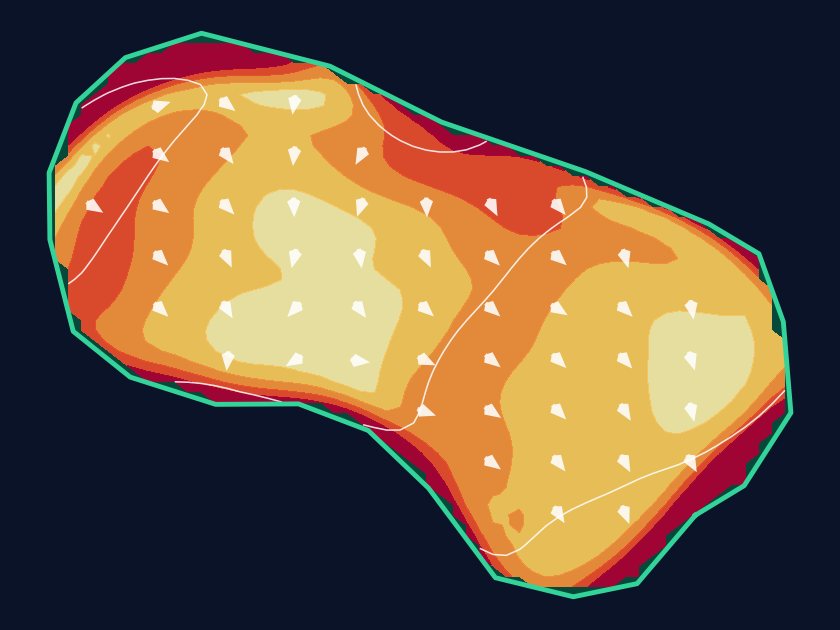
36 yd wide × 27 yd deep · 3.4 ft total elevation range
Light = gentler slope · Red = steeper slope
White lines: 1 foot of elevation. Arrows: downhill. General terrain, not a pin read.
Approach from bottom
Contour source
USGS 1 Meter 11 x56y373 CA_SaltonSea_EarthMRI_2021_D21 · collection 2021–2023
Map source & reference
Mapbox Satellite composite · capture date not provided. Green at the top; the labeled map reference is below.
Scorecard yardage is for Championship tees. The aerial shows its labeled reference position; distance rings measure to the green.
Championship tees · Par 4 · 412 yards
The plan for No. 1
The opening hole at PGA West's Nicklaus Tournament course sets an inviting yet demanding tone for this desert masterpiece. This straight 412-yard par 4 presents a deceptively simple challenge, with Jack Nicklaus crafting a strategic test that rewards precision over power from the very first tee shot. The generous fairway encourages an aggressive drive, but the small green demands surgical accuracy on the approach shot. Without significant hazards to intimidate, this hole instead relies on subtle design elements and the psychological pressure of starting a round at one of California's most prestigious venues. The compact green complex requires careful club selection and precise distance control, making it clear that success at PGA West demands both power and finesse. A perfect introduction to Nicklaus's strategic philosophy.
Off the tee
The tee shot strategy revolves around positioning for the best approach angle while respecting the hole's #3 handicap ranking. Most players should focus on the center-right portion of the fairway, which typically provides the most favorable angle into the small green. Driver is certainly in play for longer hitters, but consider a 3-wood or hybrid if accuracy has been inconsistent in practice rounds. The key is avoiding the mentality trap of the opening hole - don't let first-tee jitters lead to an overly cautious approach that leaves an unnecessarily long approach shot. Find your comfort zone between aggression and control, aiming for a landing area that leaves a manageable mid-iron approach.
Approach & recovery
The approach shot is where this hole reveals its true challenge. The small green demands pinpoint accuracy, making club selection crucial. Most players will face anywhere from a 7-iron to a 4-iron depending on tee shot success and pin position. Focus on the center of the green regardless of pin position - the small target makes going flag-hunting extremely risky, especially early in the round when you're still finding your rhythm. Take one more club than you think you need and make a smooth, controlled swing. The desert conditions at PGA West can make greens play firmer and faster than they appear.
On the green
Small greens at desert courses like PGA West typically feature subtle but significant breaks that can be deceiving. Spend extra time reading putts from multiple angles, as the surrounding desert landscape can create optical illusions. Lag putting becomes essential - focus on getting your first putt within a 3-foot circle rather than trying to make everything. The firm conditions mean putts will roll out more than expected, so err on the side of leaving putts short rather than charging past the hole. ## RISK VS REWARD The primary risk/reward decision comes with tee shot aggression. Playing driver gives you a shorter iron into the green but increases the chance of finding trouble in the desert or rough. Playing a more conservative club off the tee virtually guarantees finding the fairway but may leave a longer, more challenging approach to the small target. Given this is the opening hole, the reward rarely justifies significant risk. A solid par here builds confidence for the challenging holes ahead, while a big number can derail momentum before the round truly begins. ## DIFFERENT SKILL LEVELS **High Handicappers:** Focus entirely on finding fairways and greens in regulation. Use whatever club gives you the highest confidence off the tee, even if it's a 5-iron. From the fairway, aim for the center of the green with a club that gets you there comfortably. Two-putt par is an excellent start to your round. **Low Handicappers:** This hole offers a legitimate birdie opportunity with precise execution. Driver to set up a short iron approach is the optimal play, but be prepared to adjust based on wind conditions and pin position. Consider the pin position when selecting your approach club - back pins may require an extra club to ensure you don't come up short. The key for all skill levels is respecting the hole's difficulty rating while maintaining the confidence needed to start your round positively. This opening hole at PGA West rewards smart, committed swings over tentative or overly aggressive play.
Watch for
- Course conditioning and mapped hazards may affect line selection; confirm from the aerial.
Hole 1 Green Complex & Slope
USGS 3DEP terrain analysis
Green size: 4,376 sq ft
How did Hole 1 play?
How did this hole play today?
Frequently asked questions
Yardage reference: Championship tees · 412 yards.
What's the best strategy off the tee?
↓
For this 412-yard par 4, most players will hit driver to set up a comfortable approach.
How difficult is hole 1?
↓
This hole is a moderate challenge for most golfers. Key challenges include: small green.
How big is the green on hole 1?
↓
The green is small and requires precision. The green is deeper than wide, so club selection is crucial. Expect challenging pin positions with limited room for error.