Hole 17 of 18 · Frankfort, Michigan

Hole 17 at Crystal Downs Country Club

Par
4
Yards
311
Bunker
1
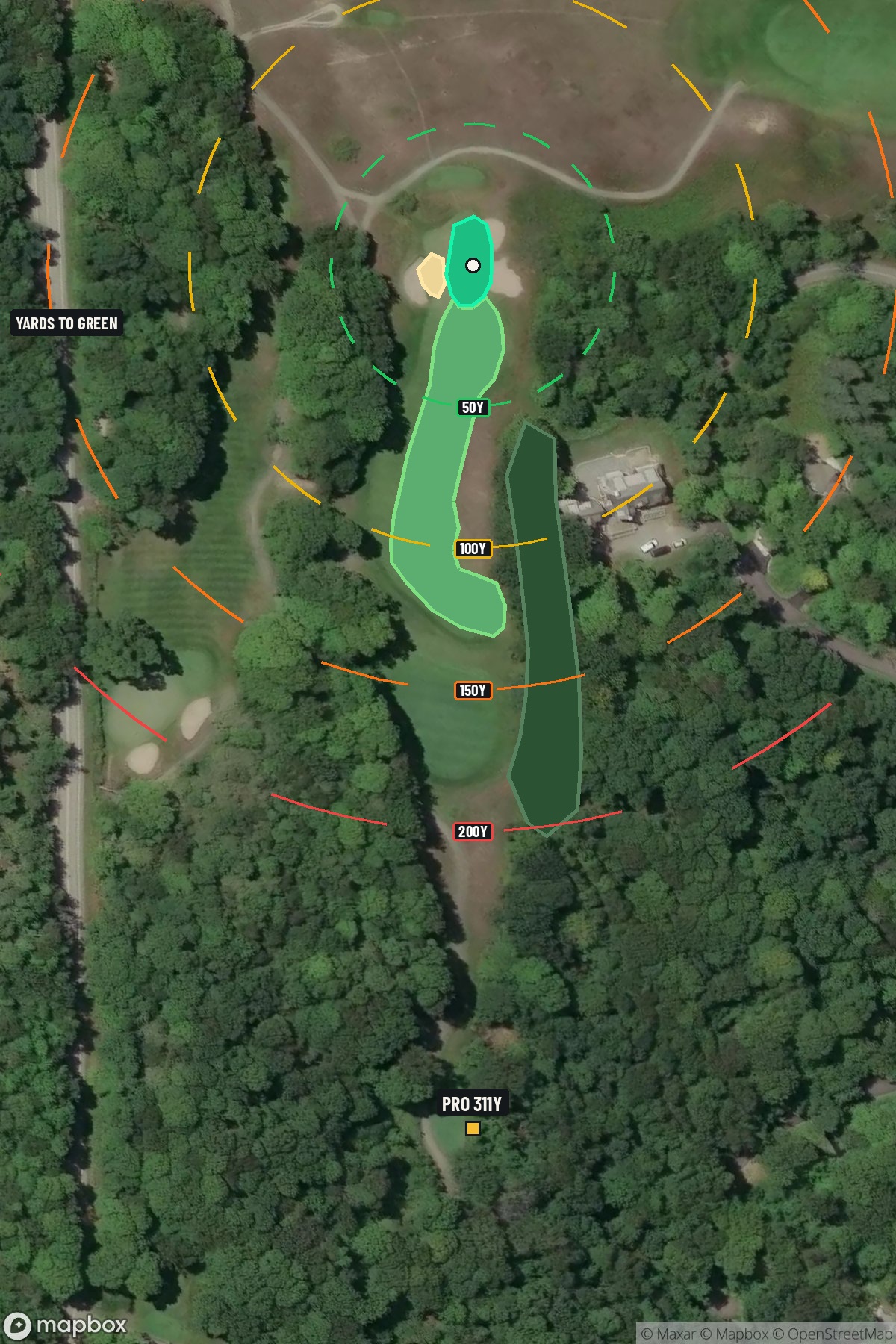
Hole 17 aerial at Crystal Downs Country Club
Map distances from Pro tee · 311 yds

The map's printed distances are measured from the Pro tee to the green; they do not move when you change tees.

Green size: 33 yds deep × 17 yds wide

Mapbox Satellite composite · capture date not provided. Green at the top.

Where this map comes from

Satellite photo
Date not published
Mapbox satellite
Green contours
2015–2016 survey
USGS lidar survey
Report a map problem
100%
Hole 17 aerial at Crystal Downs Country Club

The plan for No. 17

The play: Crystal Downs Country Club hole 17 presents a deceptively challenging short par 4 at 311 yards that epitomizes Alister MacKenzie's brilliant design philosophy. This strategic gem offers multiple playing options, with longer hitters tempted to challenge the green while shorter players must navigate a precise layup. The straight layout features no significant hazards, but the small green demands pinpoint accuracy on the approach shot. MacKenzie's genius shines through in the green complex's subtle contours and strategic positioning, making distance control paramount. This penultimate hole at one of Michigan's most revered courses perfectly sets up the drama for the finishing hole, rewarding thoughtful strategy over pure power.

Shot by shot

  1. Off the tee

    The tee shot presents golfers with a fundamental strategic decision. Longer hitters can attempt to drive the green, but the small target demands exceptional accuracy. A safer play involves hitting a controlled tee shot to the 100-150 yard range, leaving a comfortable wedge approach. Consider using a 3-wood, hybrid, or long iron off the tee to ensure optimal positioning. The target line should favor the center of the fairway, as the straight layout provides no preferred angle. Wind conditions will significantly influence club selection - into the wind, even aggressive players should consider laying back for better distance control on the approach.

  2. Approach & recovery

    From the ideal tee shot position, golfers face a short iron or wedge approach to the small green. The key is committing fully to your yardage and club selection - tentative swings often lead to poor contact and missed greens. Focus on smooth tempo and solid contact rather than trying to manufacture extra spin or trajectory. The small green demands precision, so aim for the center unless pin position clearly favors one side. Pay attention to green firmness, as short approaches can easily bounce over this compact target.

  3. On the green

    The small green at Crystal Downs' 17th requires conservative putting strategy. Lag putting becomes crucial, as aggressive approaches to pins can easily result in three-putts on this limited surface area. Focus on speed control and getting your first putt close rather than trying to make everything. The compact nature means most putts will be relatively straight, but don't underestimate subtle breaks that can affect shorter putts. ## RISK VS REWARD This hole offers one of golf's classic risk/reward scenarios. Going for the green provides birdie and eagle opportunities but risks finding trouble if you miss the small target. The conservative approach of laying up virtually guarantees a good angle for birdie while minimizing big numbers. Weather conditions should heavily influence this decision - calm conditions favor aggression, while wind makes the conservative play more attractive. ## DIFFERENT SKILL LEVELS **High-handicap players** should resist the temptation to go for the green, instead focusing on two solid shots to reach the putting surface. Use a comfortable tee club that ensures good contact and position, then commit to a smooth approach shot targeting the green's center. **Low-handicap players** have more flexibility in their approach strategy. Strong ball-strikers might attempt the drive in favorable conditions, while others may prefer the control of laying back. The key is honest self-assessment of your driving accuracy under pressure. **Mid-handicap players** should generally favor the conservative approach unless conditions are perfect and they're feeling particularly confident with the driver. The scoring opportunity remains excellent with two well-executed shots. This hole rewards smart course management and solid execution over raw power, making it a true test of strategic thinking and shot-making ability.

  4. Watch for

    • Course conditioning and mapped hazards may affect line selection; confirm from the aerial.

The green on No. 17

Mapped boundary
Wide × deepyards
17×33
Areasq ft
3,798

Gear for Hole 17

We may earn a commission when you buy through these links.

Golfer feedback

How did Hole 17 play?

⚡ Quick Golfer Pulse

How did this hole play today?

1-tap anonymous vote

Frequently asked questions

Yardage reference: Pro tees · 311 yards.

What's the best strategy off the tee?

↓

For this 311-yard par 4, most players will hit 3-wood or driver to set up a comfortable approach.

How difficult is hole 17?

↓

This hole is a good scoring opportunity for most golfers. Key challenges include: small green.

How big is the green on hole 17?

↓

The green is small and requires precision. Expect challenging pin positions with limited room for error.

What's a good score on hole 17?

↓

This hole is a birdie opportunity if you find the fairway. This shorter par 4 rewards accuracy off the tee with a short iron approach.