Hole 15 of 18 · Frankfort, Michigan

Hole 15 at Crystal Downs Country Club

Par
4
Yards
327
Bunkers
5
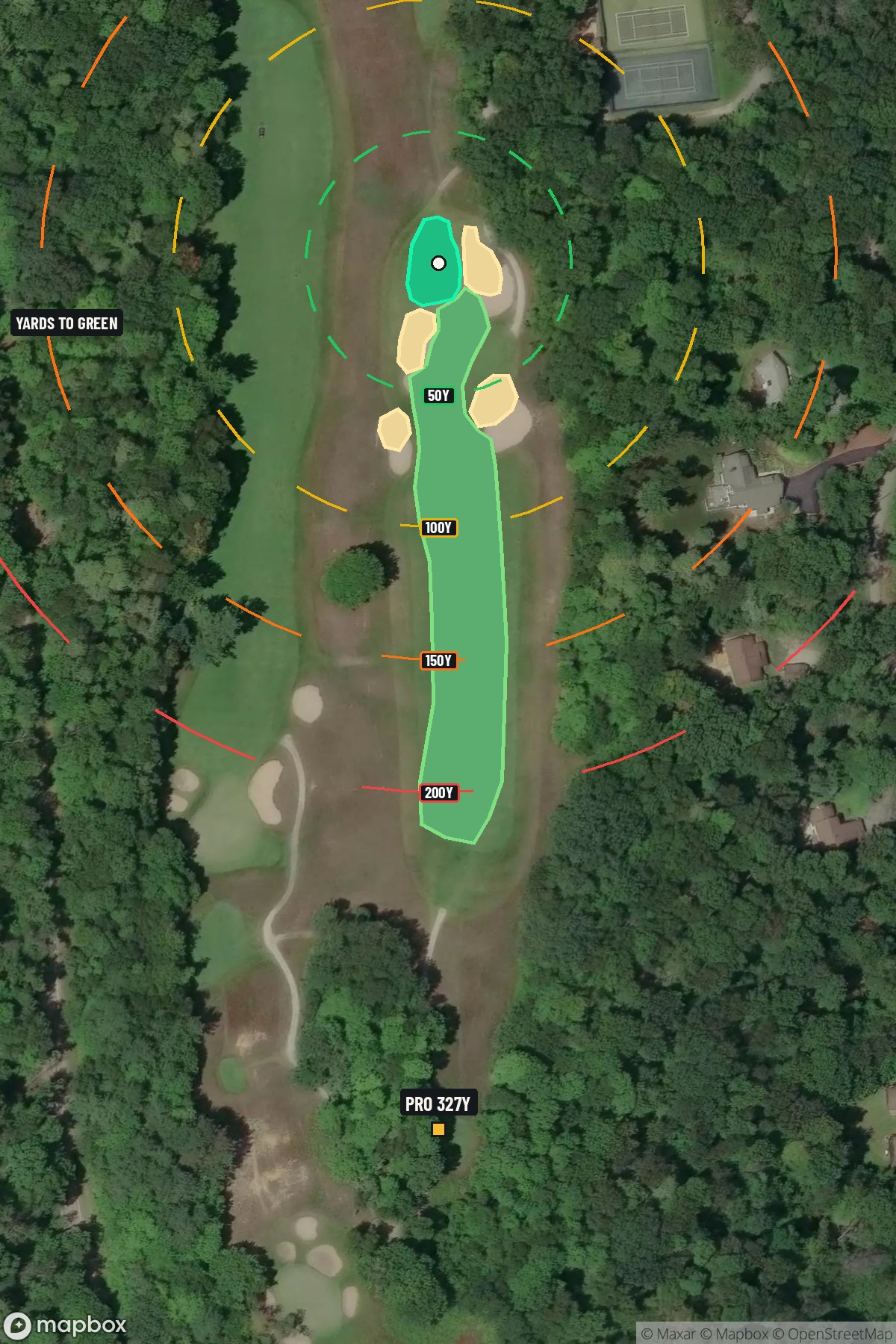
Hole 15 aerial at Crystal Downs Country Club
Map distances from Pro tee · 327 yds

The map's printed distances are measured from the Pro tee to the green; they do not move when you change tees.

Green size: 35 yds deep × 21 yds wide

Mapbox Satellite composite · capture date not provided. Green at the top.

Where this map comes from

Satellite photo
Date not published
Mapbox satellite
Green contours
2015–2016 survey
USGS lidar survey
Report a map problem
100%
Hole 15 aerial at Crystal Downs Country Club

The plan for No. 15

The play: Crystal Downs Country Club hole 15 presents a deceptively challenging short par 4 at 327 yards that epitomizes Alister MacKenzie's brilliant design philosophy. This strategic gem demands precision over power, with a generous fairway that invites aggressive play while punishing poor execution. The approach shot to the small, subtly contoured green requires careful club selection and precise distance control. What appears straightforward from the tee reveals its true character around the green complex, where short-game skills become paramount. The hole's understated elegance perfectly captures Crystal Downs' reputation as one of America's most thoughtful golf courses, rewarding strategic thinking and punishing careless play despite its modest length.

Shot by shot

  1. Off the tee

    **Target Line & Club Selection:** Most players should aim down the center of the fairway with their preferred fairway wood or hybrid. The key decision is whether to lay up to your ideal approach distance or attempt to drive closer to the green. A conservative tee shot of about 200-220 yards leaves a comfortable wedge or short iron approach. **Aggressive Option:** Longer hitters may consider driver to get within 80-100 yards of the green, but this strategy requires precise distance control to avoid running through the fairway or leaving an awkward half-wedge distance. **Wind Considerations:** Pay attention to wind direction, as it will significantly impact both tee shot distance and approach shot club selection on this shorter hole.

  2. Approach & recovery

    **Preferred Angles:** With the small green as your target, accuracy trumps distance. Focus on hitting the center of the green rather than attacking specific pin positions, especially when the flag is tucked near edges. **Club Selection Strategy:** The approach shot is make-or-break on this hole. Take one extra club and make a smooth, controlled swing rather than forcing a shorter iron. The small green penalizes missed approaches more severely than longer holes. **Distance Control:** Given the shorter approach distances typical on this hole, focus on your yardages with wedges and short irons. Know your exact distances to avoid short-siding yourself.

  3. On the green

    **Putting Strategy:** Small greens typically feature more severe slopes and faster putts. Study the green's contours carefully during your approach - the putting surface likely has subtle breaks that become more pronounced on longer putts. **Pin Position Awareness:** When the pin is near the edge of the small green, aim for the center and let your natural shot shape work toward the flag. Avoid directly attacking tucked pins unless you're supremely confident in your distance control. ## RISK VS REWARD **High Reward, Manageable Risk:** This hole offers one of the best risk-reward ratios on the course. The lack of major hazards means aggressive play is less likely to result in big numbers, while the short distance creates multiple birdie opportunities. **Driver Decision:** The biggest risk-reward choice comes off the tee. Driving aggressively can leave a simple pitch shot but may also create awkward distances or require perfect distance control to avoid running out of room. ## DIFFERENT SKILL LEVELS **High Handicappers:** Play conservatively with fairway wood or hybrid off the tee, aiming for the center of the fairway. Focus on hitting the green with your approach rather than attacking pins. A stress-free par here maintains momentum for the challenging closing holes. **Low Handicappers:** Consider the aggressive driver line if conditions permit, but have a specific target distance in mind. Your short iron precision should allow you to attack more pin positions, making this a must-birdie hole in competitive rounds. **Course Management Tip:** Regardless of skill level, this hole rewards patience and precision over power. Use it as a confidence builder and scoring opportunity before tackling Crystal Downs' more demanding finishing holes.

  4. Watch for

    • Course conditioning and mapped hazards may affect line selection; confirm from the aerial.

The green on No. 15

Mapped boundary
Wide × deepyards
21×35
Areasq ft
4,879

Gear for Hole 15

We may earn a commission when you buy through these links.

Golfer feedback

How did Hole 15 play?

⚡ Quick Golfer Pulse

How did this hole play today?

1-tap anonymous vote

Frequently asked questions

Yardage reference: Pro tees · 327 yards.

What's the best strategy off the tee?

↓

For this 327-yard par 4, most players will hit 3-wood or driver to set up a comfortable approach.

How difficult is hole 15?

↓

This hole is a good scoring opportunity for most golfers.

How big is the green on hole 15?

↓

The green is medium-sized with moderate targets. The green is wider than it is deep, rewarding shots that find the correct tier. Pay attention to pin placement when selecting your approach club.

What's a good score on hole 15?

↓

This hole is a birdie opportunity if you find the fairway. This shorter par 4 rewards accuracy off the tee with a short iron approach.