Hole 12 at Sea Island Golf Club (Seaside)
- Par
- 3
- Yardage
- 213 yds
- Stroke index
- 14
- Hazards
- 1 bunker · Water
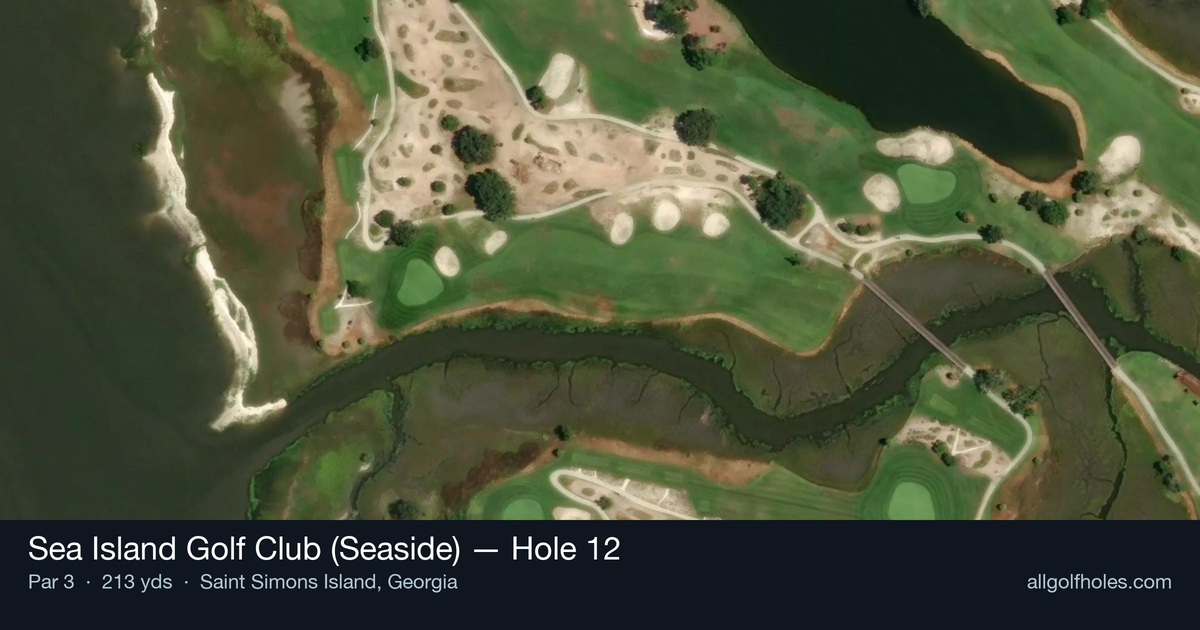
Aerial source not provided
Green size: 32 yds deep × 34 yds wide
Scorecard yardage is for Championship tees. The aerial shows its labeled reference position; distance rings measure to the green.
Championship tees · Par 3 · 213 yards
The plan for No. 12
The 12th hole at Sea Island Golf Club (Seaside) embodies the unpredictable nature of authentic links golf, where wind dictates everything from club selection to strategy. This 213-yard par 3 demands respect for the coastal elements that can transform a routine mid-iron into a white-knuckle challenge. The small green target becomes increasingly elusive as Georgia's Atlantic breezes swirl, forcing golfers to read conditions as carefully as they would any putt. One day might call for a smooth 7-iron with a helping wind, while the next could demand a punched 5-iron into a stiff headwind. Without significant hazards guarding the putting surface, the primary defense lies in the ever-changing atmospheric conditions that make no two rounds identical on this historic layout.
Off the tee
Your tee shot strategy must begin with a thorough wind assessment. Take extra time to read the conditions - throw grass in the air, observe the flag, and watch how other players' shots are affected. In calm conditions, this plays as a comfortable 5-7 iron for most golfers, but coastal winds can easily demand anything from a wedge to a 4-iron. Target the center of the small green rather than chasing pins, especially in windy conditions. The straight layout means you can commit fully to your line without worrying about doglegs or hidden trouble. Focus on a smooth, controlled swing that maintains balance - the wind will amplify any swing flaws.
Approach & recovery
Since this is a par 3, your tee shot IS your approach. The key is accepting that some days you'll be hitting two clubs more or less than usual. Don't fight the wind - use it strategically when possible. A helping wind allows for a more controlled, shorter iron, while into the wind demands commitment to a longer club with a lower ball flight. Aim for the fat part of the green and let your natural shot shape work with the wind direction. The small green size means precision is paramount, so err on the side of caution with club selection rather than trying to force a shot.
On the green
The small green at the 12th demands respect with your putting approach. Coastal winds affect putting as well, particularly on longer putts where the ball travels above the grass longer. Read putts carefully, as the wind that challenged your approach shot continues to influence ball roll. Focus on lag putting to the center of the green on longer attempts, as the small surface leaves little room for error on aggressive putts. The relatively flat nature of most links greens means speed control becomes more critical than reading dramatic breaks. ## RISK VS REWARD This hole offers minimal traditional risk/reward scenarios due to the lack of significant hazards. The real risk lies in poor club selection - being short-sided by the wind or flying the small green entirely. The reward comes from accepting the conditions and playing conservatively to the center of the green. Aggressive pin-hunting only makes sense in calm conditions or when the wind strongly favors your natural ball flight toward a particular pin position. ## DIFFERENT SKILL LEVELS **High Handicappers**: Focus entirely on reaching the green safely. Take an extra club in windy conditions and aim for the center of the green regardless of pin position. A bogey beats the big numbers that come from missing the small target entirely. **Low Handicappers**: You can be more aggressive with pin positions in calm conditions, but still respect the wind. Use your course management skills to recognize when to attack and when to play conservatively. Your superior ball-striking allows for more precise wind adjustments, but don't let confidence override smart strategy. **Wind Strategy for All Levels**: Remember that at Seaside, you're spending as much time reading the wind as reading putts. Some days the wind helps, nudging your ball toward the target like a friend. Other days, it's your adversary, demanding that 5-iron where you'd normally hit a comfortable 7. Embrace this challenge - it's what makes links golf so compelling and ensures that no two rounds at Sea Island are ever the same.
Watch for
- Course conditioning and mapped hazards may affect line selection; confirm from the aerial.
Hole 12 Green Complex
Mapped green boundary
Green size: 5,687 sq ft
How did Hole 12 play?
How did this hole play today?
Frequently asked questions
Yardage reference: Championship tees · 213 yards.
What club should I use on this par 3?
↓
At 213 yards, most golfers will need a fairway wood or hybrid to reach this green. Adjust for elevation, wind, and pin position.
How difficult is hole 12?
↓
This hole is one of the tougher holes on the course for most golfers. Key challenges include: long par 3, water in play.
What hazards should I watch out for on hole 12?
↓
Key hazards include: 1 greenside bunker; water at 110.3 yards. Plan your shots to avoid these trouble spots.
How big is the green on hole 12?
↓
The green is medium-sized with moderate targets. Pay attention to pin placement when selecting your approach club.
Where is the best miss on hole 12?
↓
If you're going to miss the green, favor the right side. The left (water) brings more trouble into play and makes recovery difficult.
What's a good score on hole 12?
↓
This hole is a challenging par where bogey is acceptable. This longer par 3 will test your long iron or hybrid game. Par is a good score.