Hole 16 at Tiburon Golf Club (Black)
- Par
- 4
- Yardage
- 414 yds
- Stroke index
- 2
- Hazards
- 4 bunkers · Water
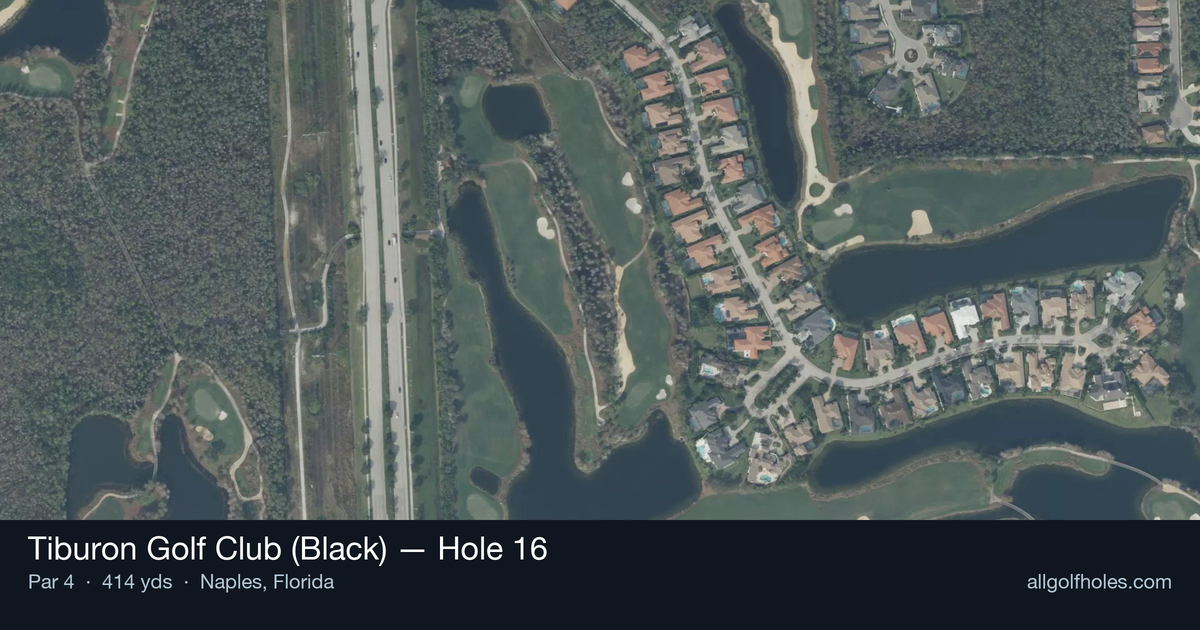
Aerial source not provided
Green size: 30 yds deep × 25 yds wide
Scorecard yardage is for Championship tees. The aerial shows its labeled reference position; distance rings measure to the green.
Championship tees · Par 4 · 414 yards
The plan for No. 16
The penultimate hole at Tiburon Golf Club (Black) demands precision over power, embodying Greg Norman's strategic design philosophy. This 414-yard par 4 presents a deceptively straightforward challenge that has humbled countless golfers on the Shark's meticulously crafted layout. The tee shot requires careful placement on a generous fairway, but the real test lies in the approach shot to a compact, well-defended green complex. As the second-hardest hole on the course, this straight par 4 rewards accuracy and course management over aggressive play. The small green demands pinpoint iron play, making distance control paramount for birdie opportunities. Norman's signature touches shine through in the subtle undulations and strategic bunkering that guard against wayward approaches, creating a memorable test before the closing hole.
Off the tee
The tee shot strategy centers on positioning for the optimal approach angle to the small green. With no significant hazards listed, the primary challenge becomes finding the ideal section of fairway that provides the best approach opportunity. Target the center-left portion of the fairway to open up the green for your approach shot. Driver may be tempting, but consider a 3-wood or hybrid if you're between clubs - accuracy trumps distance on this hole. The key is avoiding any rough areas that could complicate your approach to such a small target.
Approach & recovery
The approach shot to this small green demands surgical precision. From the fairway, you'll likely face a mid-iron to short-iron depending on your tee shot placement and pin position. Study the pin location carefully during your pre-round preparation, as the small green size leaves little margin for error. Favor the center of the green regardless of pin position - trying to attack tucked pins on such a small target often leads to trouble. Take one extra club and swing smoothly rather than forcing a shot that could miss the putting surface entirely.
On the green
The small green at the 16th rewards conservative putting strategy. With limited real estate, most putts will be relatively straight, but don't underestimate the subtle breaks that Norman incorporated into his design. Focus on speed control above all else - a putt that rolls off this small green can leave you with a challenging up-and-down. When reading putts, pay attention to the overall slope of the green complex, as even minor undulations are magnified on a smaller putting surface. ## RISK VS REWARD The risk/reward calculation here is straightforward: there's little reward for taking unnecessary risks on this hole. The small green punishes aggressive play, making this more about damage control and smart course management. The reward comes from playing within yourself and walking away with par or better on one of the course's most challenging holes. Avoid the temptation to attack pins or force shots - let the hole come to you. ## DIFFERENT SKILL LEVELS **High Handicappers:** Focus on two-putt pars by playing to the center of the green on every shot. Use a fairway wood or hybrid off the tee for accuracy, then take an extra club on your approach and aim for the heart of the green. Your goal is avoiding big numbers on this difficult hole. **Low Handicappers:** You can be more aggressive with driver off the tee to set up shorter approach shots, but maintain discipline around pin positions. Even scratch players should respect the small green size and prioritize hitting the putting surface over attacking pins. This is a hole where course management skills separate good rounds from great ones. The 16th at Tiburon Black exemplifies why Greg Norman's designs have stood the test of time - it rewards strategic thinking and punishes reckless play, making it a true test of golf strategy and execution when you need it most in your round.
Watch for
- Course conditioning and mapped hazards may affect line selection; confirm from the aerial.
Hole 16 Green Complex
Mapped green boundary
Green size: 3,334 sq ft
How did Hole 16 play?
How did this hole play today?
Frequently asked questions
Yardage reference: Championship tees · 414 yards.
What's the best strategy off the tee?
↓
For this 414-yard par 4, most players will hit driver to set up a comfortable approach.
How difficult is hole 16?
↓
This hole is one of the tougher holes on the course for most golfers. Key challenges include: water in play, heavily bunkered, small green.
How big is the green on hole 16?
↓
The green is small and requires precision. The green is deeper than wide, so club selection is crucial. Expect challenging pin positions with limited room for error.