Hole 13 at PGA West (TPC Stadium course)
- Par
- 3
- Yardage
- 214 yds
- Stroke index
- 10
- Hazards
- 3 bunkers · Water
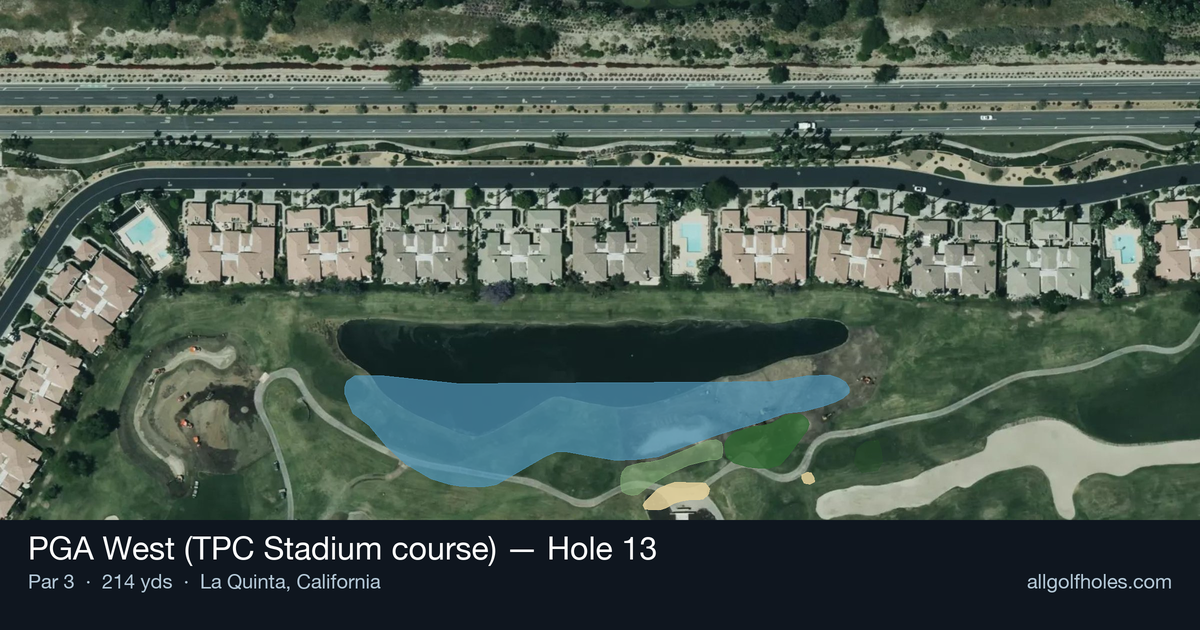
Aerial source not provided
Green size: 38 yds deep × 26 yds wide
Scorecard yardage is for Championship tees. The aerial shows its labeled reference position; distance rings measure to the green.
Championship tees · Par 3 · 214 yards
The plan for No. 13
The 13th hole at PGA West (TPC Stadium course) exemplifies Pete Dye's masterful ability to create visual intimidation through strategic water placement. This demanding par 3 stretches 214 yards with water running the full length down the left side, framed by Dye's signature railroad ties that create a menacing wall of consequence. The tee shot demands precision over power, as golfers must carry their approach to a small, well-protected green while avoiding the aquatic grave that lurks just steps away. The right side offers safer bailout options, but leaves challenging recovery shots. As part of the PGA TOUR Q-School Finals host venue, this hole has witnessed countless dreams made and broken, making every tee shot a test of both skill and nerve in true Stadium Course fashion.
Off the tee
Club selection is critical on this one-shot hole, typically requiring a mid to long iron depending on pin position and wind conditions. The target line should favor the right side of the green to create maximum margin for error away from the water. Avoid the temptation to aim directly at left pins - instead, play to the center-right portion of the green and let your putting handle the rest. The railroad tie bulkhead creates a hard boundary with no recovery options, making course management more important than aggressive pin-seeking.
Approach & recovery
Since this is a par 3, your tee shot IS your approach shot. Focus on tempo and balance rather than trying to muscle the ball to the pin. The small green size means precision trumps power - a smooth swing with proper club selection will yield better results than forcing a shorter iron. Pay attention to wind direction, as the desert conditions can significantly affect ball flight. When in doubt, take one more club and swing easier.
On the green
The small green size means most putts will be relatively short, but don't underestimate the subtle breaks that Pete Dye incorporated into the design. Putts will generally break away from the water, so factor in the slope when reading your line. Lag putting becomes crucial here - with limited green space, leaving yourself a comfortable second putt is often the difference between par and bogey. ## RISK VS REWARD The risk/reward calculation is straightforward but stark: there's minimal reward for aggressive play toward left pins, but significant penalty for missing left. The smart play is always to the safe side of the green, accepting a longer putt in exchange for eliminating the water hazard. This conservative approach often leads to better scoring over time, as pars accumulate while others rack up penalty strokes. ## DIFFERENT SKILL LEVELS **High Handicappers:** Play conservatively to the right side of the green regardless of pin position. Focus on solid contact and accept any result on the putting surface as a victory. Consider taking an extra club to ensure you clear any front hazards with room to spare. **Low Handicappers:** While you have the skill to attack certain pin positions, respect the water hazard and only go left when the pin is in the back-right portion of the green. Your superior putting skills allow you to be more conservative with approach shots while still scoring well. Use your course management skills to identify when conditions favor aggressive play versus when to play safe. The 13th hole at PGA West Stadium serves as a perfect example of Pete Dye's genius - creating a hole that appears simple but demands respect and precise execution to score well.
Hole 13 Green Complex
Mapped green boundary
Green size: 4,609 sq ft
How did Hole 13 play?
How did this hole play today?
Frequently asked questions
Yardage reference: Championship tees · 214 yards.
What club should I use on this par 3?
↓
At 214 yards, most golfers will need a fairway wood or hybrid to reach this green. Adjust for elevation, wind, and pin position.
How difficult is hole 13?
↓
This hole is one of the tougher holes on the course for most golfers. Key challenges include: long par 3, water in play.
How big is the green on hole 13?
↓
The green is medium-sized with moderate targets. The green is wider than it is deep, rewarding shots that find the correct tier. Pay attention to pin placement when selecting your approach club.
What's a good score on hole 13?
↓
This hole is a challenging par where bogey is acceptable. This longer par 3 will test your long iron or hybrid game. Par is a good score.