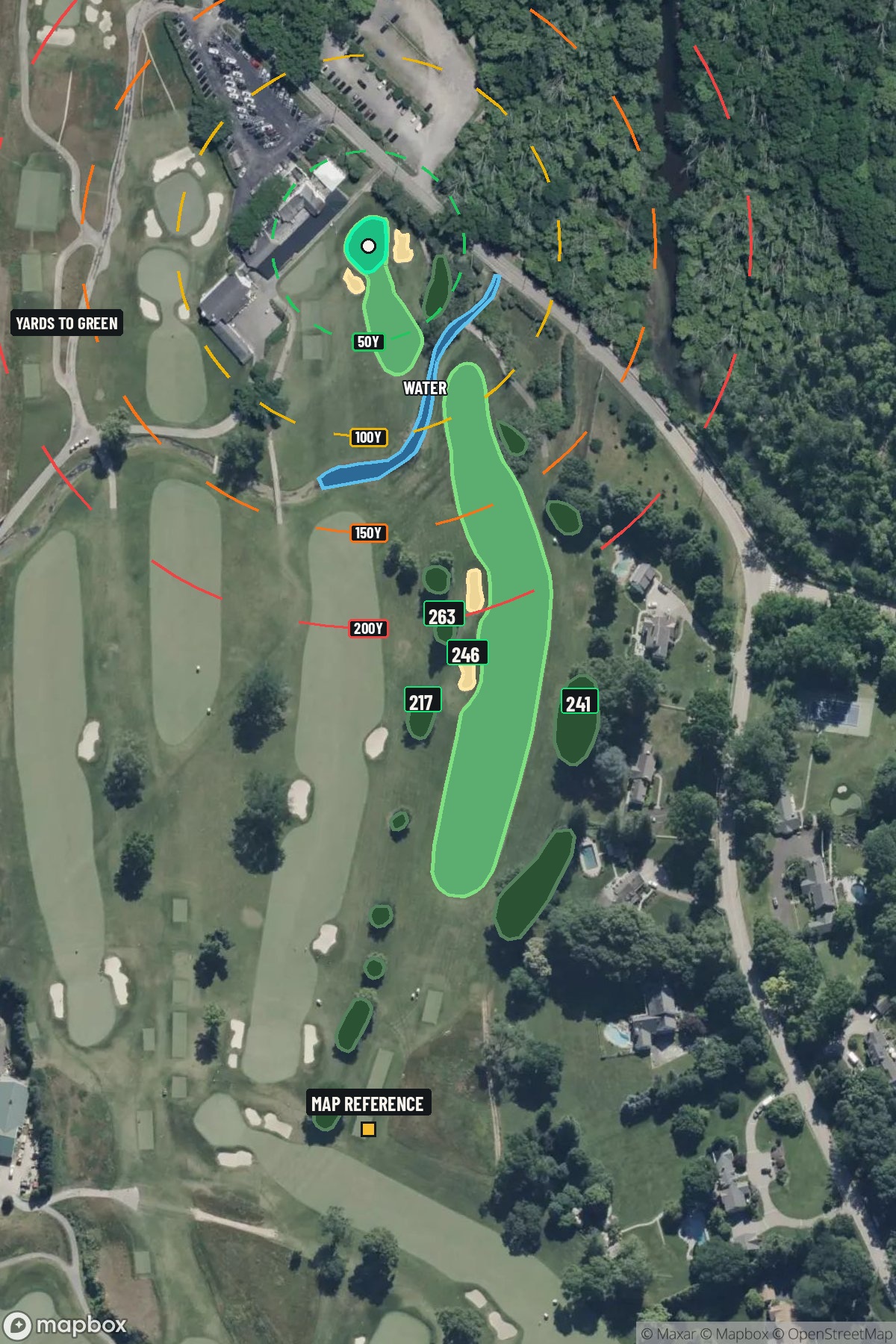
Hole 18 of 18 · Flourtown, Pennsylvania

Hole 18 at Philadelphia Cricket Club

Par
4
Yards
487
Handicap
2
Bunkers, water
4
Hole 18 aerial at Philadelphia Cricket Club
Map distances from Map reference tee

The map's printed distances are measured from the Map reference tee to the green; they do not move when you change tees. Your Championship yardage is in the tiles above.

Green size: 30 yds deep × 22 yds wide

Mapbox Satellite composite · capture date not provided. Green at the top.

Where this map comes from

Satellite photo
Date not published
Mapbox satellite
Green contours
2017–2018 survey
USGS lidar survey
Report a map problem
100%
Hole 18 aerial at Philadelphia Cricket Club

The plan for No. 18

These notes were written before the current map. Where their distances differ, trust the map.

The play: The finishing hole at Philadelphia Cricket Club presents a formidable 487-yard par 4 that serves as a worthy conclusion to this storied Flourtown layout. As the second-hardest hole on the course, this straight-away challenge demands both power and precision from the championship tees. The generous fairway welcomes aggressive tee shots, but the real test awaits with the approach to a small, well-protected green complex. Without bunkers or water to complicate matters, success hinges purely on club selection and execution into the tight target. This classic design rewards bold play while punishing the slightest miscalculation, making Philadelphia Cricket Club hole 18 a memorable finale that can make or break a round.

Shot by shot

  1. Off the tee

    Driver is typically the play here, as you'll need every yard you can get to leave a manageable approach. Aim down the center of the fairway with perhaps a slight favor to the right side, which often provides the better angle into the green. The straight layout means there's no need for heroics - a solid, in-play drive of 250-280 yards sets up the best opportunity for success. Avoid the temptation to overswing; rhythm and timing are more valuable than raw distance when the pressure is on.

  2. Approach & recovery

    This is where the hole shows its teeth. Even after a good drive, you're likely facing a mid to long iron into a small green. Club selection is critical - take enough club to reach the putting surface comfortably, as coming up short leaves a difficult recovery. The small green size demands precision, so focus on the center of the green regardless of pin position. A two-putt par from anywhere on the green is an excellent result. Consider the wind conditions carefully, as they can significantly impact club selection on this longer approach.

  3. On the green

    The small green creates premium on lag putting and distance control. Without specific knowledge of the green's contours, play conservatively and aim to leave yourself uphill putts when possible. Focus on speed control rather than trying to hole long putts - three-putting from distance can quickly turn a good round sour. If you find yourself above the hole, take extra care with pace. ## RISK VS REWARD The primary risk/reward decision comes with tee shot club selection. While driver offers the best chance at a shorter approach, players struggling with accuracy might consider 3-wood or hybrid to ensure finding the fairway. The reward of an aggressive approach shot to a tucked pin rarely outweighs the risk of missing the small green entirely. Play to the fat part of the green and take your chances with the putter. ## DIFFERENT SKILL LEVELS **High Handicappers:** Focus on keeping the ball in play off the tee, even if it means using a fairway wood. Accept that this will likely be a three-shot hole and plan accordingly. Aim for the center of the green on your approach and don't get greedy with pin hunting. **Low Handicappers:** This hole rewards aggressive but smart play. Use driver to get as close as possible, then be precise with your iron selection. You have the skills to attack certain pin positions, but respect the small green size. This is often a hole where pars feel like birdies given the difficulty. The 18th at Philadelphia Cricket Club epitomizes strategic golf course design - rewarding good shots while severely punishing poor ones. Success here comes from playing within your abilities while maximizing your strengths.

  4. Watch for

    • Course conditioning and mapped hazards may affect line selection; confirm from the aerial.

The green on No. 18

Mapped boundary
Wide × deepyards
22×30
Areasq ft
4,055

Gear for Hole 18

We may earn a commission when you buy through these links.

Golfer feedback

How did Hole 18 play?

⚡ Quick Golfer Pulse

How did this hole play today?

1-tap anonymous vote

Frequently asked questions

Yardage reference: Championship tees · 487 yards.

What's the best strategy off the tee?

↓

For this 487-yard par 4, most players will hit driver to set up a comfortable approach.

How difficult is hole 18?

↓

This hole is one of the tougher holes on the course for most golfers. Key challenges include: long par 4, water in play, heavily bunkered, small green.

How big is the green on hole 18?

↓

The green is small and requires precision. The green is wider than it is deep, rewarding shots that find the correct tier. Expect challenging pin positions with limited room for error.

What's a good score on hole 18?

↓

This hole is one of the tougher holes where par feels like birdie. A challenging par 4. Accept that bogey happens and avoid big numbers.