Hole 4 of 18 · Akron, Ohio

Hole 4 at Firestone Country Club - South

Par
4
Yards
471
Handicap
7
Bunkers, water
3
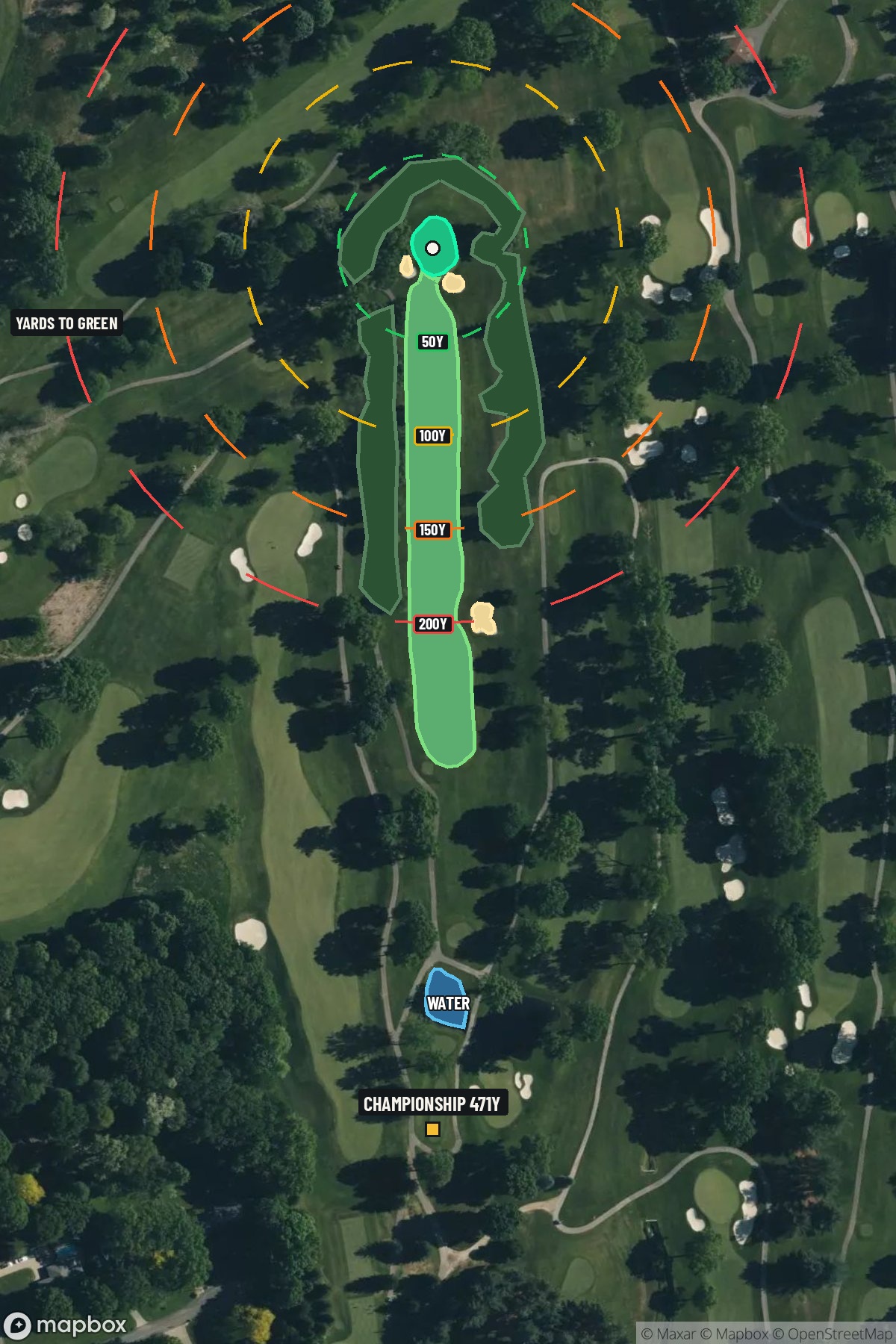
Hole 4 aerial at Firestone Country Club - South
Map distances from Championship tee · 471 yds

The map's printed distances are measured from the Championship tee to the green; they do not move when you change tees.

Green size: 33 yds deep × 26 yds wide

Mapbox Satellite composite · capture date not provided. Green at the top.

Where this map comes from

Satellite photo
Date not published
Mapbox satellite
Green contours
2019–2021 survey
USGS lidar survey
Report a map problem
100%
Hole 4 aerial at Firestone Country Club - South

The plan for No. 4

The play: The 4th hole at Firestone Country Club - South exemplifies why this legendary course earned its "Monster" nickname from Arnold Palmer. This demanding 471-yard par 4 presents a deceptively straightforward tee shot down a generous fairway, but the real challenge emerges on the approach shot. The elevated green complex requires significant lift and precise distance control, as the height differential punishes any shot that comes up short. The small green demands accuracy from what is typically a mid-to-long iron, making club selection critical. Part of the Robert Trent Jones Sr. design that has tested PGA Championship fields, this hole rewards aggressive play but severely punishes miscalculation. The elevated putting surface creates an intimidating visual that has frustrated countless golfers, making par feel like a victory on this unforgiving test of precision and power.

Shot by shot

  1. Off the tee

    Your tee shot strategy should prioritize finding the optimal landing zone in the fairway, typically around the 250-yard mark for most golfers. Driver is the logical choice for longer hitters who can carry it safely into the landing area, while shorter hitters might consider a 3-wood or hybrid to ensure accuracy over pure distance. The target line should favor the center of the fairway, as missing left or right will complicate your approach angle to the elevated green. Avoid the temptation to overswing - a smooth, controlled swing that finds the short grass is far more valuable than extra distance in the rough.

  2. Approach & recovery

    This is where the hole reveals its true character and where golfers historically "get themselves into trouble." The elevated green demands a high-trajectory shot with enough carry to clear the front edge and hold the putting surface. Club selection becomes crucial - take at least one extra club to account for the elevation change and don't be afraid to go two clubs up if conditions are firm. A mid-iron to long-iron approach (depending on your tee shot distance) should be struck cleanly with a slightly steeper angle of attack to generate the necessary height. The small green size means precision is paramount - aim for the center of the green regardless of pin position.

  3. On the green

    The elevated nature of this green creates subtle but significant breaks that can fool even experienced players. Putts generally break away from the highest point of the green, and the small size means there's little room for error with speed control. When the pin is tucked near edges, always err toward the center of the green - two-putting from 30 feet is far better than chipping back up from below the green. Pay special attention to grain direction, as elevated greens often drain differently than ground-level putting surfaces. ## RISK VS REWARD The primary risk/reward decision comes with tee shot positioning versus approach club selection. Aggressive drivers who push their tee shots for maximum distance might find better approach angles but risk missing the fairway entirely. The conservative play - fairway position over distance - often yields better scoring opportunities because it ensures a clean lie for the demanding approach shot. There's minimal reward for being overly aggressive on this hole; par is always a good score. ## DIFFERENT SKILL LEVELS **High-handicap players** should focus entirely on course management rather than trying to overpower the hole. Consider laying up with your second shot if the approach distance exceeds your comfortable carry range - a wedge third shot to an elevated green is far more manageable than a forced long iron. Play for bogey as your target score and take par as a bonus. **Low-handicap players** can be more aggressive with driver off the tee but must respect the approach shot requirements. The elevation change and small green size demand precise distance control, so trust your yardages and don't second-guess club selection. This is a hole where scrambling skills become crucial if you miss the green, as getting up and down from below an elevated surface requires excellent touch around the greens. The 4th hole at Firestone South perfectly embodies why this course has challenged the world's best players for decades. Success here comes from respecting the hole's demands rather than trying to overpower them.

  4. Watch for

    • Water comes into play on this hole; confirm carry lines from the mapped aerial.
    • Bunkers (3 mapped) guard landing areas and greens; favor the side that leaves a clear approach.

The green on No. 4

Mapped boundary
Wide × deepyards
26×33
Areasq ft
5,022

Gear for Hole 4

We may earn a commission when you buy through these links.

Course and tournament history

Historical context for the course and venue. Each entry identifies the event or course it describes.

  • 1960 · Arnold Palmer

    After a triple–bogey at the 16th hole in the third round of the PGA Championship in 1960, Arnold Palmer called it a "monster." The name stayed and struck such a chord with frustrated golfers

    Source →
Golfer feedback

How did Hole 4 play?

⚡ Quick Golfer Pulse

How did this hole play today?

1-tap anonymous vote

Frequently asked questions

Yardage reference: Championship tees · 471 yards.

What's the best strategy off the tee?

↓

For this 471-yard par 4, most players will hit driver to set up a comfortable approach.

How difficult is hole 4?

↓

This hole is one of the tougher holes on the course for most golfers. Key challenges include: long par 4, water in play.

How big is the green on hole 4?

↓

The green is medium-sized with moderate targets. Pay attention to pin placement when selecting your approach club.

What's a good score on hole 4?

↓

This hole is one of the tougher holes where par feels like birdie. A challenging par 4. Accept that bogey happens and avoid big numbers.