Hole 16 at Baltusrol Golf Club (Lower Course)
- Par
- 3
- Yardage
- 210 yds
- Stroke index
- 18
- Hazards
- 5 bunkers
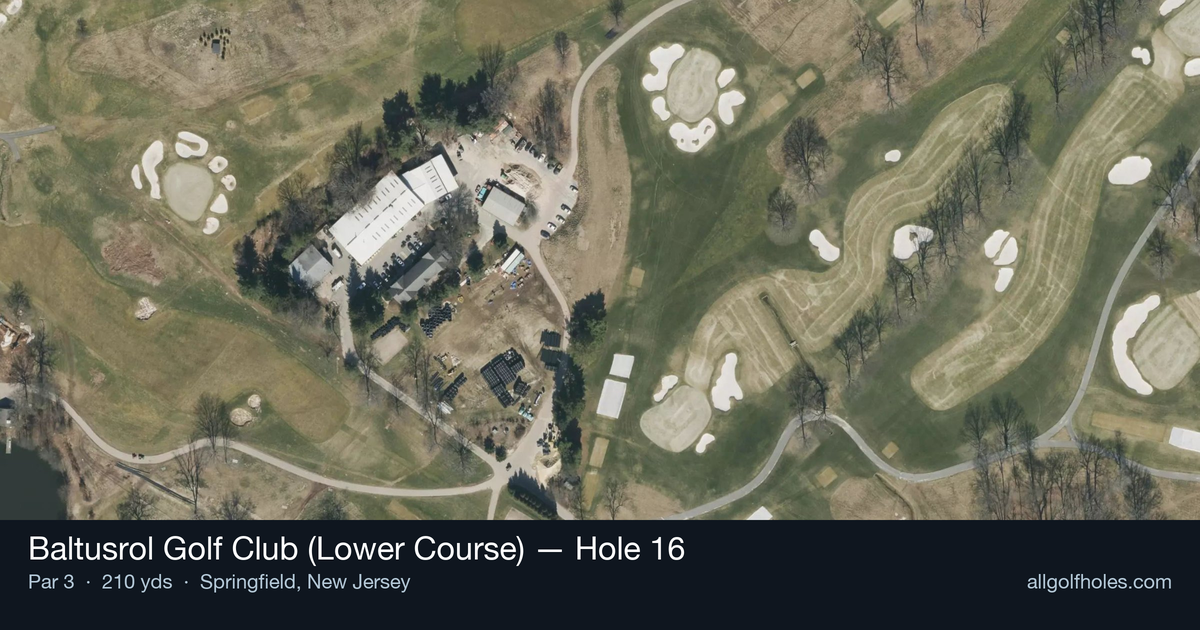
Aerial source not provided
Green size: 33 yds deep × 27 yds wide
Scorecard yardage is for Championship tees. The aerial shows its labeled reference position; distance rings measure to the green.
Championship tees · Par 3 · 210 yards
The plan for No. 16
This classic Tillinghast par 3 at 210 yards presents a straightforward but demanding test of iron play and course management. With the handicap rating of 18, this hole offers one of the best scoring opportunities on the Lower Course, but precision is still paramount on this small green.
Off the tee
Club selection is critical on this lengthy par 3, typically requiring anything from a 5-iron to a 4-iron depending on wind conditions and pin position. Aim for the center of the green regardless of pin placement, as the small putting surface leaves little margin for error. Take one extra club and swing smoothly rather than forcing a shot - the key is solid contact and proper trajectory. Pay close attention to wind direction, as it can significantly affect club selection on this exposed hole. Commit fully to your yardage and club choice, as tentative swings often result in poor contact and short misses.
Approach & recovery
Since this is a par 3, your tee shot IS your approach shot. Focus on landing the ball softly on the green with proper spin to hold the putting surface. The small green size means you must be precise with both line and length - being pin-high is more important than being close to the flag. If the pin is tucked in a corner, resist the temptation to fire directly at it; instead, play to the fat part of the green and rely on your putting. Monitor the firmness of the green, as harder conditions will require more precision to stop the ball quickly.
On the green
The small green at the 16th creates interesting putting dynamics, as most golfers will face relatively short putts if they've hit the green in regulation. However, the compact surface can create subtle breaks that are easy to misread. Take time to study the overall slope and grain direction. Lag putting becomes less of a concern here, but precision on shorter putts increases in importance. The green's size means that even slight misreads can result in three-putts, so be extra careful with your green reading routine.
Watch for
- The 16th hole at Baltusrol's Lower Course embodies A.W. Tillinghast's design philosophy of rewarding precise execution while punishing wayward shots. At 210 yards to a small green, this par 3 requires committed club selection and accurate t…
Hole 16 Green Complex
Mapped green boundary
Green size: 5,501 sq ft
How did Hole 16 play?
How did this hole play today?
Frequently asked questions
Yardage reference: Championship tees · 210 yards.
What club should I use on this par 3?
↓
At 210 yards, most golfers will need a fairway wood or hybrid to reach this green. Adjust for elevation, wind, and pin position.
How difficult is hole 16?
↓
This hole is a moderate challenge for most golfers. Key challenges include: long par 3, heavily bunkered.
What hazards should I watch out for on hole 16?
↓
Key hazards include: 5 greenside bunkers. Plan your shots to avoid these trouble spots.
How big is the green on hole 16?
↓
The green is medium-sized with moderate targets. Pay attention to pin placement when selecting your approach club.
What's a good score on hole 16?
↓
This hole is a challenging par where bogey is acceptable. This longer par 3 will test your long iron or hybrid game. Par is a good score.