Hole 4 at Whistling Straits
- Par
- 4
- Yardage
- 489 yds
- Stroke index
- 2
- Hazards
- 9 bunkers · Water
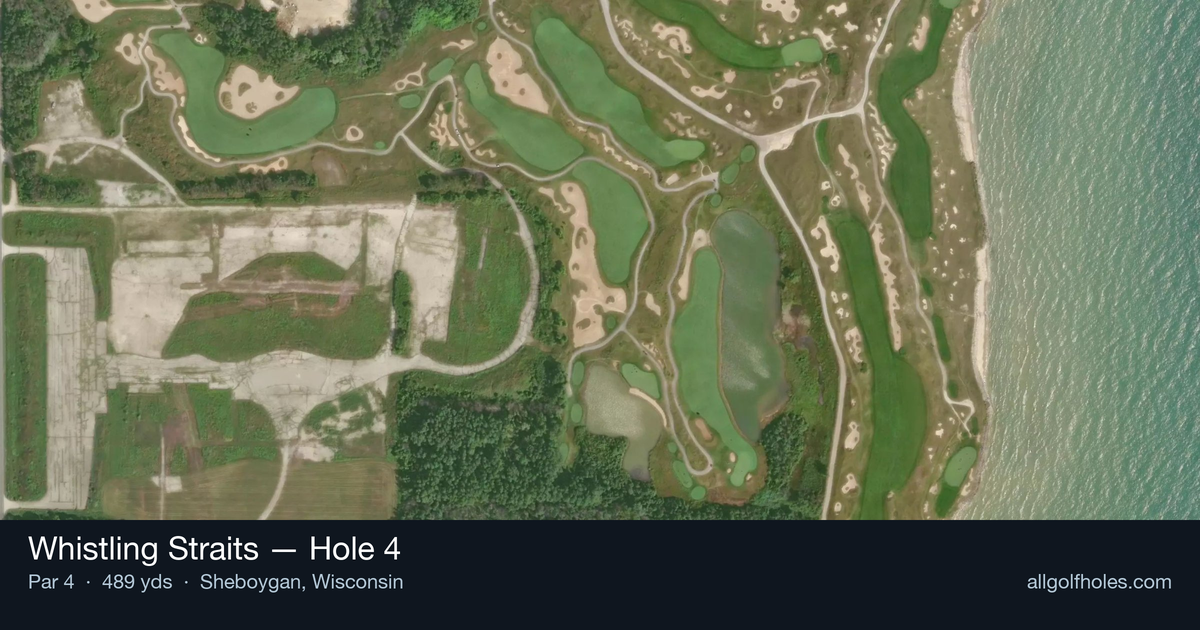
Aerial source not provided
Green size: 35 yds deep × 18 yds wide
Scorecard yardage is for Championship tees. The aerial shows its labeled reference position; distance rings measure to the green.
Championship tees · Par 4 · 489 yards
The plan for No. 4
The fourth hole at Whistling Straits continues Pete Dye's masterful blend of links-style architecture with strategic complexity. This lengthy par-4 demands precision and power as players navigate toward Lake Michigan, where Dye's signature pot bunkers and undulating terrain create both visual intimidation and strategic challenge.
Off the tee
The tee shot strategy centers on maximizing distance while maintaining accuracy down the center of the fairway. Given the hole's length, most golfers will need every yard they can manage off the tee to have a reasonable approach shot. Target the center-left portion of the fairway to provide the best angle into the small green. Driver is typically the play here, but golfers struggling with accuracy should consider a strong 3-wood to ensure they find the short grass. The straight layout eliminates dogleg concerns, but Pete Dye's design likely includes subtle undulations and strategic bunkering that reward precise placement.
Approach & recovery
The approach shot represents the hole's primary challenge, as most golfers will face a mid-to-long iron into a small target. The key is committing to enough club to reach the green, as coming up short on a Pete Dye design often means finding trouble. Aim for the center of the green regardless of pin position, as the small target leaves little margin for error. The green's compact size means that even a well-struck shot to the wrong portion can leave a challenging putt. Factor in wind conditions, which can be significant at this lakeside venue, and don't be afraid to take one more club than the yardage suggests.
On the green
The small green demands precision with your putting stroke and green-reading skills. Pete Dye greens are known for subtle breaks and firm conditions that can make distance control challenging. Focus on getting your first putt close rather than being overly aggressive with birdie attempts. The green's size means most putts will be relatively short, but don't underestimate the importance of reading the grain and slope correctly. Lag putting becomes crucial when facing longer putts on this compact surface.
Watch for
- Water along the hole
- Greenside bunker (greenside)
- Fairway bunker crossing the landing zone
Hole 4 Green Complex
Mapped green boundary
Green size: 3,938 sq ft
Course coverage
Tournament and creator videos about Whistling Straits — shared course coverage, not hole-specific clips.
Featured by these creators
Creator videos about this course
YouTube creators who filmed or featured Whistling Straits. · Stats as of Oct 12, 2026 · 5d ago
Our $50,000 BUCKET LIST Golf Trip With LUKE KWON & TOOMS.... (Whistling Straits)
I recreated Jordan Spieth's Whistling Straits shot 👀⛳️
I play one of the BEST Golf Courses in America 🇺🇸 (Whistling Straits)
The Good Good Whistling Straits Major
How did Hole 4 play?
How did this hole play today?
Frequently asked questions
Yardage reference: Championship tees · 489 yards.
What's the best strategy off the tee?
↓
For this 489-yard par 4, most players will hit driver to set up a comfortable approach.
How difficult is hole 4?
↓
This hole is one of the tougher holes on the course for most golfers. Key challenges include: long par 4, water in play, heavily bunkered, small green.
How big is the green on hole 4?
↓
The green is small and requires precision. The green is deeper than wide, so club selection is crucial. Expect challenging pin positions with limited room for error.
Which side of the fairway is safer on hole 4?
↓
Aim for the left side of the fairway when possible. Missing right (water) brings more trouble into play.
What's a good score on hole 4?
↓
This hole is one of the tougher holes where par feels like birdie. A challenging par 4. Accept that bogey happens and avoid big numbers.