Hole 16 of 18 · Mullen, Nebraska
Hole 16 at Sand Hills Golf Club
- Par
- 5
- Yards
- 612
- Handicap
- 17
- Bunkers
- 9
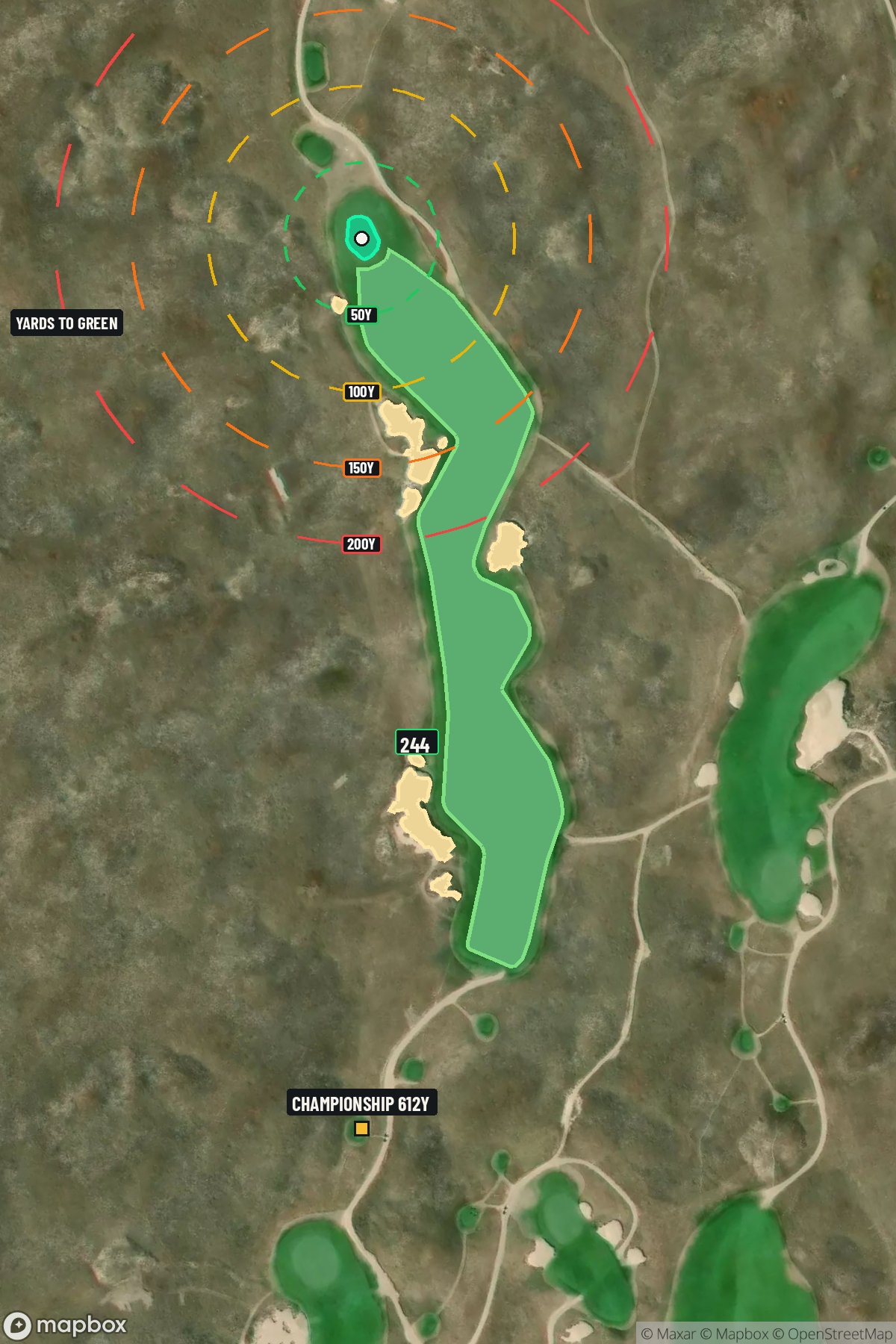
Map distances from Championship tee · 612 yds
The map's printed distances are measured from the Championship tee to the green; they do not move when you change tees.
Green size: 30 yds deep × 23 yds wide
Mapbox Satellite composite · capture date not provided. Green at the top.
Where this map comes from
- Satellite photo
- Date not published
- Mapbox satellite
- Green contours
- 2023–2024 survey
- USGS lidar survey
The plan for No. 16
The play: The 612-yard par 5 16th hole at Sand Hills Golf Club epitomizes the course's minimalist design philosophy, presenting a deceptively challenging test through Nebraska's rolling sandhills terrain. This straight-away par 5 demands precision over power, as the natural undulations of the land create blind spots and challenging lies throughout the hole. Without artificial hazards cluttering the landscape, golfers must navigate the subtle slopes and native grasses that define Sand Hills' world-renowned aesthetic. The small green serves as the ultimate target, requiring a carefully planned approach to avoid the surrounding collection areas. This hole perfectly captures the strategic brilliance that has made Sand Hills Golf Club one of America's most celebrated modern courses.
Shot by shot
The green on No. 16
Mapped boundary- Wide × deepyards
- 23×30
- Areasq ft
- 4,138
Gear for Hole 16
9bunkers
Bring a sand wedge you trust
 Titleist Vokey SM10 Tour Chrome$180 MSRPCheck priceCompare all picks →
612yd par 5
A fairway wood sets up the third
 PING G440 Max Fairway Wood$300 MSRPCheck priceCompare all picks →
We may earn a commission when you buy through these links.
Course coverage
Tournament and creator videos about Sand Hills Golf Club — shared course coverage, not hole-specific clips.
Featured by these creators
Creator videos about this course
YouTube creators who filmed or featured Sand Hills Golf Club. · Stats as of Nov 16, 2026 · 6d ago
The Story of Sand Hills | Designing Golf
Kapalua, Sand Hills, & 35 Years at Skokie Country Club | The Fried Egg Golf Podcast
How did Hole 16 play?
How did this hole play today?
Frequently asked questions
Yardage reference: Championship tees · 612 yards.
Can this par 5 be reached in two?
↓
At 612 yards, A true three-shot hole for most players. Position your layup to leave a comfortable wedge distance.
How difficult is hole 16?
↓
This hole is a moderate challenge for most golfers. Key challenges include: long par 5, small green.
How big is the green on hole 16?
↓
The green is small and requires precision. The green is wider than it is deep, rewarding shots that find the correct tier. Expect challenging pin positions with limited room for error.
What's a good score on hole 16?
↓
This hole is a true three-shot hole where birdie requires execution. This longer par 5 demands patience. Two good shots set up the scoring opportunity.