Hole 13 of 18 · Mullen, Nebraska
Hole 13 at Sand Hills Golf Club
- Par
- 3
- Yards
- 216
- Handicap
- 7
- Bunkers
- 7
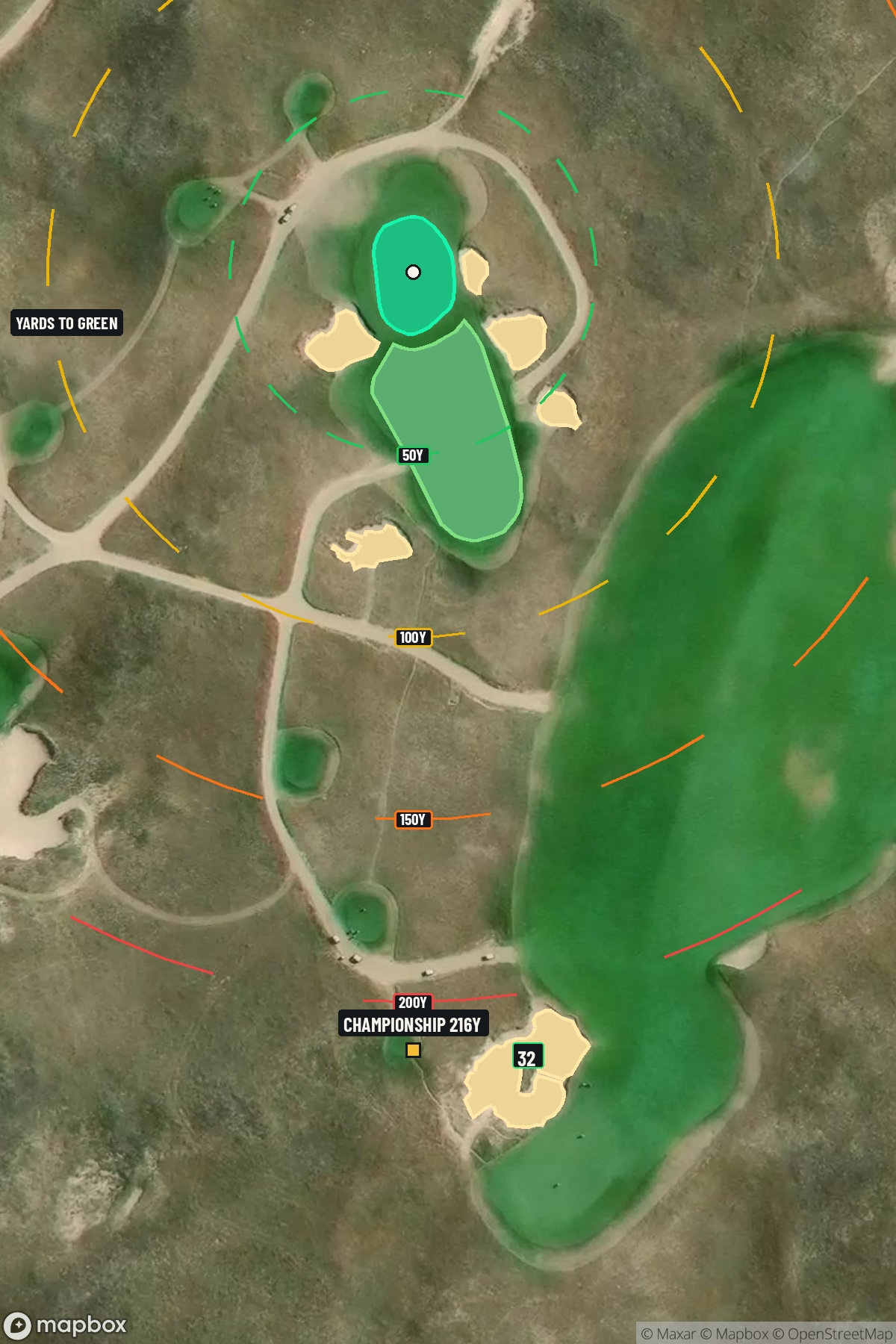
Map distances from Championship tee · 216 yds
The map's printed distances are measured from the Championship tee to the green; they do not move when you change tees.
Green size: 33 yds deep × 23 yds wide
Mapbox Satellite composite · capture date not provided. Green at the top.
Where this map comes from
- Satellite photo
- Date not published
- Mapbox satellite
- Green contours
- 2023–2024 survey
- USGS lidar survey
The plan for No. 13
The play: Sand Hills Golf Club hole 13 presents a deceptively challenging par 3 that epitomizes the course's minimalist beauty across Nebraska's Sandhills. At 216 yards, this straight shot demands precision to a small, elevated green that sits naturally within the rolling terrain. The absence of traditional hazards doesn't diminish the difficulty—instead, the hole's challenge lies in club selection and distance control against the prairie winds that can dramatically alter yardages. The green's compact size punishes anything but the most accurate tee shots, while the surrounding native grasses provide a stunning visual backdrop. This hole perfectly captures Sand Hills' philosophy of strategic golf through natural design rather than manufactured obstacles.
Shot by shot
The green on No. 13
Mapped boundary- Wide × deepyards
- 23×33
- Areasq ft
- 4,889
Gear for Hole 13
7bunkers
Bring a sand wedge you trust
 Titleist Vokey SM10 Tour Chrome$180 MSRPCheck priceCompare all picks →
216yd par 3
A hybrid beats a long iron here
 Callaway Elyte Hybrid$329 MSRPCheck priceCompare all picks →
We may earn a commission when you buy through these links.
Course coverage
Tournament and creator videos about Sand Hills Golf Club — shared course coverage, not hole-specific clips.
Featured by these creators
Creator videos about this course
YouTube creators who filmed or featured Sand Hills Golf Club. · Stats as of Nov 16, 2026 · 6d ago
The Story of Sand Hills | Designing Golf
Kapalua, Sand Hills, & 35 Years at Skokie Country Club | The Fried Egg Golf Podcast
How did Hole 13 play?
How did this hole play today?
Frequently asked questions
Yardage reference: Championship tees · 216 yards.
What club should I use on this par 3?
↓
At 216 yards, most golfers will need a fairway wood or hybrid to reach this green. Adjust for elevation, wind, and pin position.
How difficult is hole 13?
↓
This hole is a moderate challenge for most golfers. Key challenges include: long par 3.
How big is the green on hole 13?
↓
The green is medium-sized with moderate targets. The green is wider than it is deep, rewarding shots that find the correct tier. Pay attention to pin placement when selecting your approach club.
Where is the best miss on hole 13?
↓
If you're going to miss the green, favor the left side. The right brings more trouble into play and makes recovery difficult.
What's a good score on hole 13?
↓
This hole is a challenging par where bogey is acceptable. This longer par 3 will test your long iron or hybrid game. Par is a good score.