Hole 16 at TPC of Louisiana
- Par
- 4
- Yardage
- 355 yds
- Stroke index
- 8
- Hazards
- 6 bunkers · Water
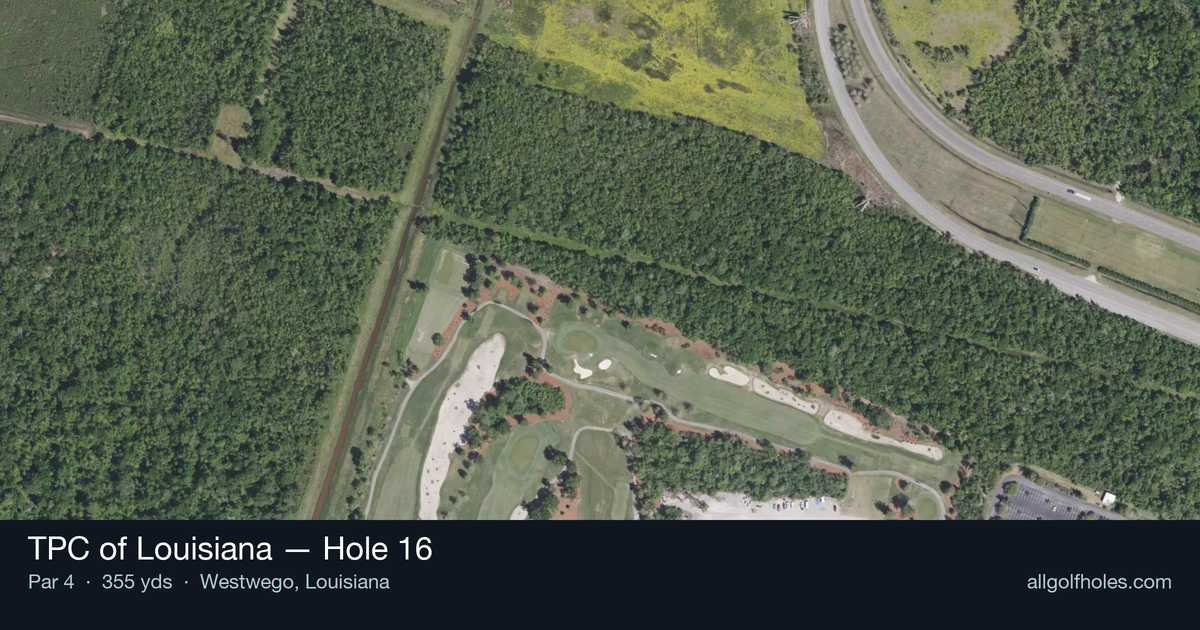
Aerial source not provided
Green size: 29 yds deep × 22 yds wide
Scorecard yardage is for Championship tees. The aerial shows its labeled reference position; distance rings measure to the green.
Championship tees · Par 4 · 355 yards
The plan for No. 16
TPC of Louisiana hole 16 launches a thrilling finishing stretch with this tempting 355-yard par 4 that presents golfers with a classic risk-reward decision. The relatively short distance makes driving the green an enticing possibility, but water hugging the entire left side of the tiny putting surface transforms this opportunity into a high-stakes gamble. Conservative players can lay up with a mid-iron off the tee, leaving a comfortable wedge approach to the small green complex. However, the compact target demands precision on the approach shot, as missing left brings water into play while the diminutive green offers little margin for error. This strategic hole perfectly embodies Pete Dye's philosophy of rewarding bold, accurate play while severely punishing poor execution.
Off the tee
The tee shot presents two distinct strategies. Conservative players should aim for the right side of the fairway with a 3-wood or long iron, leaving a comfortable wedge approach from about 100-120 yards. This strategy keeps you well away from the water and provides the best angle to attack the small green. For those considering the aggressive line, a driver aimed at the green carries significant risk - while the distance is manageable for longer hitters, the water hazard and minuscule target make this a low-percentage play unless you're exceptionally confident in your driving accuracy.
Approach & recovery
From the fairway, your approach shot is all about precision to the small green. Target the center of the green regardless of pin position, as the compact putting surface makes getting close to any flag location achievable with a good putt. Short irons or wedges from the preferred landing area should focus on a smooth, controlled swing rather than trying to get too cute with spin or trajectory. The water left means missing on that side is disastrous, while a miss right typically leaves a manageable chip shot.
On the green
The small green at the 16th requires careful pace control on putts, as the limited real estate means longer putts can easily run off the putting surface. Focus on getting your first putt close rather than being aggressive toward the hole. Pay attention to any subtle breaks, as even minor slopes are magnified on a compact green. Leave yourself uphill putts when possible, as these are easier to control on a small target. ## RISK VS REWARD The primary risk-reward decision comes on the tee shot. Going for the green offers the chance at eagle and almost guarantees birdie if successful, but the penalty for missing left into the water can easily lead to double bogey or worse. The conservative play of laying up almost guarantees a birdie opportunity with a short iron in hand, making this often the smarter percentage play, especially in competitive situations. ## DIFFERENT SKILL LEVELS **High-handicap players** should always lay up with their most reliable fairway club, focusing on finding the short grass and leaving a comfortable distance for their best scoring iron. Avoid the temptation to go for the green, as the water hazard and small target make this an extremely low-percentage play. **Low-handicap players** can consider the aggressive line based on conditions and tournament situation. If you're a long, accurate driver and need to make up ground, the risk may be justified. However, even skilled players should lean toward the conservative approach when protecting a lead or in windy conditions that make precision more difficult. The 16th hole exemplifies Pete Dye's design philosophy of offering multiple ways to play a hole while severely punishing poor execution. Success here comes from honest self-assessment of your abilities and making the smart play based on your skill level and the situation at hand.
Watch for
- Course conditioning and mapped hazards may affect line selection; confirm from the aerial.
Hole 16 Green Complex
Mapped green boundary
Green size: 3,611 sq ft
How did Hole 16 play?
How did this hole play today?
Frequently asked questions
Yardage reference: Championship tees · 355 yards.
What's the best strategy off the tee?
↓
For this 355-yard par 4, most players will hit 3-wood or driver to set up a comfortable approach.
How difficult is hole 16?
↓
This hole is one of the tougher holes on the course for most golfers. Key challenges include: water in play, heavily bunkered, small green.
How big is the green on hole 16?
↓
The green is small and requires precision. The green is deeper than wide, so club selection is crucial. Expect challenging pin positions with limited room for error.
What's a good score on hole 16?
↓
This hole is a medium-length test where par is a solid result. A straightforward par 4 where course management pays off.