Hole 8 at TPC of Louisiana
- Par
- 4
- Yardage
- 371 yds
- Stroke index
- 17
- Hazards
- 9 bunkers
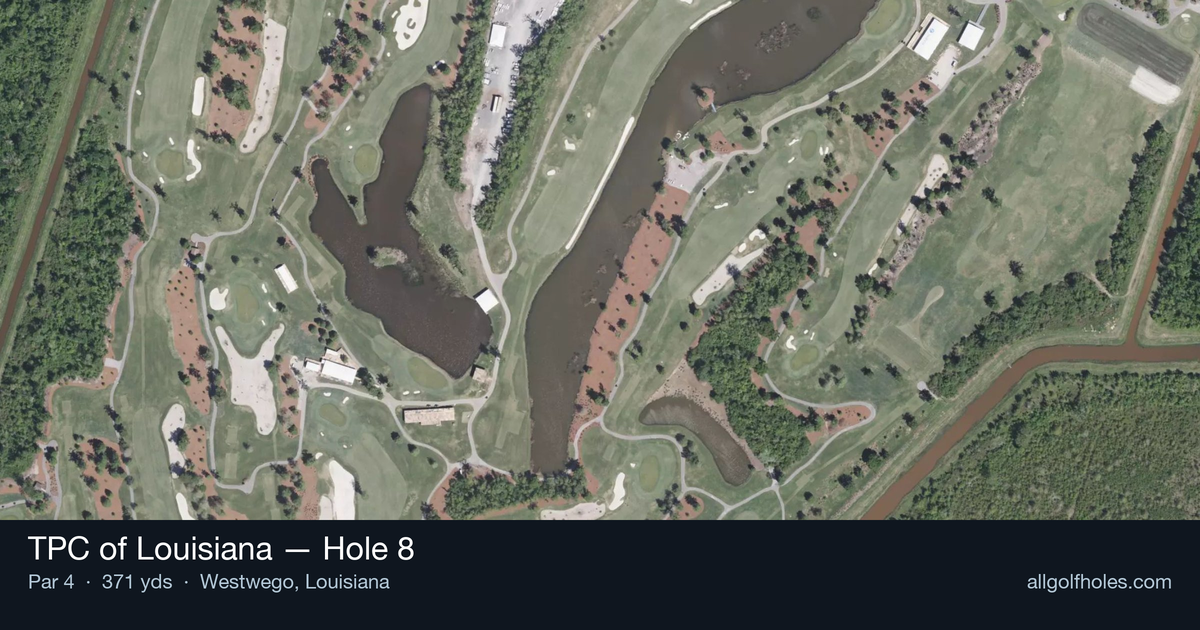
Aerial source not provided
Green size: 28 yds deep × 19 yds wide
Scorecard yardage is for Championship tees. The aerial shows its labeled reference position; distance rings measure to the green.
Championship tees · Par 4 · 371 yards
The plan for No. 8
The eighth hole at TPC of Louisiana showcases Pete Dye's strategic brilliance in a deceptively simple package. This 371-yard par 4 may appear straightforward, but the master architect's subtle touches create mental challenges that belie its modest length. The generous fairway invites aggressive tee shots, yet positioning becomes critical for the optimal approach angle to the compact green complex. Without traditional hazards to intimidate, golfers must rely on precision and course management rather than power. The small green demands accurate iron play, making club selection and distance control paramount. As one of the more scorable holes on this Zurich Classic venue, it rewards smart strategy while punishing complacency—a quintessential example of Dye's psychological warfare that has challenged PGA Tour professionals since 2007.
Off the tee
Your tee shot strategy should prioritize accuracy and optimal positioning over maximum distance. With the hole's relatively short length, most golfers can reach a comfortable approach distance with a controlled drive. Consider hitting driver only if you can consistently find the fairway - the small green will punish wayward approach shots from any rough or difficult lies. Target the center of the fairway, leaving yourself in the 100-130 yard range for your approach. This distance allows for precise club selection and better spin control into the small green. If conditions are firm or the pin is tucked, consider laying back with a 3-wood or hybrid to ensure a clean lie for your approach shot.
Approach & recovery
The approach shot is where this hole's true challenge reveals itself. The small green demands pinpoint accuracy and proper trajectory control. Study the pin position carefully - with limited green surface area, even a well-struck shot can find trouble if aimed at the wrong section. Focus on the center of the green unless the pin is easily accessible. A mid-iron to short-iron approach should provide the necessary height and spin to hold this small target. Pay attention to wind conditions, as they'll have a greater impact on a smaller landing area. Club up if needed to ensure solid contact rather than trying to force a shorter iron.
On the green
Pete Dye greens are notorious for their subtle breaks and challenging pin positions, and the 8th's small putting surface amplifies these characteristics. Take extra time to read the green from multiple angles, as the limited space means every putt matters more. Focus on lag putting to the correct level, as three-putts can quickly turn a scoring opportunity into a bogey. The small green likely features strategic undulations that funnel balls away from certain pin positions, so respect the architecture and putt to the fat part of the green when in doubt. ## RISK VS REWARD This hole offers excellent birdie potential for players who execute proper course management. The risk comes from being overly aggressive - the small green punishes imprecise approaches, and Pete Dye's design likely includes subtle collection areas or challenging recovery shots around the green. The reward is clear: at 371 yards and the 17th handicap, this represents one of your best scoring opportunities on the course. However, the small green means the margin for error is smaller than typical par 4s, making smart play more important than aggressive play. ## DIFFERENT SKILL LEVELS **High Handicappers:** Focus entirely on finding the fairway with your tee shot, even if it means using a hybrid or fairway wood. From the fairway, aim for the center of the green regardless of pin position. Two putts from anywhere on this small green should be manageable, making par a realistic goal. **Low Handicappers:** You can be more aggressive with driver off the tee if you're confident in your accuracy. Study pin positions carefully and consider attacking when the flag is in an accessible location. However, respect Pete Dye's design - even tour professionals approach these greens with caution during the Zurich Classic. **Mid Handicappers:** Strike a balance between aggression and caution. Use the club that gives you the highest percentage of fairway hits, then focus on solid contact for your approach rather than trying to get too cute with distance control. The 8th hole rewards patience and precision - qualities that define successful play on any Pete Dye design. Trust your yardages, commit to your target line, and let the scoring opportunity come to you rather than forcing it.
Watch for
- Course conditioning and mapped hazards may affect line selection; confirm from the aerial.
Hole 8 Green Complex
Mapped green boundary
Green size: 2,508 sq ft
How did Hole 8 play?
How did this hole play today?
Frequently asked questions
Yardage reference: Championship tees · 371 yards.
What's the best strategy off the tee?
↓
For this 371-yard par 4, most players will hit 3-wood or driver to set up a comfortable approach.
How difficult is hole 8?
↓
This hole is a moderate challenge for most golfers. Key challenges include: heavily bunkered, small green.
How big is the green on hole 8?
↓
The green is small and requires precision. The green is deeper than wide, so club selection is crucial. Expect challenging pin positions with limited room for error.
What's a good score on hole 8?
↓
This hole is a medium-length test where par is a solid result. A straightforward par 4 where course management pays off.