Hole 6 of 18 · Augusta, Georgia
Hole 6 at Augusta National Golf Club
- Par
- 3
- Yards
- 180
- Bunker
- 1
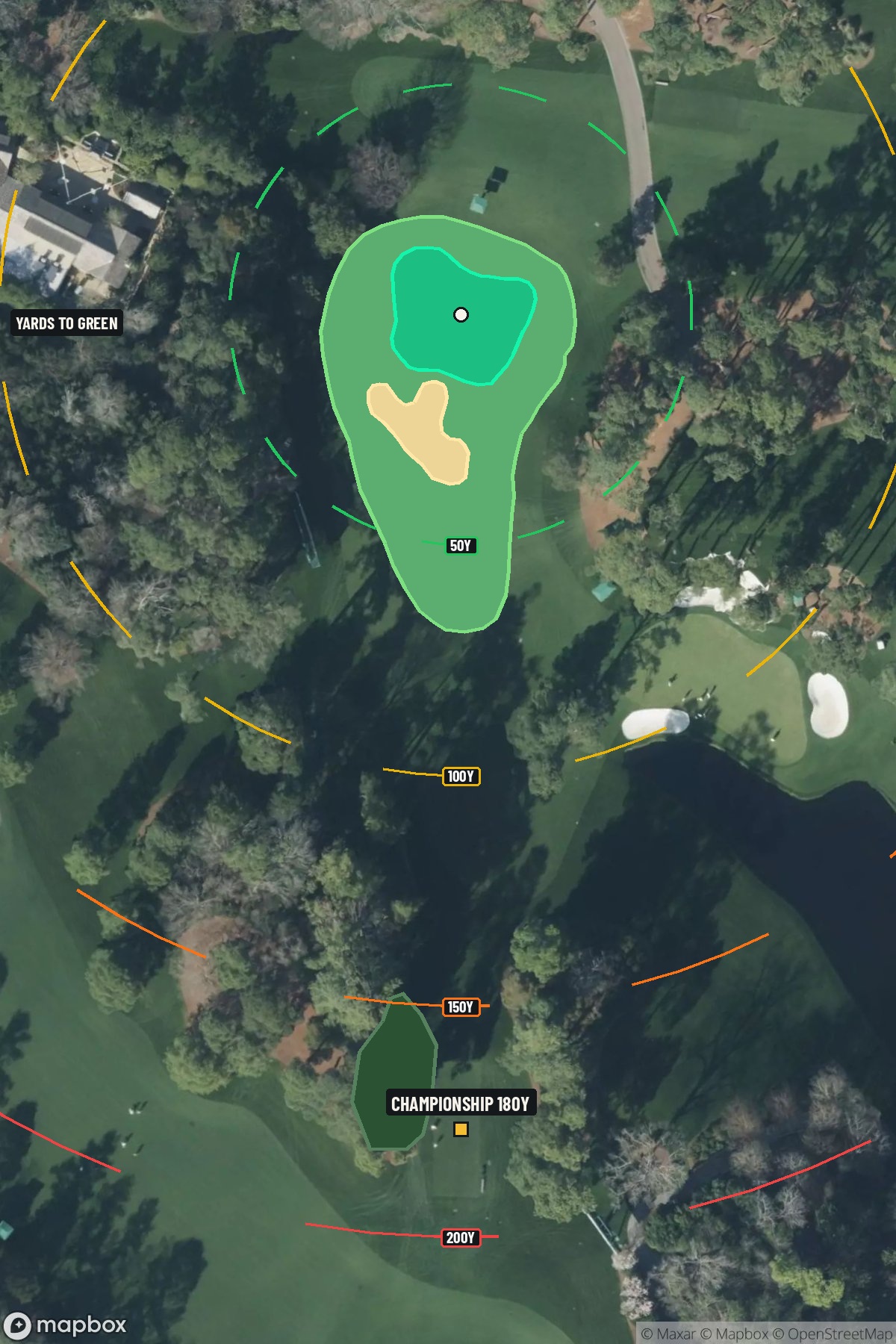
Map distances from Championship tee · 180 yds
The map's printed distances are measured from the Championship tee to the green; they do not move when you change tees.
Green size: 30 yds deep × 32 yds wide
Mapbox Satellite composite · capture date not provided. Green at the top.
Where this map comes from
- Satellite photo
- Date not published
- Mapbox satellite
- Green contours
- 2018–2019 survey
- USGS lidar survey
The plan for No. 6
The play: Augusta National Golf Club hole 6 presents a deceptively challenging par 3 that demands precision over power at 180 yards. This elegant one-shotter features a compact green nestled among the pines, where club selection becomes critical as swirling winds through the Georgia trees can turn a confident mid-iron into a guessing game. The absence of major water hazards doesn't diminish the hole's bite - missing the small target green leaves players facing delicate recovery shots from surrounding slopes and collection areas. What makes this hole memorable is its understated difficulty within Augusta's legendary layout, requiring golfers to commit fully to their tee shot while navigating the subtle but punishing contours that define this storied venue's strategic design philosophy.
Shot by shot
The green on No. 6
Mapped boundary- Wide × deepyards
- 32×30
- Areasq ft
- 5,111
Gear for Hole 6
180yd par 3
Know the exact number
 Bushnell Pro X3+$549 MSRPCheck priceCompare all picks →
We may earn a commission when you buy through these links.
Course coverage
Tournament and creator videos about Augusta National Golf Club — shared course coverage, not hole-specific clips.
Featured by these creators
Creator videos about this course
YouTube creators who filmed or featured Augusta National Golf Club. · Stats as of Nov 16, 2026 · 3d ago
How to Play Augusta National at Home! ⛳️ #golf #golfsimulator #augustanational
Strapped: Augusta National
Jim "Bones" Mackay Goes In-Depth on Augusta National | Lunch With The Boys
Template Holes at Augusta National? | Designing Golf
The Original Augusta National (feat. Brian Schneider) | Designing Golf
Bernhard Langer on Augusta National, the “Big Five,” & His Life in Golf | The Fried Egg Golf Podcast
Will Zalatoris Talks Injury Comeback, Augusta National, & Much More | The Fried Egg Golf Podcast
I Play Golf at the FAKE Augusta National! (Wow!)
Playing Augusta National & Three Courses Brian Schneider Thinks About | The Fried Egg Golf Podcast
How did Hole 6 play?
How did this hole play today?
Frequently asked questions
Yardage reference: Championship tees · 180 yards.
Why is hole 6 called 'Juniper'?
↓
Based on the provided context, there is no information explaining why hole 6 at Augusta National Golf Club is called "Juniper." The web search results discuss "Amen Corner" (holes 11-13) and general course information, but do not contain any details about the naming of the 6th hole or its "Juniper" designation.
What club should I use on this par 3?
↓
At 180 yards, most golfers will need a long iron or hybrid (5-iron to 6-iron) to reach this green. Adjust for elevation, wind, and pin position.
How difficult is hole 6?
↓
This hole is a good scoring opportunity for most golfers.
What hazards should I watch out for on hole 6?
↓
Key hazards include: 1 greenside bunker. Plan your shots to avoid these trouble spots.
How big is the green on hole 6?
↓
The green is medium-sized with moderate targets. Pay attention to pin placement when selecting your approach club.