Hole 7 of 18 · Augusta, Georgia
Hole 7 at Augusta National Golf Club
- Par
- 4
- Yards
- 450
- Bunkers
- 5
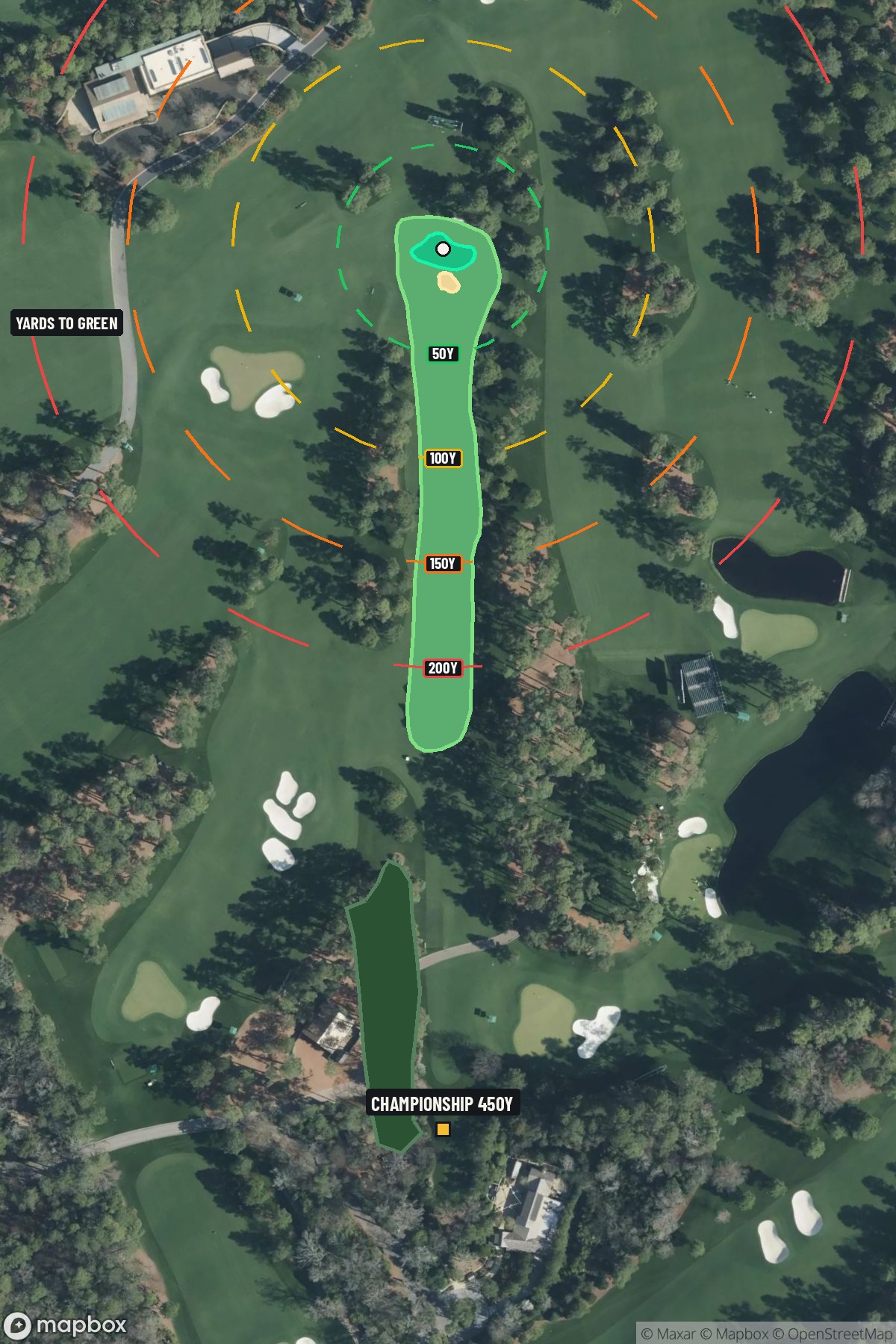
Map distances from Championship tee · 450 yds
The map's printed distances are measured from the Championship tee to the green; they do not move when you change tees.
Green size: 19 yds deep × 32 yds wide
Mapbox Satellite composite · capture date not provided. Green at the top.
Where this map comes from
- Satellite photo
- Date not published
- Mapbox satellite
- Green contours
- 2018–2019 survey
- USGS lidar survey
The plan for No. 7
The play: Pampas, Augusta National Golf Club hole 7, presents a deceptively challenging par 4 that demands precision from tee to green. This 450-yard test stretches across Augusta's pristine landscape with a straight layout that belies its difficulty. The tee shot requires accuracy to find the fairway, as Augusta's notorious rough punishes wayward drives by reducing ball control and spin. With no significant hazards protecting the hole, the challenge lies in the approach shot to a small, elevated green that demands precise distance control. The putting surface's compact size leaves little margin for error, making course management essential. Originally named Cedar before becoming Pampas, this hole exemplifies Augusta's philosophy of rewarding accuracy over power, setting up perfectly for the drama that awaits at nearby Amen Corner.
Shot by shot
The green on No. 7
Mapped boundary- Wide × deepyards
- 32×19
- Areasq ft
- 2,836
Gear for Hole 7
5bunkers
Bring a sand wedge you trust
 Titleist Vokey SM10 Tour Chrome$180 MSRPCheck priceCompare all picks →
450yd par 4
Distance off the tee pays
 TaylorMade Qi35 Max$600 MSRPCheck priceCompare all picks →
We may earn a commission when you buy through these links.
Course coverage
Tournament and creator videos about Augusta National Golf Club — shared course coverage, not hole-specific clips.
Featured by these creators
Creator videos about this course
YouTube creators who filmed or featured Augusta National Golf Club. · Stats as of Nov 16, 2026 · 2d ago
How to Play Augusta National at Home! ⛳️ #golf #golfsimulator #augustanational
Strapped: Augusta National
Jim "Bones" Mackay Goes In-Depth on Augusta National | Lunch With The Boys
Template Holes at Augusta National? | Designing Golf
The Original Augusta National (feat. Brian Schneider) | Designing Golf
Bernhard Langer on Augusta National, the “Big Five,” & His Life in Golf | The Fried Egg Golf Podcast
Will Zalatoris Talks Injury Comeback, Augusta National, & Much More | The Fried Egg Golf Podcast
I Play Golf at the FAKE Augusta National! (Wow!)
Playing Augusta National & Three Courses Brian Schneider Thinks About | The Fried Egg Golf Podcast
How did Hole 7 play?
How did this hole play today?
Frequently asked questions
Yardage reference: Championship tees · 450 yards.
Why is hole 7 called 'Pampas'?
↓
Based on the available information, hole 7 at Augusta National Golf Club is called "Pampas" as part of the course's tradition of naming holes after trees and plants, though the specific reason for choosing "Pampas" (likely referring to pampas grass) is not documented in the provided sources. The hole was originally named "Cedar" but was later renamed to its current designation of "Pampas."
What's the best strategy off the tee?
↓
For this 450-yard par 4, most players will hit driver to set up a comfortable approach.
How difficult is hole 7?
↓
This hole is a moderate challenge for most golfers. Key challenges include: heavily bunkered, small green.
What hazards should I watch out for on hole 7?
↓
Key hazards include: 5 greenside bunkers. Plan your shots to avoid these trouble spots.
How big is the green on hole 7?
↓
The green is small and requires precision. The green is deeper than wide, so club selection is crucial. Expect challenging pin positions with limited room for error.
What's a good score on hole 7?
↓
This hole is one of the tougher holes where par feels like birdie. A challenging par 4. Accept that bogey happens and avoid big numbers.