Hole 16 at Westin Innisbrook Resort 'Copperhead Course'
- Par
- 4
- Yardage
- 475 yds
- Stroke index
- 4
- Hazards
- 2 bunkers · Water
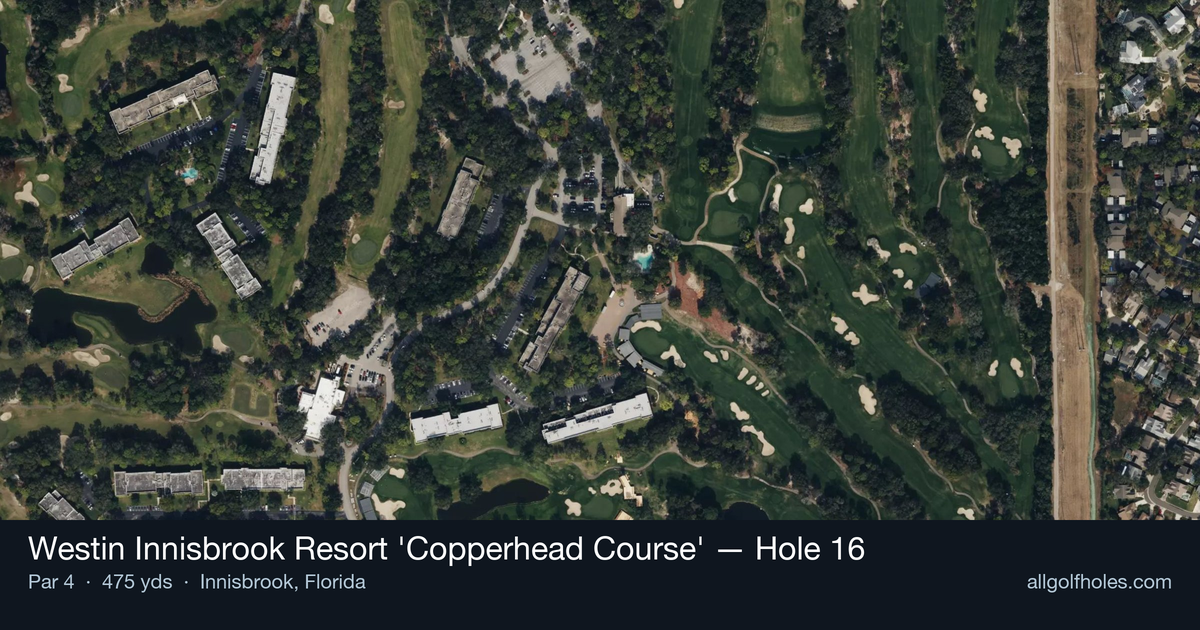
Aerial source not provided
Green size: 25 yds deep × 38 yds wide
Scorecard yardage is for Championship tees. The aerial shows its labeled reference position; distance rings measure to the green.
Championship tees · Par 4 · 475 yards
The plan for No. 16
The opening salvo of Innisbrook's infamous "Snake Pit," this 475-yard par 4 begins one of the toughest finishing stretches on the PGA Tour. Westin Innisbrook Resort 'Copperhead Course' hole 16 demands precision from the championship tees, with towering pines creating a narrow corridor that punishes wayward tee shots. The straight layout may appear straightforward, but the tree-lined fairway requires committed ball-striking to find the optimal position for your approach shot. A small, well-protected green awaits, demanding pinpoint accuracy with mid-to-long irons. As tournaments have proven time and again, this hole sets the tone for drama ahead, where even tour professionals feel the pressure mounting. The Snake Pit's reputation for making or breaking rounds begins here with unforgiving precision.
Off the tee
Your tee shot strategy must prioritize finding the fairway above all else. The tree-lined corridor leaves no margin for wayward drives, making accuracy more important than distance. Consider taking one club less than your normal driver if conditions are firm or wind is a factor. Target the center of the fairway, as the straight layout doesn't favor either side. The key is positioning yourself in the optimal landing zone, typically around 250 yards out, which sets up a manageable approach to the small green. Remember, this is the Snake Pit - conservative play often trumps aggressive swings here.
Approach & recovery
With the green's small size, your approach shot becomes critical for scoring opportunities. Club selection should favor the center of the green rather than attacking pins, especially when they're tucked near edges. The straight hole layout means you'll have a clear view of your target, but don't let that fool you into being overly aggressive. A mid-iron to long-iron, depending on conditions and your tee shot position, should be your go-to range. Focus on solid contact and a controlled trajectory - the small green punishes mishits severely, and being in the right section of the putting surface is crucial for your next shot.
On the green
The small green size means every putt carries added significance. While the specific breaks aren't detailed, expect subtle undulations that can catch you off-guard if you're not reading them carefully. Take extra time with your green reading, as three-putts here can derail your entire Snake Pit experience. Conservative putting strategy applies - aim for the fat part of the hole and focus on solid speed control. Getting your approach shot to the correct level of the green becomes even more important given the limited surface area to work with. ## RISK VS REWARD This hole offers limited risk/reward opportunities, which is precisely what makes it so challenging. The straight layout and tree-lined fairways eliminate most aggressive angles or shortcuts. The reward for playing smart, conservative golf is keeping your round intact as you enter the final two holes of the Snake Pit. The risk of trying to overpower this hole or take unnecessary chances is severe - penalty strokes here can snowball quickly through the remaining holes. ## DIFFERENT SKILL LEVELS **Low Handicap Players:** Focus on precision over power. Your ability to shape shots and control distance will be tested. Consider the pin position carefully and don't be afraid to aim for the center of the green even with shorter irons. Your short game skills will be crucial if you miss the small target. **High Handicap Players:** This hole demands your most conservative approach. Use whatever club gives you the highest confidence level off the tee, even if it's a 3-wood or hybrid. Aim for the middle of everything - fairway and green. Accept that par is an excellent score here, and don't let the pressure of the Snake Pit's reputation force you into risky shots. Course management and mental discipline will serve you better than trying to match the professionals' aggressive play. The 16th hole is where the Snake Pit earns its fearsome reputation. Respect this opening salvo, play within your abilities, and remember that surviving this stretch with minimal damage is often more valuable than trying to make birdies.
Hole 16 Green Complex
Mapped green boundary
Green size: 5,001 sq ft
Course coverage
Tournament and creator videos about Westin Innisbrook Resort 'Copperhead Course' — shared course coverage, not hole-specific clips.
Tournament coverage
Valspar Championship highlights
Valspar Championship | Final Round Highlights
2025
How did Hole 16 play?
How did this hole play today?
Frequently asked questions
Yardage reference: Championship tees · 475 yards.
What's the best strategy off the tee?
↓
For this 475-yard par 4, most players will hit driver to set up a comfortable approach.
How difficult is hole 16?
↓
This hole is one of the tougher holes on the course for most golfers. Key challenges include: long par 4, water in play.
What hazards should I watch out for on hole 16?
↓
Key hazards include: 2 greenside bunkers; water at 242.5 yards. Plan your shots to avoid these trouble spots.
How big is the green on hole 16?
↓
The green is medium-sized with moderate targets. Pay attention to pin placement when selecting your approach club.
What's a good score on hole 16?
↓
This hole is one of the tougher holes where par feels like birdie. A challenging par 4. Accept that bogey happens and avoid big numbers.