Hole 18 at Wilshire Country Club
- Par
- 4
- Yardage
- 439 yds
- Stroke index
- 4
- Hazards
- Water
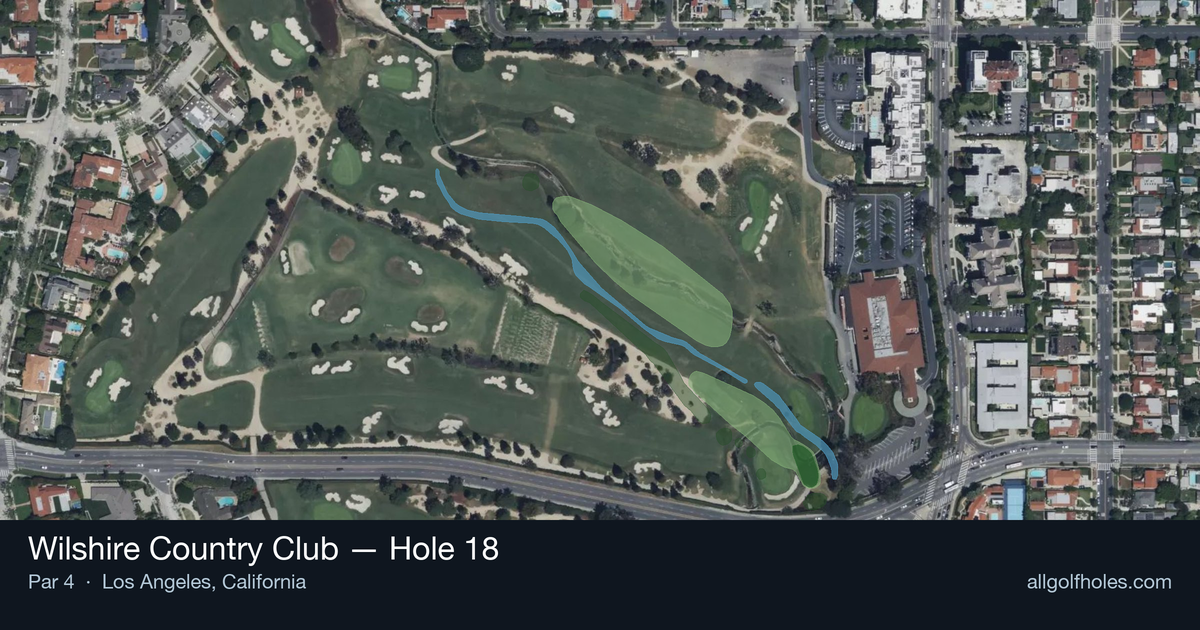
Aerial source not provided
Green size: 32 yds deep × 24 yds wide
Scorecard yardage is for Pro tees. The aerial shows its labeled reference position; distance rings measure to the green.
Pro tees · Par 4 · 439 yards
The plan for No. 18
The finishing hole at Wilshire Country Club presents a demanding 439-yard par 4 that serves as a true test of precision and nerve. This straight-away challenge features no significant hazards, placing the emphasis squarely on accuracy and course management. The tee shot demands commitment to a well-positioned drive that sets up the crucial approach to a deceptively small green complex. With its handicap rating of 4, this hole separates contenders from pretenders, requiring golfers to execute two quality shots under pressure. The compact putting surface rewards precise iron play while punishing anything less than surgical accuracy. As befitting a prestigious Los Angeles venue, Wilshire Country Club's 18th hole delivers a memorable conclusion that epitomizes championship golf.
Off the tee
The tee shot strategy centers on finding the optimal position for your approach distance. Most players will need driver to give themselves the best chance at reaching the green in regulation. Aim for the center of the fairway, as the straight layout provides a clear target line without major directional concerns. The key is committing to a smooth, controlled swing rather than trying to overpower the ball. Even without hazards, accuracy off the tee sets up a more manageable approach angle and distance.
Approach & recovery
With the green being small, precision becomes paramount on your approach shot. Depending on your tee shot distance, you'll likely face anywhere from a mid-iron to hybrid for your second shot. Club selection should favor taking enough club to ensure you reach the green, as coming up short on a small target is particularly costly. Focus on the center of the green regardless of pin position - the small size means any part of the putting surface gives you a reasonable birdie opportunity while avoiding the difficulty of chipping to a tight target.
On the green
The small green size means putting strategy revolves around speed control and reading subtle breaks carefully. With limited real estate, approach putts from longer distances require conservative speed to avoid running well past the hole. Pay attention to the overall slope and grain direction, as these factors become magnified on smaller surfaces. Conservative putting that ensures your next putt is makeable should take precedence over aggressive attempts at long birdie putts. ## RISK VS REWARD This hole presents a more subtle risk/reward scenario than dramatic hazard-laden holes. The reward comes from attacking with confidence - a well-struck driver followed by an aggressive approach to a small target can yield birdie opportunities. The risk lies in the cumulative effect of small misses: a slightly offline tee shot leading to a longer approach, which increases the difficulty of hitting and holding the small green. The smart play is controlled aggression rather than conservative course management. ## DIFFERENT SKILL LEVELS **Higher Handicap Players:** Focus on two solid, straight shots rather than distance. Consider hitting 3-wood off the tee if it keeps you in the fairway, then take one extra club on the approach to ensure you reach the green. Aim for the center of the green regardless of pin position and focus on two-putting for a solid par. **Lower Handicap Players:** This hole offers a genuine birdie opportunity with precise execution. Use driver confidently and be aggressive with your approach shot, especially when the pin is accessible. The small green rewards accurate iron play, so trust your yardages and commit to your club selection. Consider pin position more carefully, but never at the expense of finding the putting surface. The 18th at Wilshire rewards golfers who can execute under pressure while maintaining their normal swing tempo and decision-making process throughout the closing hole of their round.
Watch for
- Course conditioning and mapped hazards may affect line selection; confirm from the aerial.
Hole 18 Green Complex
Mapped green boundary
Green size: 3,195 sq ft
How did Hole 18 play?
How did this hole play today?
Frequently asked questions
Yardage reference: Pro tees · 439 yards.
What's the best strategy off the tee?
↓
For this 439-yard par 4, most players will hit driver to set up a comfortable approach.
How difficult is hole 18?
↓
This hole is one of the tougher holes on the course for most golfers. Key challenges include: water in play, small green.
What hazards should I watch out for on hole 18?
↓
Key hazards include: water at 177.3 yards. Plan your shots to avoid these trouble spots.
How big is the green on hole 18?
↓
The green is small and requires precision. The green is deeper than wide, so club selection is crucial. Expect challenging pin positions with limited room for error.
What's a good score on hole 18?
↓
This hole is a demanding hole where bogey is not unusual. This longer par 4 will test most golfers. Focus on position over distance.