Hole 16 of 18 · Owings Mills, Maryland
Hole 16 at Caves Valley Golf Club
- Par
- 4
- Yards
- 342
- Handicap
- 18
- Bunkers
- 8
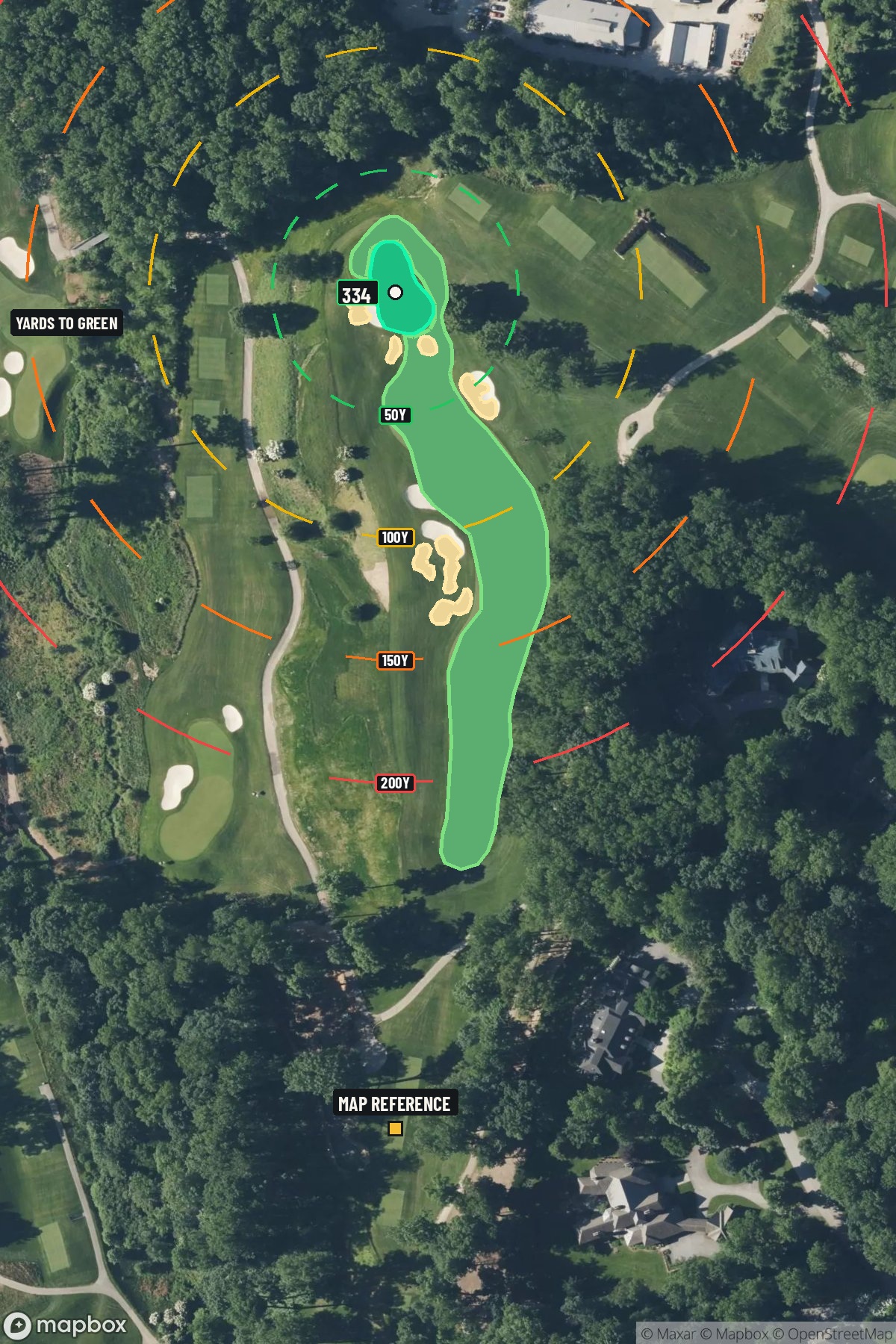
Map distances from Map reference tee
The map's printed distances are measured from the Map reference tee to the green; they do not move when you change tees. Your Championship yardage is in the tiles above.
Green size: 39 yds deep × 27 yds wide
Mapbox Satellite composite · capture date not provided. Green at the top.
Where this map comes from
- Satellite photo
- Date not published
- Mapbox satellite
- Green contours
- 2024 survey
- USGS lidar survey
The plan for No. 16
These notes were written before the current map. Where their distances differ, trust the map.
The play: The 16th hole at Caves Valley Golf Club presents a deceptively challenging par 4 that demands both precision and course management. This 342-yard dogleg left features a subtle curve that requires careful tee shot placement to set up the optimal approach angle. The generous fairway initially appears forgiving, but the slight bend left creates strategic decisions about how aggressively to attack the corner. A well-positioned drive opens up the small green complex, while conservative play leaves a longer approach to a challenging target. Despite being the 18th handicap hole, the compact green demands accuracy on the approach shot. The absence of major hazards shifts focus entirely to execution and green reading, making this a hole where short game skills and putting prowess determine scoring success in the closing stretch.
Shot by shot
The green on No. 16
Mapped boundary- Wide × deepyards
- 27×39
- Areasq ft
- 5,594
Gear for Hole 16
8bunkers
Bring a sand wedge you trust
 Titleist Vokey SM10 Tour Chrome$180 MSRPCheck priceCompare all picks →
We may earn a commission when you buy through these links.
Course coverage
Tournament and creator videos about Caves Valley Golf Club — shared course coverage, not hole-specific clips.
Featured by these creators
Creator videos about this course
YouTube creators who filmed or featured Caves Valley Golf Club. · Stats as of Nov 16, 2026 · 6d ago
Burger Dog inflation, BMW at Caves Valley Conundrums, Versant gets the U.S. Open | The Shotgun Start
How did Hole 16 play?
How did this hole play today?
Frequently asked questions
Yardage reference: Championship tees · 342 yards.
What's the best strategy off the tee?
↓
For this 342-yard par 4, most players will hit 3-wood or driver to set up a comfortable approach.
How difficult is hole 16?
↓
This hole is a good scoring opportunity for most golfers.
How big is the green on hole 16?
↓
The green is medium-sized with moderate targets. The green is deeper than wide, so club selection is crucial. Pay attention to pin placement when selecting your approach club.
What's a good score on hole 16?
↓
This hole is a birdie opportunity if you find the fairway. This shorter par 4 rewards accuracy off the tee with a short iron approach.