Hole 11 at TPC at Deere Run
- Par
- 4
- Yardage
- 432 yds
- Stroke index
- 6
- Hazards
- 3 bunkers · Water
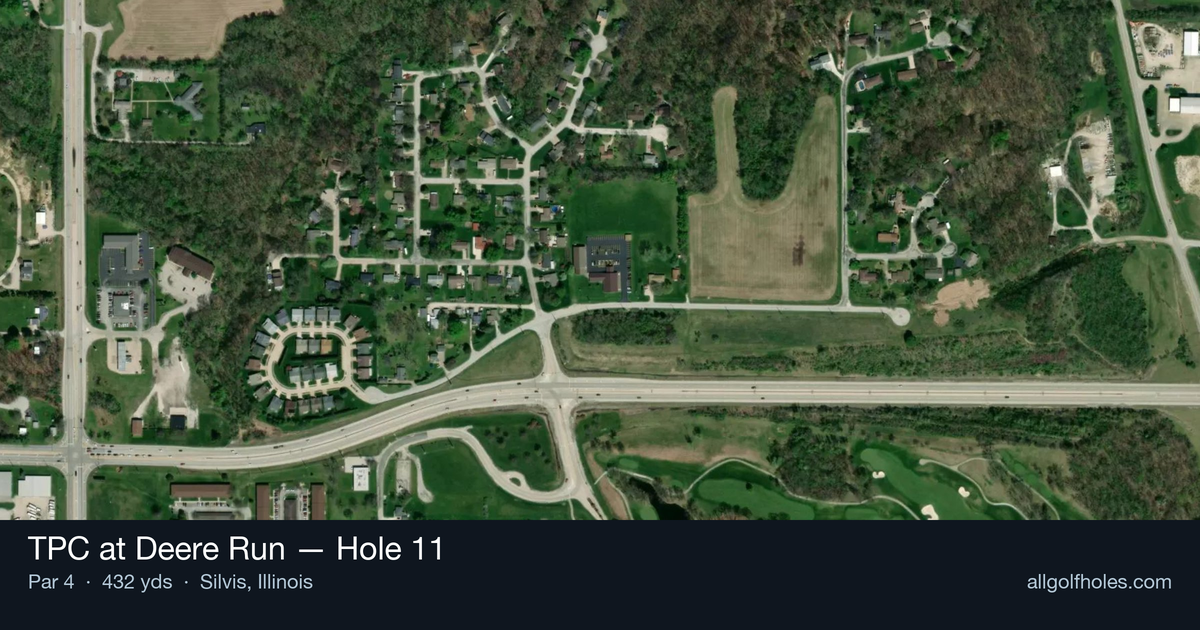
Aerial source not provided
Green size: 51 yds deep × 23 yds wide
Scorecard yardage is for Championship tees. The aerial shows its labeled reference position; distance rings measure to the green.
Championship tees · Par 4 · 432 yards
The plan for No. 11
Known as "Jump Start," TPC at Deere Run hole 11 stands as the longest par 4 and one of the most demanding tests on this John Deere Classic venue. At 432 yards, this straight hole presents a deceptively challenging proposition that has tested PGA Tour professionals for years. The tee shot finds a level landing area, but the real challenge begins with the approach shot, which must navigate through strategically placed trees to reach a small, unforgiving green complex. With limited margin for error on the second shot, precise club selection and accurate execution become paramount. This hole perfectly embodies the course's philosophy of rewarding strategic thinking over pure power, making it a memorable examination that separates contenders from pretenders during tournament week.
Off the tee
The tee shot strategy centers on finding the level landing area that sets up the best angle for your approach. Driver is typically the right choice for most golfers given the hole's length, but accuracy remains paramount. Focus on the center-right portion of the fairway, which provides the clearest sight line through the trees on your approach. Avoid getting too aggressive with your target line - the fairway is forgiving enough to reward a well-struck shot down the middle. Wind conditions can significantly impact club selection, so factor in any crosswinds that might push your ball toward trouble areas.
Approach & recovery
The approach shot represents the hole's primary challenge, requiring precision through a tree-lined corridor to reach the small green. From a good drive position, you'll typically face a mid-iron to long-iron depending on conditions and pin position. The key is committing fully to your club selection and swing - tentative shots rarely find success on this demanding approach. Aim for the center of the green regardless of pin position, as the small target leaves little margin for error. The trees create a natural funnel effect, so trust your line and make an aggressive swing through impact.
On the green
The small green demands respect and precision with your putting approach. Focus on leaving yourself below the hole whenever possible, as uphill putts are generally more manageable on this surface. Speed control becomes critical - the compact putting surface means that pace is often more important than perfect line reading. Take extra time to read the subtle breaks, as the small target can magnify even minor misreads. ## RISK VS REWARD This hole offers limited risk/reward opportunities, instead demanding solid execution of a straightforward strategy. The primary decision point comes with tee shot positioning - playing too conservatively can leave an overly long approach, while being too aggressive might find trouble that makes the approach even more difficult. The smart play is measured aggression: take enough club off the tee to reach the optimal landing area, then commit fully to a confident approach shot. ## DIFFERENT SKILL LEVELS **Higher Handicap Players:** Focus on finding the fairway with your most reliable tee shot, even if that means using a 3-wood or hybrid. From there, don't be afraid to take one extra club on your approach and aim for the center of the green. Course management is key - accept that par is a great score on this challenging hole. **Lower Handicap Players:** This hole rewards the ability to shape shots and control trajectory. Consider working the ball slightly right-to-left off the tee to optimize your approach angle. On the approach, you can be more aggressive with pin-seeking, but always respect the small green size. This is a hole where your short game skills around the green become crucial if you miss the putting surface. The 11th hole exemplifies the strategic design philosophy at TPC Deere Run, where historical significance meets modern golf course architecture to create memorable and challenging golf experiences.
Watch for
- Course conditioning and mapped hazards may affect line selection; confirm from the aerial.
Hole 11 Green Complex
Mapped green boundary
Green size: 6,416 sq ft
How did Hole 11 play?
How did this hole play today?
Frequently asked questions
Yardage reference: Championship tees · 432 yards.
What's the best strategy off the tee?
↓
For this 432-yard par 4, most players will hit driver to set up a comfortable approach.
How difficult is hole 11?
↓
This hole is a moderate challenge for most golfers. Key challenges include: water in play.
What hazards should I watch out for on hole 11?
↓
Key hazards include: 3 greenside bunkers; water at 105.4 yards. Plan your shots to avoid these trouble spots.
How big is the green on hole 11?
↓
The green is fairly large with multiple pin positions. The green is wider than it is deep, rewarding shots that find the correct tier. Lag putting becomes important on longer putts.
What's a good score on hole 11?
↓
This hole is a demanding hole where bogey is not unusual. This longer par 4 will test most golfers. Focus on position over distance.