Hole 1 at PGA National Resort & Spa (Champion)
- Par
- 4
- Yardage
- 365 yds
- Stroke index
- 9
- Hazards
- 5 bunkers
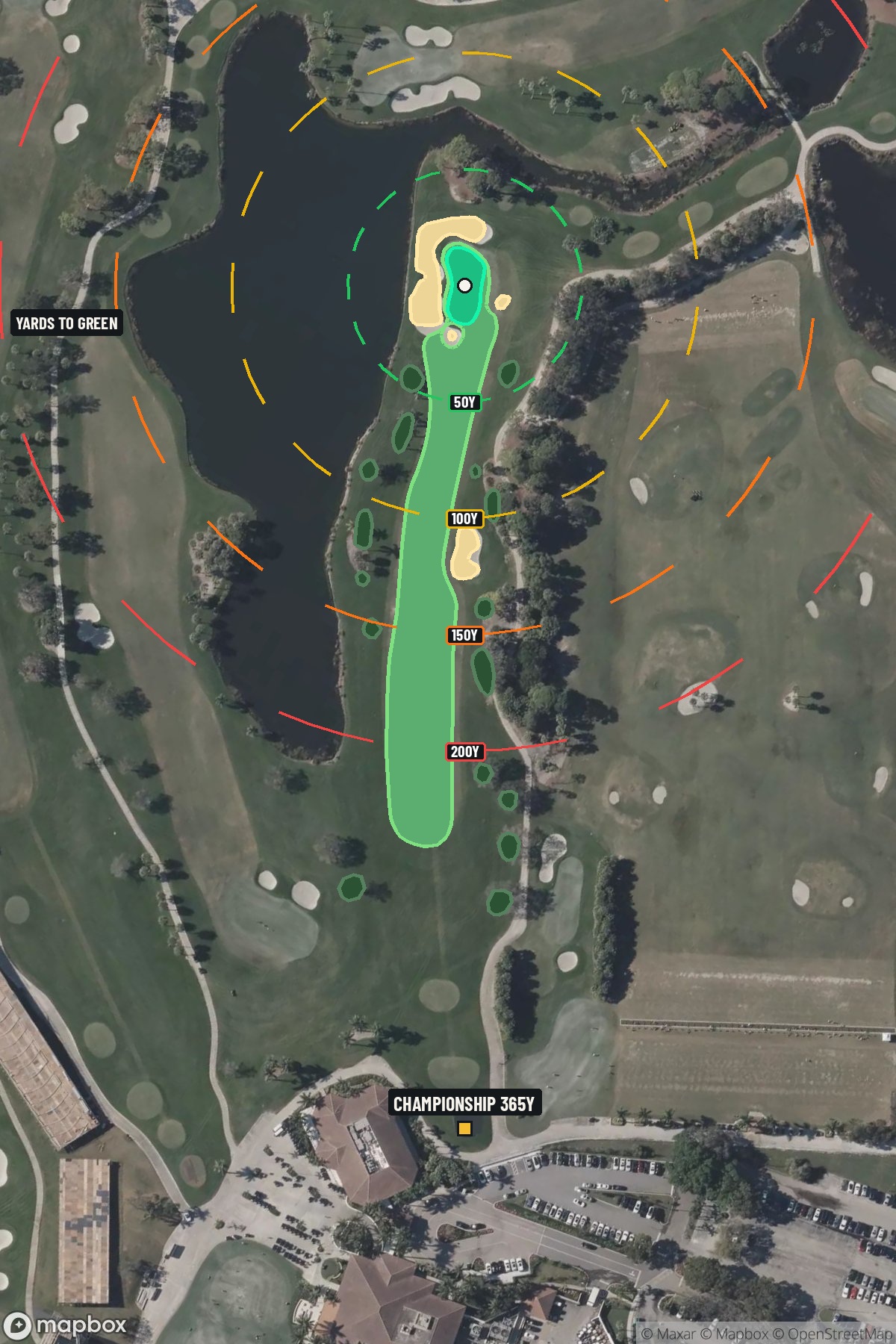 Hole 1 map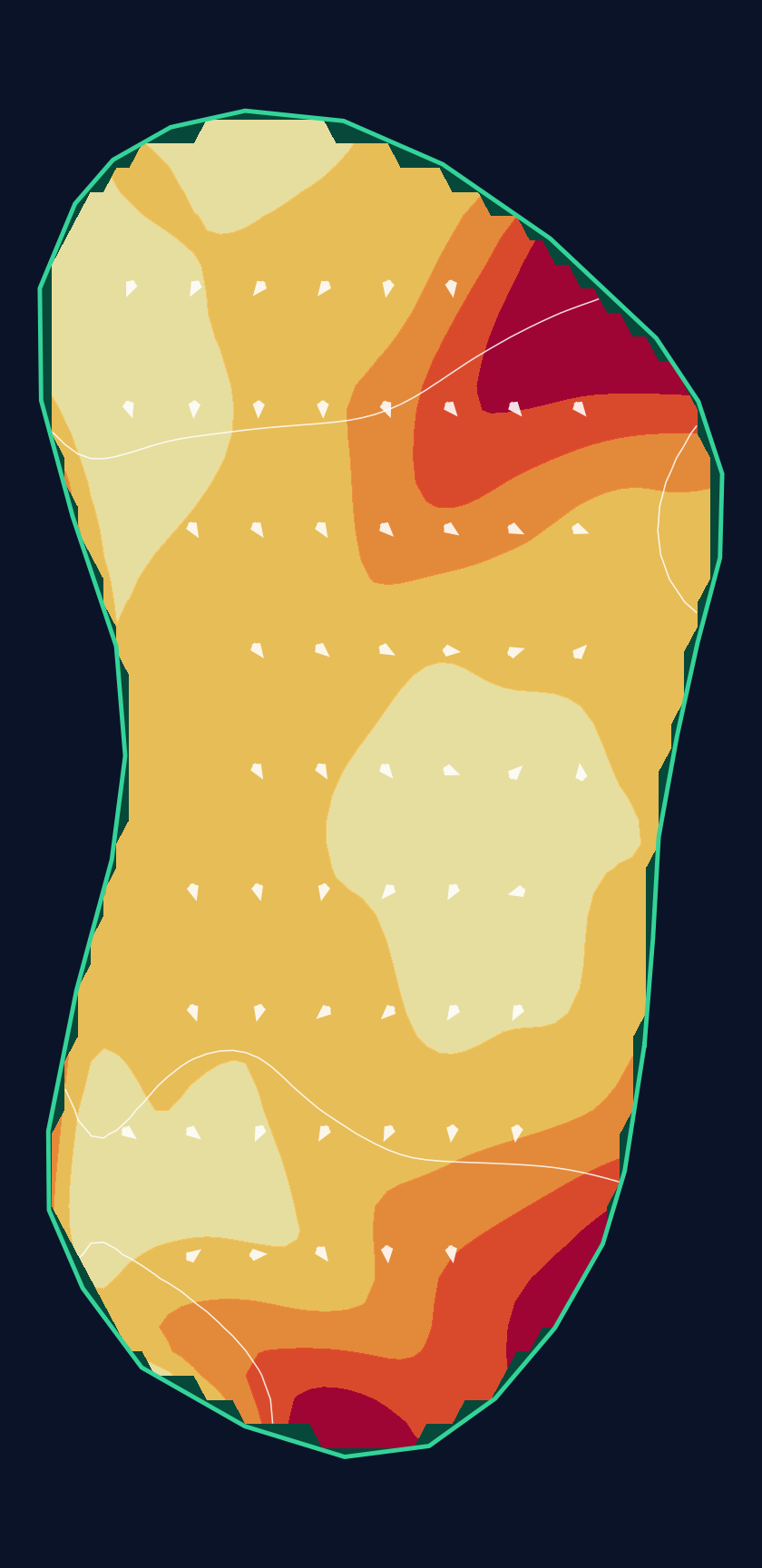
17 yd wide × 35 yd deep · 2.6 ft total elevation range
Light = gentler slope · Red = steeper slope
White lines: 1 foot of elevation. Arrows: downhill. General terrain, not a pin read.
Approach from bottom
Contour source
USGS 1 Meter 17 x58y297 FL_Peninsular_FDEM_2018_D19_DRRA · collection 2018–2020
Map source & reference
Mapbox Satellite composite · capture date not provided. Green at the top; the labeled map reference is below.
Scorecard yardage is for Championship tees. The aerial shows its labeled reference position; distance rings measure to the green.
Championship tees · Par 4 · 365 yards
The plan for No. 1
The opening hole at PGA National Resort & Spa (Champion) presents a welcoming yet strategic start to one of Florida's most respected championship layouts. This 365-yard par 4 features a straight design that allows golfers to settle into their round while demanding precision from the first swing. The tee shot plays to a generous fairway corridor, offering multiple club options depending on pin position and confidence level. With no major hazards guarding the hole, the primary challenge lies in positioning for the approach shot to a small, well-protected green complex. The compact putting surface rewards accurate iron play and punishes wayward approaches with challenging recovery shots. Smart course management begins immediately at PGA National, where even seemingly straightforward holes require thoughtful execution to secure par and build momentum for the demanding stretch ahead.
Off the tee
The tee shot strategy centers on finding the optimal position for your approach shot rather than maximizing distance. Most players should focus on the center-left portion of the fairway, which typically provides the best angle into the small green. A smooth driver or 3-wood, depending on your comfort level and swing tempo for the day, will leave you in ideal position. Avoid the temptation to overpower this opening hole. The relatively short length means even conservative club selection will leave a manageable approach shot. Focus on tempo and rhythm, using this hole to establish your swing feel for the round. The straight layout eliminates directional guesswork, making it crucial to commit fully to your chosen target line. ## APPROACH The approach shot represents the hole's primary challenge, with the small green demanding pinpoint accuracy. Depending on your tee shot position, you'll likely face a short to mid-iron into the green. The key is selecting enough club to ensure you reach the putting surface, as coming up short leaves difficult recovery shots. Study the pin position carefully during your pre-round preparation or warm-up. With a small green, pin placement significantly affects your target selection and required precision. Aim for the center of the green when the pin is tucked, and only attack direct pin positions when you're confident in your distance control and ball flight. ## ON THE GREEN The small green size means every putt becomes crucial for scoring. Focus on speed control above all else, as the compact surface leaves little room for error on longer putts. Take time during practice rounds to understand the green's subtle breaks and grain direction, which can be particularly influential on Florida's Bermuda grass surfaces. Position yourself below the hole whenever possible, as uphill putts provide better speed control on smaller targets. Pay attention to morning and afternoon putting conditions, as the green's orientation and surrounding vegetation can create varying speeds throughout the day. ## RISK VS REWARD This opening hole offers limited traditional risk/reward scenarios, instead presenting a more subtle strategic challenge. The reward comes from executing a solid, conservative game plan that builds confidence for the more demanding holes ahead. The risk lies in trying to force aggressive plays on a hole that rewards precision over power. The most significant risk/reward decision involves club selection on both the tee shot and approach. Aggressive players might attack with driver and shorter irons, while conservative players can lay back with fairway woods and accept slightly longer approach shots for improved accuracy. ## DIFFERENT SKILL LEVELS **High-Handicap Players:** Focus on fairway woods or hybrids off the tee to maximize accuracy and build confidence. Accept bogey as a reasonable score while aiming for par. Prioriti
Approach & recovery
The approach shot represents the hole's primary challenge, with the small green demanding pinpoint accuracy. Depending on your tee shot position, you'll likely face a short to mid-iron into the green. The key is selecting enough club to ensure you reach the putting surface, as coming up short leaves difficult recovery shots. Study the pin position carefully during your pre-round preparation or warm-up. With a small green, pin placement significantly affects your target selection and required precision. Aim for the center of the green when the pin is tucked, and only attack direct pin positions when you're confident in your distance control and ball flight. ## ON THE GREEN The small green size means every putt becomes crucial for scoring. Focus on speed control above all else, as the compact surface leaves little room for error on longer putts. Take time during practice rounds to understand the green's subtle breaks and grain direction, which can be particularly influential on Florida's Bermuda grass surfaces. Position yourself below the hole whenever possible, as uphill putts provide better speed control on smaller targets. Pay attention to morning and afternoon putting conditions, as the green's orientation and surrounding vegetation can create varying speeds throughout the day. ## RISK VS REWARD This opening hole offers limited traditional risk/reward scenarios, instead presenting a more subtle strategic challenge. The reward comes from executing a solid, conservative game plan that builds confidence for the more demanding holes ahead. The risk lies in trying to force aggressive plays on a hole that rewards precision over power. The most significant risk/reward decision involves club selection on both the tee shot and approach. Aggressive players might attack with driver and shorter irons, while conservative players can lay back with fairway woods and accept slightly longer approach shots for improved accuracy. ## DIFFERENT SKILL LEVELS **High-Handicap Players:** Focus on fairway woods or hybrids off the tee to maximize accuracy and build confidence. Accept bogey as a reasonable score while aiming for par. Prioriti
On the green
The small green size means every putt becomes crucial for scoring. Focus on speed control above all else, as the compact surface leaves little room for error on longer putts. Take time during practice rounds to understand the green's subtle breaks and grain direction, which can be particularly influential on Florida's Bermuda grass surfaces. Position yourself below the hole whenever possible, as uphill putts provide better speed control on smaller targets. Pay attention to morning and afternoon putting conditions, as the green's orientation and surrounding vegetation can create varying speeds throughout the day. ## RISK VS REWARD This opening hole offers limited traditional risk/reward scenarios, instead presenting a more subtle strategic challenge. The reward comes from executing a solid, conservative game plan that builds confidence for the more demanding holes ahead. The risk lies in trying to force aggressive plays on a hole that rewards precision over power. The most significant risk/reward decision involves club selection on both the tee shot and approach. Aggressive players might attack with driver and shorter irons, while conservative players can lay back with fairway woods and accept slightly longer approach shots for improved accuracy. ## DIFFERENT SKILL LEVELS **High-Handicap Players:** Focus on fairway woods or hybrids off the tee to maximize accuracy and build confidence. Accept bogey as a reasonable score while aiming for par. Prioriti
Watch for
- Use mapped hazard edges and the hole 1 aerial for the selected tee before committing to a line.
Hole 1 Green Complex & Slope
USGS 3DEP terrain analysis
Green size: 3,188 sq ft
Course coverage
Tournament and creator videos about PGA National Resort & Spa (Champion) — shared course coverage, not hole-specific clips.
Tournament coverage
Cognizant Classic highlights
Cognizant Classic | Final Round Highlights
2025
Featured by these creators
Creator videos about this course
YouTube creators who filmed or featured PGA National Resort & Spa (Champion). · Stats as of Oct 12, 2026 · 6d ago
Has the PGA Tour wrecked PGA National? & FBF to Steve Pate's win in Palm Beach | The Shotgun Start
TGL's future & Todd Watch returns at PGA National for Cognizant Classic | The Shotgun Start
PGA National - Hole 5 - 238 yard par 3
How did Hole 1 play?
How did this hole play today?
Frequently asked questions
Yardage reference: Championship tees · 365 yards.
What's the best strategy off the tee?
↓
For this 365-yard par 4, most players will hit 3-wood or driver to set up a comfortable approach.
How difficult is hole 1?
↓
This hole is a good scoring opportunity for most golfers. Key challenges include: small green.
How big is the green on hole 1?
↓
The green is small and requires precision. Expect challenging pin positions with limited room for error.
What's a good score on hole 1?
↓
This hole is a medium-length test where par is a solid result. A straightforward par 4 where course management pays off.