Hole 1 at Wilshire Country Club
- Par
- 4
- Yardage
- 390 yds
- Stroke index
- 5
- Hazards
- 10 bunkers · Water
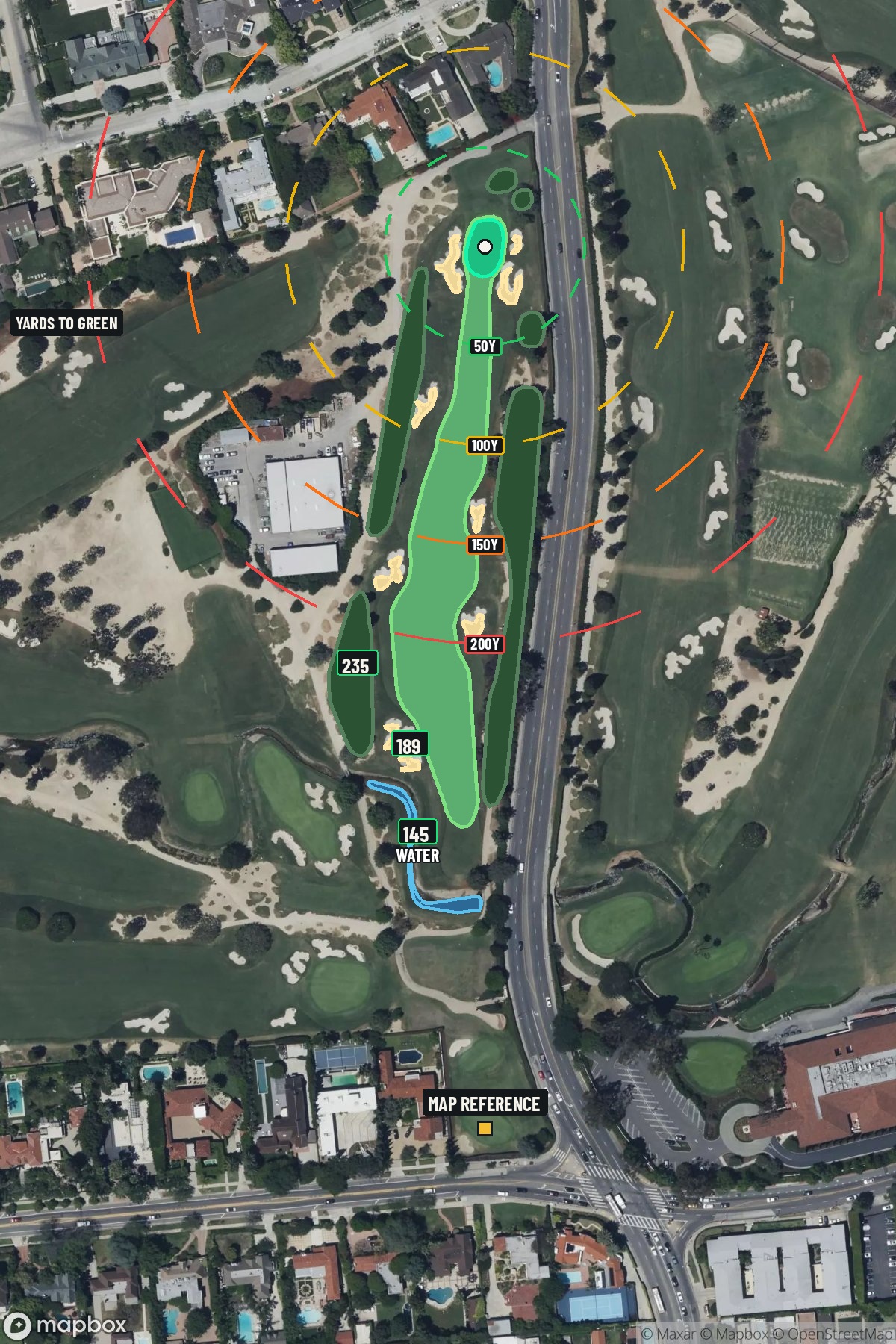 Hole 1 map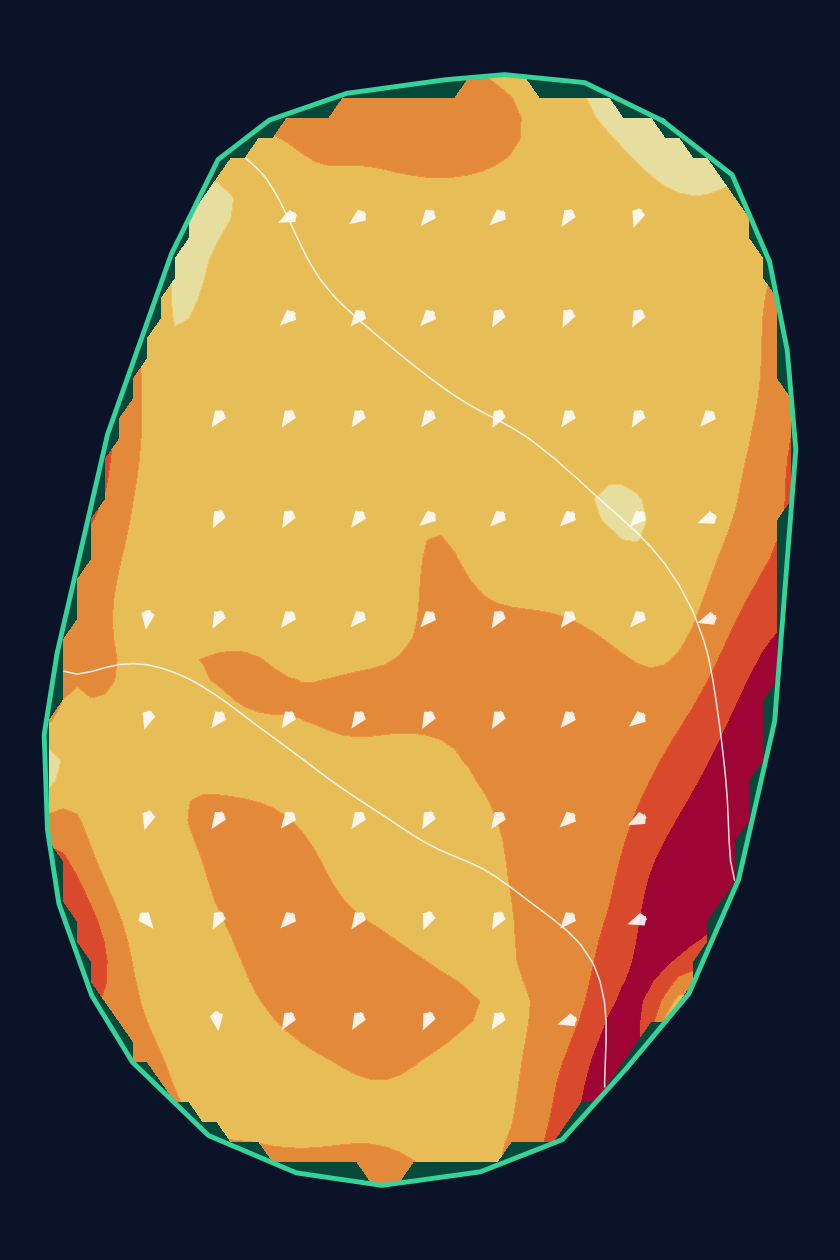
20 yd wide × 30 yd deep · 2.7 ft total elevation range
Light = gentler slope · Red = steeper slope
White lines: 1 foot of elevation. Arrows: downhill. General terrain, not a pin read.
Approach from bottom
Contour source
USGS 1 Meter 11 x37y378 CA_LosAngeles_B23 · collection 2023–2024
Map source & reference
Mapbox Satellite composite · capture date not provided. Green at the top; the labeled map reference is below.
Scorecard yardage is for Pro tees. The aerial shows its labeled reference position; distance rings measure to the green.
Pro tees · Par 4 · 390 yards
The plan for No. 1
The opening hole at Wilshire Country Club sets an inviting yet demanding tone for this prestigious Los Angeles layout. This straight par 4 stretches 390 yards through mature trees that frame the fairway beautifully, creating a classic parkland aesthetic that has welcomed members since 1919. The tee shot plays to a generous landing area with no significant hazards to intimidate, allowing golfers to swing freely and find their rhythm early in the round. However, the approach shot reveals the hole's true character - a small, well-protected green that demands precision and proper club selection. The elevated green complex sits like a crown jewel, requiring golfers to commit fully to their yardage and pin position. What makes this opening hole memorable is its perfect balance of accessibility and challenge, rewarding confident swings while punishing tentative play on the approach.
Off the tee
Your tee shot strategy should prioritize finding the fairway and setting up the ideal approach distance. With no significant hazards to navigate, focus on selecting a club that leaves you comfortable with your second shot. Many players will benefit from a controlled driver or strong 3-wood, aiming for the center of the fairway. The key is avoiding the temptation to overcook the tee shot – position over power is the winning formula here. Consider the pin position when planning your tee shot. If the flag is tucked in a corner of the small green, you'll want to approach from the optimal angle, which may influence your target line off the tee.
Approach & recovery
The approach shot is where this hole shows its teeth. The small green size means there's little margin for error, making club selection critical. Depending on your tee shot, you'll likely face a mid-iron to short-iron approach. Take one more club than you think you need and swing smoothly – coming up short of a small green is far preferable to flying it and facing a difficult recovery. Pay close attention to pin position and green conditions. The compact putting surface means that landing in the wrong section can leave you with a challenging two-putt. Aim for the center of the green unless you're supremely confident in your iron play.
On the green
The small green at Wilshire's first hole demands respect with the putter. While the specific contours aren't detailed, small greens typically feature subtle but significant breaks that can catch players off guard. Take time to read your putt carefully, especially on longer attempts across the green. Focus on speed control above all else. On a compact putting surface, getting your first putt close is more important than being aggressive with the line. A three-putt here can derail your round before it really begins. ## RISK VS REWARD This hole offers a classic risk/reward scenario in club selection rather than target selection. The reward for aggressive play is minimal – there are no significant scoring advantages to taking on extra risk. The smart play is conservative course management, treating this as a solid par opportunity with an outside chance at birdie if you execute well. The biggest risk is overplaying the approach shot. With a small target, the penalty for missing the green can be severe, potentially leading to bogey or worse. ## DIFFERENT SKILL LEVELS **High-Handicap Players:** Focus on putting the ball in play off the tee, even if that means using a hybrid or long iron. For the approach, club up and aim for the center of the green regardless of pin position. Your primary goal is avoiding big numbers early in the round. **Low-Handicap Players:** You can be more aggressive with driver off the tee, but still prioritize accuracy. On the approach, you have the skill to attack certain pin positions, but respect the small green size. This is a hole where par is never a bad score, and birdie opportunities should be taken only when the conditions are right. The opening hole at Wilshire Country Club rewards patience and precision – qualities that will serve you well throughout your round. Start smart, and let your good play build from there.
Watch for
- Course conditioning and mapped hazards may affect line selection; confirm from the aerial.
Hole 1 Green Complex & Slope
USGS 3DEP terrain analysis
Green size: 3,621 sq ft
How did Hole 1 play?
How did this hole play today?
Frequently asked questions
Yardage reference: Pro tees · 390 yards.
What's the best strategy off the tee?
↓
For this 390-yard par 4, most players will hit driver to set up a comfortable approach.
How difficult is hole 1?
↓
This hole is a moderate challenge for most golfers. Key challenges include: water in play, small green.
What hazards should I watch out for on hole 1?
↓
Key hazards include: water at 144.7 yards. Plan your shots to avoid these trouble spots.
How big is the green on hole 1?
↓
The green is small and requires precision. Expect challenging pin positions with limited room for error.
What's a good score on hole 1?
↓
This hole is a medium-length test where par is a solid result. A straightforward par 4 where course management pays off.