Hole 16 of 18 · Bloomfield Hills, Michigan

Hole 16 at Oakland Hills Country Club (South Course)

Par
4
Yards
406
Bunkers, water
3
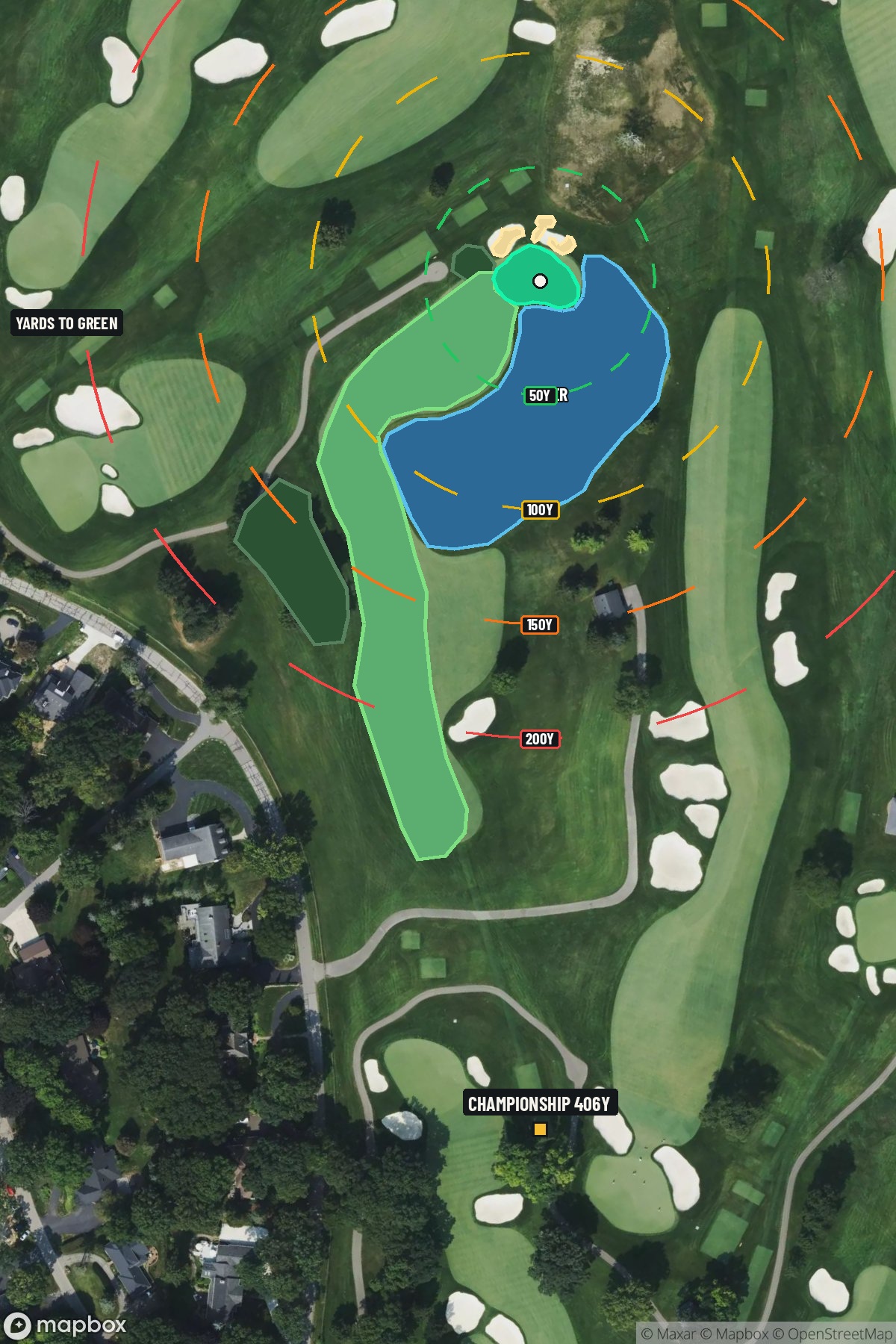
Hole 16 aerial at Oakland Hills Country Club (South Course)
Map distances from Championship tee · 406 yds

The map's printed distances are measured from the Championship tee to the green; they do not move when you change tees.

Green size: 29 yds deep × 39 yds wide

Mapbox Satellite composite · capture date not provided. Green at the top.

Where this map comes from

Satellite photo
Date not published
Mapbox satellite
Green contours
2017 survey
USGS lidar survey
Report a map problem
100%
Hole 16 aerial at Oakland Hills Country Club (South Course)

The plan for No. 16

The play: The signature 16th hole at Oakland Hills Country Club South Course stands as the crown jewel of "The Monster" that Ben Hogan famously conquered. This challenging 406-yard par 4 features a dramatic dogleg right that bends around a picturesque pond lined with graceful willow trees. The tee shot demands precision to navigate the corner while avoiding the water that guards the right side of the fairway. The approach shot plays to a small, well-defended green flanked by water on the right and protected by strategic bunkers on the left and rear. This hole perfectly embodies the championship pedigree of Oakland Hills, where major tournaments have been decided by how players handle this demanding water-guarded test.

Shot by shot

  1. Off the tee

    The tee shot strategy centers on finding the optimal position to navigate the dogleg while avoiding the pond that dominates the right side. Aim for the left-center of the fairway to open up the green and provide the safest angle around the water. A driver may be tempting given the 406-yard length, but many players benefit from a 3-wood or hybrid that ensures staying in the fairway and short of any trouble. The elevated tee provides a good view of the landing area, so use it to pick a specific target line that accounts for the dogleg's severity.

  2. Approach & recovery

    Your approach shot angle is critical on this hole. From the left side of the fairway, you'll have the best view of the green and can attack more aggressively. The green is small and well-defended, so club selection must account for the water on the right and bunkers behind and left of the putting surface. A mid-iron to long-iron depending on your tee shot position will typically be required. Favor the left side of the green to avoid the water, and don't be afraid to take one more club to ensure you clear any front hazards. Missing short or right brings water into play immediately.

  3. On the green

    The small green at the 16th demands precision putting. With the green's compact size, reading the subtle breaks becomes crucial for scoring opportunities. Pin positions near the water create additional pressure, making lag putting essential to avoid three-putts. The green typically slopes away from the approach angle, so uphill putts are generally easier to control. When the pin is tucked right near the water, play to the fat part of the green and accept a longer putt rather than risk finding the pond. ## RISK VS REWARD The primary risk/reward decision comes on the approach shot when facing a pin position near the water. Aggressive players might attack a right pin with a precise iron, but the penalty for missing right is severe. The reward is a potential birdie on one of the course's toughest holes, but the risk includes a water ball and likely double bogey or worse. Conservative play to the left side of the green gives you a chance at par and keeps big numbers off the scorecard. ## DIFFERENT SKILL LEVELS **High-handicap players** should focus on staying dry and in play. Use a fairway wood or hybrid off the tee to ensure finding the fairway, then play your approach to the left side of the green regardless of pin position. Accept bogey as a good score and avoid the temptation to attack sucker pins near the water. **Low-handicap players** can be more aggressive with driver off the tee if conditions allow, seeking optimal position for the approach. These players can attack middle pin positions but should still respect right pins near the water. The key is knowing when to be aggressive and when to play for the center of the green, especially in tournament situations where this hole's reputation for big numbers is well-earned.

  4. Watch for

    • Course conditioning and mapped hazards may affect line selection; confirm from the aerial.

The green on No. 16

Mapped boundary
Wide × deepyards
39×29
Areasq ft
6,444

Gear for Hole 16

We may earn a commission when you buy through these links.

Course coverage

Tournament and creator videos about Oakland Hills Country Club (South Course) — shared course coverage, not hole-specific clips.

Official & tour

Tour & network videos

Official coverage mentioning Oakland Hills Country Club (South Course).

My U.S. Open: Andy North Relives His 1985 U.S. Open Victory at Oakland Hills

Featured by these creators

Creator videos about this course

YouTube creators who filmed or featured Oakland Hills Country Club (South Course). · Stats as of Nov 16, 2026 · 6d ago

Explore golf creators →

Alum Shares Internship Program at Oakland Hills

Golfer feedback

How did Hole 16 play?

⚡ Quick Golfer Pulse

How did this hole play today?

1-tap anonymous vote

Frequently asked questions

Yardage reference: Championship tees · 406 yards.

What's the best strategy off the tee?

↓

For this 406-yard par 4, most players will hit driver to set up a comfortable approach.

How difficult is hole 16?

↓

This hole is a moderate challenge for most golfers. Key challenges include: water in play.

What hazards should I watch out for on hole 16?

↓

Key hazards include: 3 greenside bunkers; water at 323.5 yards. Plan your shots to avoid these trouble spots.

How big is the green on hole 16?

↓

The green is fairly large with multiple pin positions. Lag putting becomes important on longer putts.