Hole 17 of 18 · Augusta, Georgia
Hole 17 at Augusta National Golf Club
- Par
- 4
- Yards
- 440
- Bunkers
- 2
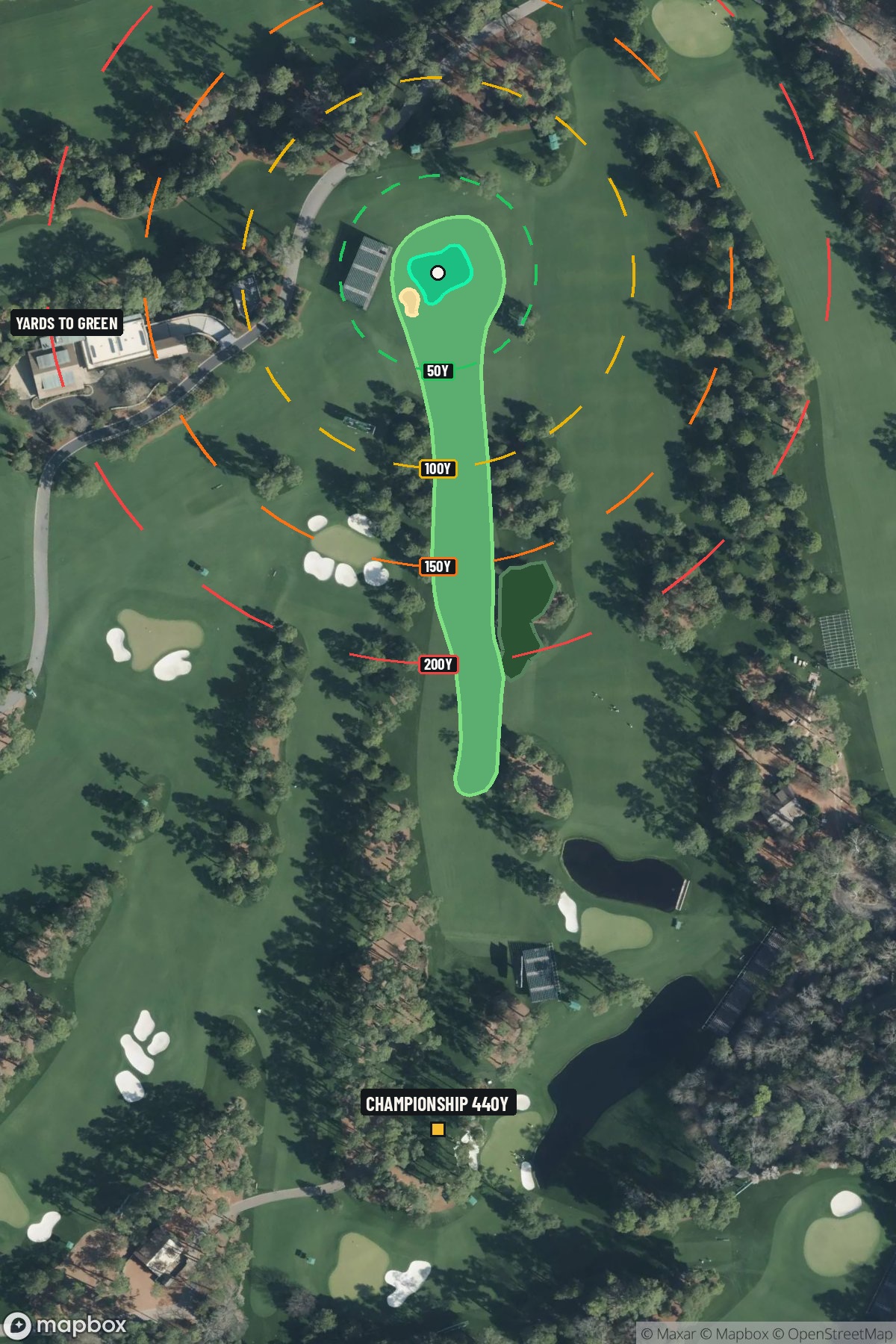
Map distances from Championship tee · 440 yds
The map's printed distances are measured from the Championship tee to the green; they do not move when you change tees.
Green size: 32 yds deep × 34 yds wide
Mapbox Satellite composite · capture date not provided. Green at the top.
Where this map comes from
- Satellite photo
- Date not published
- Mapbox satellite
- Green contours
- 2018–2019 survey
- USGS lidar survey
The plan for No. 17
The play: Augusta National Golf Club hole 17, known as "Nandina," presents a deceptively strategic par 4 that has witnessed some of the Masters' most memorable moments. This 440-yard hole appears straightforward but demands precision on the approach shot to a compact, sloping green. The putting surface features a prominent ridge that creates dramatic break patterns, with the right side offering a generous landing area that feeds putts toward the pin. Masters champions understand this hole's birdie potential - it's often considered the best scoring opportunity besides the par-5 15th. The green's subtle undulations, framed by beautiful nandina shrubs, reward players who position their tee shot for the optimal angle. When Sunday pressure mounts and players need to make a move, the 17th hole at Augusta National consistently delivers championship-defining moments.
Shot by shot
The green on No. 17
Mapped boundary- Wide × deepyards
- 34×32
- Areasq ft
- 4,947
Gear for Hole 17
440yd par 4
Know the exact number
 Bushnell Pro X3+$549 MSRPCheck priceCompare all picks →
We may earn a commission when you buy through these links.
Course coverage
Tournament and creator videos about Augusta National Golf Club — shared course coverage, not hole-specific clips.
Featured by these creators
Creator videos about this course
YouTube creators who filmed or featured Augusta National Golf Club. · Stats as of Nov 16, 2026 · 3d ago
How to Play Augusta National at Home! ⛳️ #golf #golfsimulator #augustanational
Strapped: Augusta National
Jim "Bones" Mackay Goes In-Depth on Augusta National | Lunch With The Boys
Template Holes at Augusta National? | Designing Golf
The Original Augusta National (feat. Brian Schneider) | Designing Golf
Bernhard Langer on Augusta National, the “Big Five,” & His Life in Golf | The Fried Egg Golf Podcast
Will Zalatoris Talks Injury Comeback, Augusta National, & Much More | The Fried Egg Golf Podcast
I Play Golf at the FAKE Augusta National! (Wow!)
Playing Augusta National & Three Courses Brian Schneider Thinks About | The Fried Egg Golf Podcast
How did Hole 17 play?
How did this hole play today?
Frequently asked questions
Yardage reference: Championship tees · 440 yards.
What's the best strategy off the tee?
↓
For this 440-yard par 4, most players will hit driver to set up a comfortable approach.
How difficult is hole 17?
↓
This hole is a good scoring opportunity for most golfers.
What hazards should I watch out for on hole 17?
↓
Key hazards include: 2 greenside bunkers. Plan your shots to avoid these trouble spots.
How big is the green on hole 17?
↓
The green is medium-sized with moderate targets. Pay attention to pin placement when selecting your approach club.
What's a good score on hole 17?
↓
This hole is a demanding hole where bogey is not unusual. This longer par 4 will test most golfers. Focus on position over distance.