Hole 2 at Links at Spanish Bay, The
- Par
- 4
- Yardage
- 307 yds
- Stroke index
- 13
- Hazards
- 2 bunkers
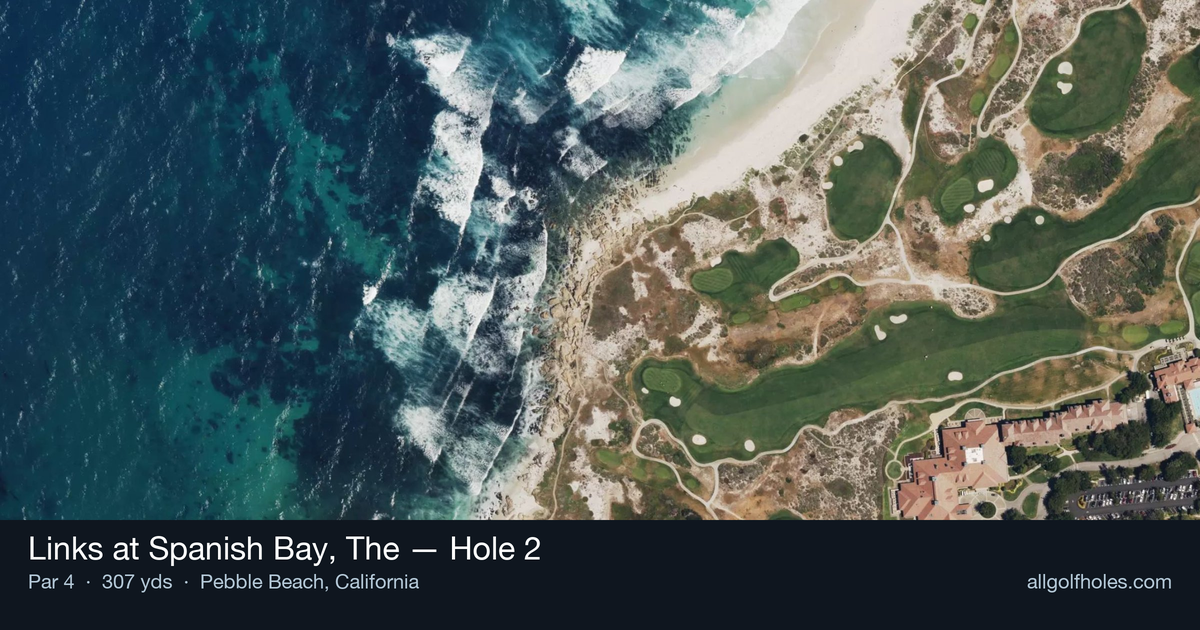
Aerial source not provided
Green size: 26 yds deep × 28 yds wide
Scorecard yardage is for Pro tees. The aerial shows its labeled reference position; distance rings measure to the green.
Pro tees · Par 4 · 307 yards
The plan for No. 2
The second hole at Links at Spanish Bay presents a deceptively strategic par 4 that embodies true links golf philosophy. At 307 yards, this straight hole tempts aggressive players to consider driver, but the prevailing Pacific winds demand careful club selection and precise execution. The tee shot plays to a generous fairway that flows naturally toward a compact green complex, where the real challenge awaits. The small, undulating green features subtle slopes that can confound even well-struck approach shots, particularly when the ocean breeze is up. Smart golfers will club up significantly on their approach, as the coastal conditions consistently play longer than expected. This early test of wind management and green reading sets the tone for the links experience ahead.
Off the tee
The tee shot strategy hinges entirely on wind conditions and pin position. In calm conditions, longer hitters may consider driver to get close to or even reach the green, but this aggressive approach carries significant risk given the small target. A more conservative play with 3-wood or long iron to the landing zone around 230-250 yards out sets up a comfortable wedge approach. Pay special attention to wind direction - if it's helping, even mid-handicap players might reach the green with driver. However, experienced Spanish Bay players consistently advise clubbing up throughout the front nine, as coastal winds can be deceptive and stronger than they appear. The straight layout means wind will primarily affect distance rather than direction, making club selection the critical decision.
Approach & recovery
The approach shot to this small green demands precision and proper club selection. Local wisdom strongly emphasizes taking extra club - if you're debating between two clubs, choose the longer one. The coastal location at sea level can make distances play longer than expected, especially with any headwind component. Target the center of the green regardless of pin position, as the small size leaves little margin for error. The straight hole layout provides a clear view of the target, but don't let this fool you into being overly aggressive with pin hunting. A solid shot to the middle of the green will always leave a reasonable putt for birdie.
On the green
The small green size makes lag putting the priority over aggressive birdie attempts. Focus on getting your first putt close rather than trying to hole everything. The putting surface, while not heavily detailed in available information, should be approached with respect for the coastal conditions that can affect green speeds throughout the day. Take time to read the subtle breaks carefully - what appears flat on a small green often has more movement than initially visible. The ocean proximity may create grain issues that affect ball roll, particularly later in the day.
Watch for
- Bunkers and waste areas influence line selection; use mapped hazard edges for the selected tee.
Hole 2 Green Complex
Mapped green boundary
Green size: 3,795 sq ft
Course and tournament history
Historical context for the course and venue. Each entry identifies the event or course it describes.
1974 · Tom Watson
Responding to player complaints from the 1974 U.S. Open, Tatum famously defended the U.S. Open course set-up, stating, “We had no intention of confounding the best players in the world. We just wanted
Source →
How did Hole 2 play?
How did this hole play today?
Frequently asked questions
Yardage reference: Pro tees · 307 yards.
What's the best strategy off the tee?
↓
For this 307-yard par 4, most players will hit 3-wood or driver to set up a comfortable approach.
How difficult is hole 2?
↓
This hole is a good scoring opportunity for most golfers. Key challenges include: small green.
How big is the green on hole 2?
↓
The green is small and requires precision. Expect challenging pin positions with limited room for error.
What's a good score on hole 2?
↓
This hole is a birdie opportunity if you find the fairway. This shorter par 4 rewards accuracy off the tee with a short iron approach.