Hole 16 at Links at Spanish Bay, The
- Par
- 3
- Yardage
- 200 yds
- Stroke index
- 16
- Hazards
- 2 bunkers
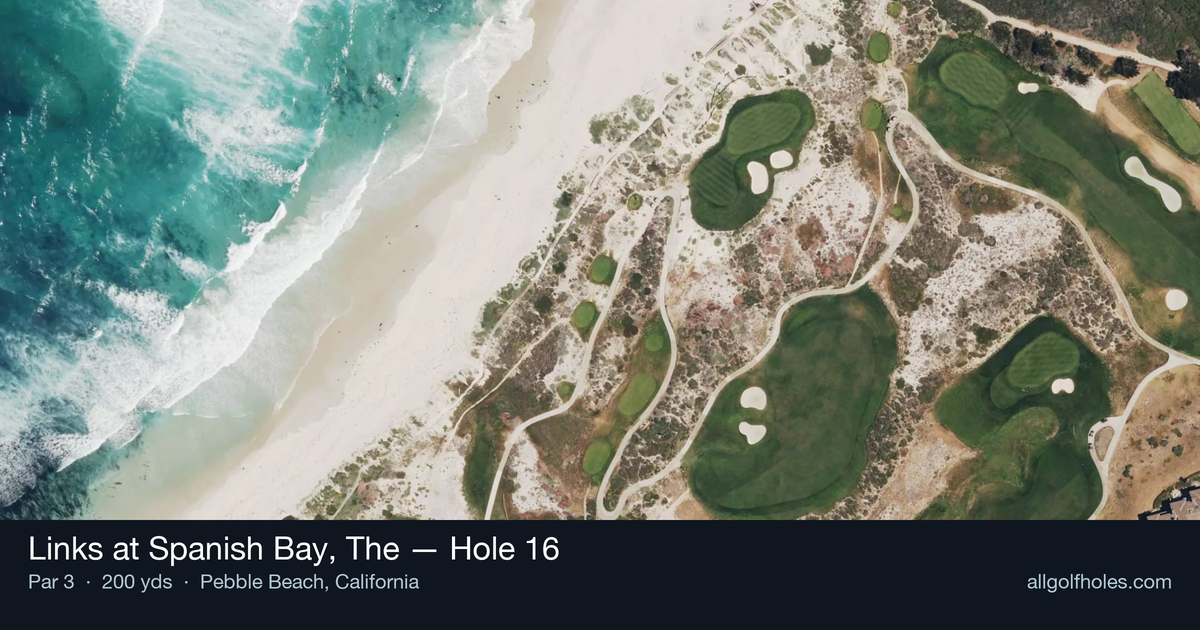
Aerial source not provided
Green size: 36 yds deep × 31 yds wide
Scorecard yardage is for Pro tees. The aerial shows its labeled reference position; distance rings measure to the green.
Pro tees · Par 3 · 200 yards
The plan for No. 16
The 16th hole at The Links at Spanish Bay marks a pivotal moment in your round, where the famous bagpiper traditionally begins his sunset serenade across the Monterey Peninsula. This 200-yard par 3 demands precision and smart club selection, as the coastal winds can dramatically affect ball flight on this exposed links terrain. The small green requires an accurate tee shot, with little margin for error around the putting surface. Club selection becomes critical here - the sea-level conditions and persistent ocean breezes often require taking one or two clubs more than the yardage suggests. As part of Spanish Bay's reputation for strategic shot-making and wind judgment, this hole epitomizes the course's challenge of reading conditions perfectly. The combination of distance, wind, and the intimate green complex makes this a memorable test late in the round.
Off the tee
Your tee shot **is** your approach on this par 3, making club selection absolutely crucial. The prevailing coastal winds at Spanish Bay can dramatically affect ball flight, so take extra time to assess conditions. Watch the flag, feel the wind on your face, and observe how it's affecting other players. Based on local knowledge, plan to club up significantly - if you think you need one extra club, take two. The sea-level conditions and ocean breezes create deceptive playing conditions that consistently fool golfers into underestimating the required distance. Aim for the center of the small green rather than chasing pins, as the margin for error is minimal.
Approach & recovery
Since this is a par 3, your tee shot serves as your approach. Focus on a smooth, committed swing rather than trying to muscle the ball through the wind. The straight layout means you don't need to work the ball, but you must account for crosswinds that can push shots offline. Target the fat part of the green and avoid the temptation to attack difficult pin positions. The small green size means even center-green shots will leave manageable putting distances. Trust your club selection and make a confident swing - second-guessing in these conditions leads to poor contact and missed greens.
On the green
Spanish Bay's greens are known for their consistent speed and subtle breaks that reflect the coastal terrain. The small green on 16 likely features gentle undulations that can be tricky to read in the wind. Pay attention to the grain direction, which often follows the prevailing wind patterns near the ocean. Putts may play faster downwind and slower into the breeze. Focus on lag putting to the correct tier if the green has multiple levels, as three-putts from long distances can quickly derail your score.
Watch for
- Bunkers and waste areas influence line selection; use mapped hazard edges for the selected tee.
Hole 16 Green Complex
Mapped green boundary
Green size: 5,293 sq ft
How did Hole 16 play?
How did this hole play today?
Frequently asked questions
Yardage reference: Pro tees · 200 yards.
What club should I use on this par 3?
↓
At 200 yards, most golfers will need a long iron or hybrid (5-iron to 6-iron) to reach this green. Adjust for elevation, wind, and pin position.
How difficult is hole 16?
↓
This hole is a good scoring opportunity for most golfers.
What hazards should I watch out for on hole 16?
↓
Key hazards include: 2 greenside bunkers. Plan your shots to avoid these trouble spots.
How big is the green on hole 16?
↓
The green is medium-sized with moderate targets. The green is wider than it is deep, rewarding shots that find the correct tier. Pay attention to pin placement when selecting your approach club.