Hole 16 at TPC at Deere Run
- Par
- 3
- Yardage
- 158 yds
- Stroke index
- 16
- Hazards
- 2 bunkers · Water
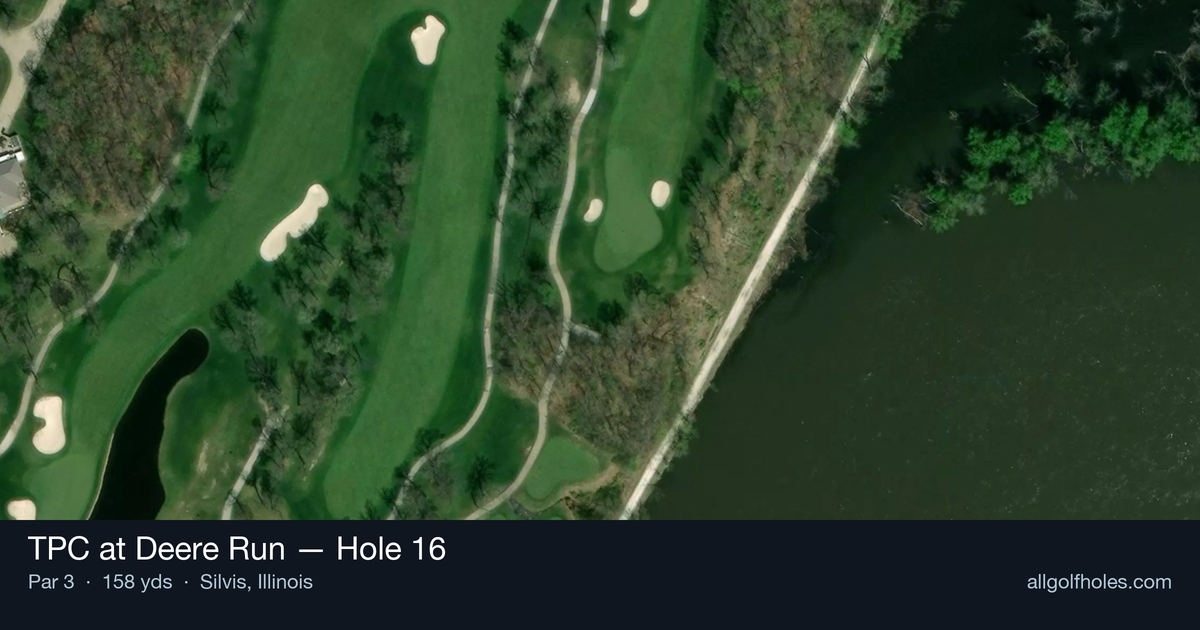
Aerial source not provided
Green size: 36 yds deep × 22 yds wide
Scorecard yardage is for Championship tees. The aerial shows its labeled reference position; distance rings measure to the green.
Championship tees · Par 3 · 158 yards
The plan for No. 16
Known as "Mother Earth," TPC at Deere Run hole 16 stands as the course's signature par 3, offering breathtaking views that showcase the property's natural beauty. This 158 yards hole presents a deceptively challenging tee shot to a small green nestled within the stunning Illinois landscape. The elevated tee provides panoramic vistas that have drawn visitors to this land for generations, but golfers must maintain focus on club selection and precision. With minimal hazards protecting the green, the primary challenge lies in finding the correct distance and hitting the compact target. The hole's reputation as TPC Deere Run's most memorable experience stems from its perfect marriage of strategic golf and scenic splendor, creating a moment that lingers long after the round concludes.
Off the tee
Club selection is paramount on this signature hole. Most players will be choosing between a mid-iron to short-iron depending on conditions and pin position. The key is committing to enough club to reach the back edge of the small green, as coming up short often leads to difficult recovery shots. Focus on a smooth, controlled swing rather than trying to muscle a shorter club. The natural landscape surrounding the green means errant shots can find challenging lies, so prioritize the center of the green over aggressive pin-hunting unless you're feeling particularly confident with your iron play.
Approach & recovery
Since this is a par-3, your tee shot is your approach shot. The straight layout means there's no preferred angle to attack from, putting the emphasis squarely on distance control and accuracy. With the green's small size, aim for the center and let the ball work toward the pin rather than taking on risky flag positions. Wind conditions can play a significant role at this yardage, so factor in any breeze when making your club selection. The natural setting may create swirling winds that aren't immediately apparent from the tee.
On the green
The small green size means putting becomes critical for scoring well on "Mother Earth." With limited real estate, most putts will be relatively short, making this an excellent birdie opportunity if you find the putting surface. Focus on speed control rather than trying to be overly aggressive with breaking putts. The compact nature of the green means even modest slopes can have significant impact on ball roll. Take time to read the green carefully, as three-putts from this distance can be particularly frustrating. ## RISK VS REWARD The risk/reward calculation here is straightforward: the reward of a potential birdie on a short par-3 versus the risk of missing the small target entirely. The smart play is almost always targeting the center of the green, regardless of pin position. The natural surroundings that make this hole so visually appealing can also create challenging recovery situations for wayward shots. Conservative course management typically pays dividends, as pars are solid scores when others in your group may be struggling with the precision required. ## DIFFERENT SKILL LEVELS **High-Handicap Players:** Take one more club than you think you need and aim for the heart of the green. Don't get caught up in the signature hole pressure - treat it like any other short par-3 and focus on finding the putting surface. A bogey here isn't devastating given the hole's reputation for difficulty. **Low-Handicap Players:** This represents a legitimate birdie opportunity that you should capitalize on. Still prioritize the center of the green unless the pin is in a very accessible location. Your superior distance control with mid-irons should give you more confidence to attack certain pin positions, but remember that even tour professionals respect small greens. The key is avoiding the big number that can derail a good round. The signature "Mother Earth" hole rewards patience and precision while punishing overaggression. Success here comes from respecting the small target and executing a fundamentally sound golf shot rather than trying to create something spectacular.
Watch for
- Course conditioning and mapped hazards may affect line selection; confirm from the aerial.
Hole 16 Green Complex
Mapped green boundary
Green size: 4,035 sq ft
How did Hole 16 play?
How did this hole play today?
Frequently asked questions
Yardage reference: Championship tees · 158 yards.
What club should I use on this par 3?
↓
At 158 yards, most golfers will need a mid-iron (7-iron to 8-iron) to reach this green. Adjust for elevation, wind, and pin position.
How difficult is hole 16?
↓
This hole is a moderate challenge for most golfers. Key challenges include: water in play, small green.
What hazards should I watch out for on hole 16?
↓
Key hazards include: 2 greenside bunkers; water at 160.9 yards. Plan your shots to avoid these trouble spots.
How big is the green on hole 16?
↓
The green is small and requires precision. The green is deeper than wide, so club selection is crucial. Expect challenging pin positions with limited room for error.
What's a good score on hole 16?
↓
This hole is a solid par with birdie chances for precise approach shots. Making par is a good result here. Focus on hitting the green and avoiding three-putts.