Hole 3 at PGA National Resort & Spa (Champion)
- Par
- 5
- Yardage
- 528 yds
- Stroke index
- 3
- Hazards
- 6 bunkers · Water
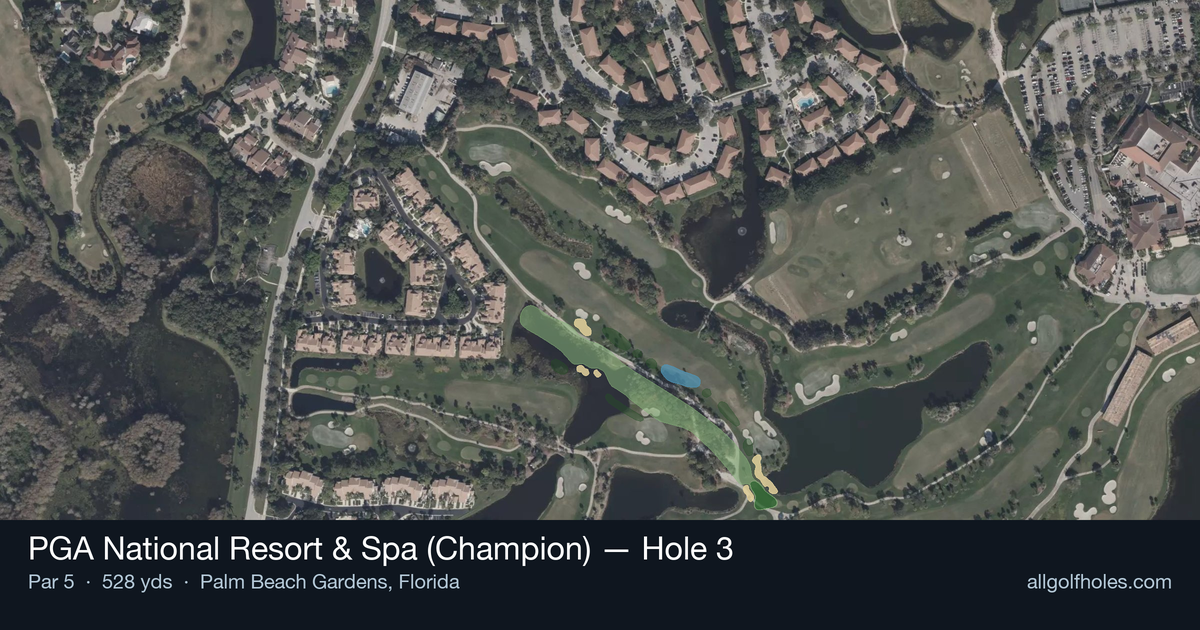
Aerial source not provided
Green size: 40 yds deep × 25 yds wide
Scorecard yardage is for Championship tees. The aerial shows its labeled reference position; distance rings measure to the green.
Championship tees · Par 5 · 528 yards
The plan for No. 3
The third hole at PGA National Resort & Spa (Champion) presents a deceptively challenging par 5 that demands precision over power. This 528-yard straight-away hole may appear generous from the tee, but its small green complex creates a strategic puzzle that separates aggressive players from calculated ones. The relatively hazard-free layout invites longer hitters to consider reaching in two, yet the diminutive putting surface punishes wayward approach shots with difficult recovery situations. As the third-hardest hole on this championship layout, it establishes early momentum for those who respect its subtleties while rewarding bold, accurate shotmaking with potential birdie opportunities.
Off the tee
Your opening shot should prioritize finding the fairway center, as position trumps distance on this hole. Driver remains the preferred choice for most players to maximize distance toward the green, but accuracy is paramount. Aim for the middle of the fairway to provide the widest possible target and avoid any rough that could complicate your second shot lie. The straight layout means you can be aggressive with your target line without worrying about hidden trouble around corners. ## APPROACH Your second shot strategy depends entirely on your driving distance and comfort level. Longer hitters may attempt to reach the green in two, but the small target makes this a high-risk proposition. Most players should focus on advancing the ball 100-150 yards to an ideal wedge distance, positioning themselves in the center of the fairway for the best angle into the green. This conservative approach eliminates big numbers and sets up numerous birdie opportunities. ## ON THE GREEN The small green size demands exceptional accuracy on your approach shot, whether it's your second or third shot. Focus on hitting the center of the green rather than chasing pin positions, as the limited surface area leaves little room for error. Putting strategy should emphasize lag putting to avoid three-putts, which can quickly turn a scoring opportunity into a disappointing result. ## RISK VS REWARD The primary risk/reward decision occurs on your second shot. Going for the green in two offers eagle potential but risks missing the small target entirely, potentially leading to difficult up-and-downs. The safer three-shot approach virtually guarantees a birdie look while eliminating disaster scores. Given the hole's low handicap ranking, playing conservatively often proves more rewarding than gambling. ## DIFFERENT SKILL LEVELS **Low-handicap players** can be more aggressive with their second shots, potentially reaching the green in two when conditions favor it. Their superior short game skills also allow them to attack tighter pin positions with confidence. **High-handicap players** should embrace the three-shot strategy without hesitation. Focus on keeping the ball in play off the tee, advancing it safely with the second shot, and giving yourself a comfortable wedge into the green. This approach maximi
Approach & recovery
Your second shot strategy depends entirely on your driving distance and comfort level. Longer hitters may attempt to reach the green in two, but the small target makes this a high-risk proposition. Most players should focus on advancing the ball 100-150 yards to an ideal wedge distance, positioning themselves in the center of the fairway for the best angle into the green. This conservative approach eliminates big numbers and sets up numerous birdie opportunities. ## ON THE GREEN The small green size demands exceptional accuracy on your approach shot, whether it's your second or third shot. Focus on hitting the center of the green rather than chasing pin positions, as the limited surface area leaves little room for error. Putting strategy should emphasize lag putting to avoid three-putts, which can quickly turn a scoring opportunity into a disappointing result. ## RISK VS REWARD The primary risk/reward decision occurs on your second shot. Going for the green in two offers eagle potential but risks missing the small target entirely, potentially leading to difficult up-and-downs. The safer three-shot approach virtually guarantees a birdie look while eliminating disaster scores. Given the hole's low handicap ranking, playing conservatively often proves more rewarding than gambling. ## DIFFERENT SKILL LEVELS **Low-handicap players** can be more aggressive with their second shots, potentially reaching the green in two when conditions favor it. Their superior short game skills also allow them to attack tighter pin positions with confidence. **High-handicap players** should embrace the three-shot strategy without hesitation. Focus on keeping the ball in play off the tee, advancing it safely with the second shot, and giving yourself a comfortable wedge into the green. This approach maximi
On the green
The small green size demands exceptional accuracy on your approach shot, whether it's your second or third shot. Focus on hitting the center of the green rather than chasing pin positions, as the limited surface area leaves little room for error. Putting strategy should emphasize lag putting to avoid three-putts, which can quickly turn a scoring opportunity into a disappointing result. ## RISK VS REWARD The primary risk/reward decision occurs on your second shot. Going for the green in two offers eagle potential but risks missing the small target entirely, potentially leading to difficult up-and-downs. The safer three-shot approach virtually guarantees a birdie look while eliminating disaster scores. Given the hole's low handicap ranking, playing conservatively often proves more rewarding than gambling. ## DIFFERENT SKILL LEVELS **Low-handicap players** can be more aggressive with their second shots, potentially reaching the green in two when conditions favor it. Their superior short game skills also allow them to attack tighter pin positions with confidence. **High-handicap players** should embrace the three-shot strategy without hesitation. Focus on keeping the ball in play off the tee, advancing it safely with the second shot, and giving yourself a comfortable wedge into the green. This approach maximi
Watch for
- Water influences line selection and recovery options on this hole.
Hole 3 Green Complex
Mapped green boundary
Green size: 3,817 sq ft
Course coverage
Tournament and creator videos about PGA National Resort & Spa (Champion) — shared course coverage, not hole-specific clips.
Tournament coverage
Cognizant Classic highlights
Cognizant Classic | Final Round Highlights
2025
Featured by these creators
Creator videos about this course
YouTube creators who filmed or featured PGA National Resort & Spa (Champion). · Stats as of Oct 12, 2026 · 5d ago
Has the PGA Tour wrecked PGA National? & FBF to Steve Pate's win in Palm Beach | The Shotgun Start
TGL's future & Todd Watch returns at PGA National for Cognizant Classic | The Shotgun Start
PGA National - Hole 5 - 238 yard par 3
How did Hole 3 play?
How did this hole play today?
Frequently asked questions
Yardage reference: Championship tees · 528 yards.
Can this par 5 be reached in two?
↓
At 528 yards, A true three-shot hole for most players. Position your layup to leave a comfortable wedge distance.
How difficult is hole 3?
↓
This hole is a moderate challenge for most golfers. Key challenges include: water in play, small green.
What hazards should I watch out for on hole 3?
↓
Key hazards include: water at 368.2 yards. Plan your shots to avoid these trouble spots.
How big is the green on hole 3?
↓
The green is small and requires precision. Expect challenging pin positions with limited room for error.
What's a good score on hole 3?
↓
This hole is a solid birdie opportunity with smart layup strategy. Most golfers can reach in three. Position your layup to leave a comfortable wedge.