Hole 7 of 18 · Melbourne, Australia
Hole 7 at Kingston Heath Golf Club
- Par
- 5
- Yards
- 505
- Handicap
- 18
- Bunkers
- 5
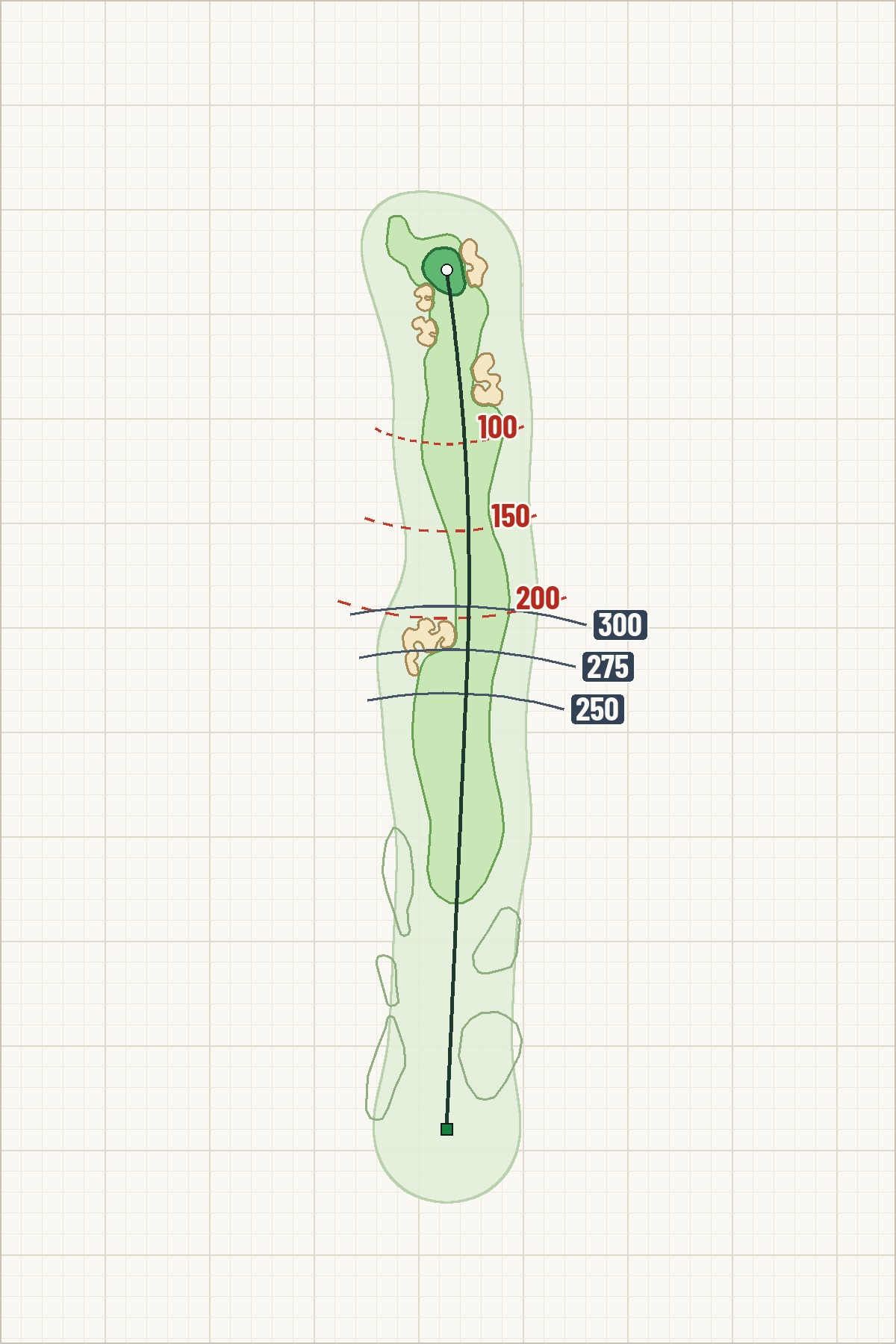
Map distances from Blue tee · 505 yds
The map's printed distances are measured from the Blue tee to the green; they do not move when you change tees.
Green size: 30 yds deep × 23 yds wide
Mapbox Satellite composite · capture date not provided. Green at the top.
Where this map comes from
- Satellite photo
- Date not published
- Mapbox satellite
The plan for No. 7
The play: Blue tee: 505 yards (462 metres on the club card). The easiest hole on the men's index, and one the club describes as a birdie or eagle chance. Mapped here: 5 bunkers or sandy areas; the green is 27 yards deep.
Scorecard line from the guide
Par 5, stroke index 18.
Shot by shot
The green on No. 7
Mapped boundary- Wide × deepyards
- 23×29.8
- Areasq ft
- 4,123
Gear for Hole 7
5bunkers
Bring a sand wedge you trust
 Titleist Vokey SM10 Tour Chrome$180 MSRPCheck priceCompare all picks →
We may earn a commission when you buy through these links.
Golfer feedback
How did Hole 7 play?
⚡ Quick Golfer Pulse
1-tap anonymous voteHow did this hole play today?
Research notes
- The easiest hole on the men's index, and one the club describes as a birdie or eagle chance. The club's line is left-centre, staying short of the cross bunker. A small swale sits at the entrance to the green. The club says the second should carry past it, because pitches from short of the swale are hard to judge; being above the flag is also to be avoided. (Club course-tour hole page as archived 16 December 2015)[1]
- The 2026 Australian Open is at Kingston Heath, with tournament rounds from Thursday 3 to Sunday 6 December 2026. The page gives no par, length, routing or hole card. (Event information page)[2]
- The club began as Elsternwick Golf Club, with play from 1909 and an official opening day on 30 April 1910. It bought its Cheltenham site in 1923 and the course opened on 4 April 1925 with no bunkers. Dan Soutar designed the course and Mick Morcom built it. Alister MacKenzie inspected it on 29 October 1926 and supplied a bunkering scheme; his one significant routing change turned the 15th into an uphill par three. Vernon Morcom built 53 bunkers by early 1928 and had broken them into more than 130 by 1945. (History page)[3]
- The club describes about 50 hectares of relatively flat land on sandy loam, with firm, fast surfaces, native heath and sandy waste areas, so that missed fairways often find sand or scrub rather than rough. (Course page)[4]
- The club lists nine men's Australian Opens at Kingston Heath: 1948, 1957, 1970, 1983, 1989, 1995, 2000, 2022 and 2024, the last two shared with Victoria Golf Club. It also lists the Australian Masters in 2009, won by Tiger Woods, and the 2016 World Cup of Golf. (History page, championships)[3]
- The club's archived scorecard gives the Blue course, used for amateur events, as 6,352 metres, par 72, and the Black course, used for professional events, as 6,494 metres, par 72, both on the member hole numbering. (Archived scorecard page)[5]
Sources
- Kingston Heath Golf Club: Hole 7 (course tour, archived December 2015) — Kingston Heath Golf Clubhttps://web.archive.org/web/20151216031656/http://www.kingstonheath.melbourne:80/guests/course/hole7.mhtml
- Australian Open event information — Golf Australiahttps://golf.com.au/australian-open-event-information
- Kingston Heath Golf Club: History — Kingston Heath Golf Clubhttps://www.kingstonheath.melbourne/history/
- Kingston Heath Golf Club: Our courses — Kingston Heath Golf Clubhttps://www.kingstonheath.melbourne/our-courses/
- Kingston Heath Golf Club: Scorecard (archived January 2016) — Kingston Heath Golf Clubhttps://web.archive.org/web/20160117014725/http://www.kingstonheath.melbourne:80/guests/course/scorecard.mhtml